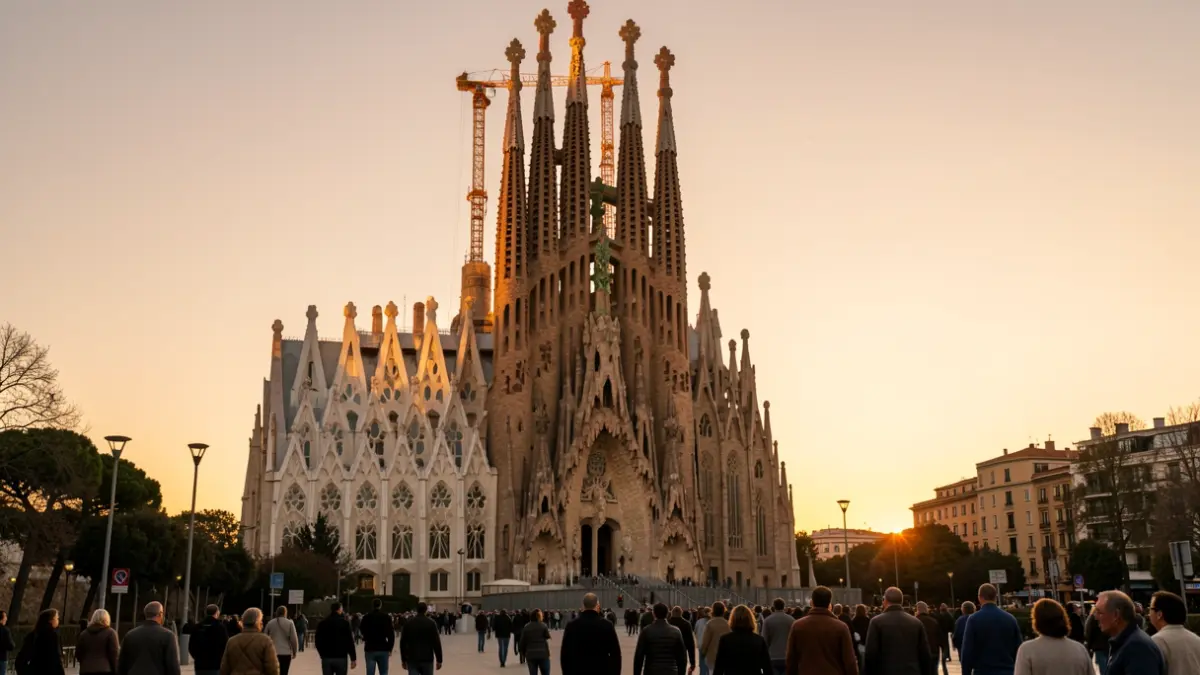
The Sagrada Familia basilica in Barcelona is not only under construction for nearly a century and a half but has also been a tourist attraction for almost a hundred years. As early as 1929, Barcelona Atracción magazine recognized it as a point of interest, and since then, the temple designed by Antoni Gaudí has experienced several moments of prominence. However, none have matched the impact of the event following the inauguration of the tower that makes it the world's tallest, an occasion that culminated with the visit of Pope Leo XIV.
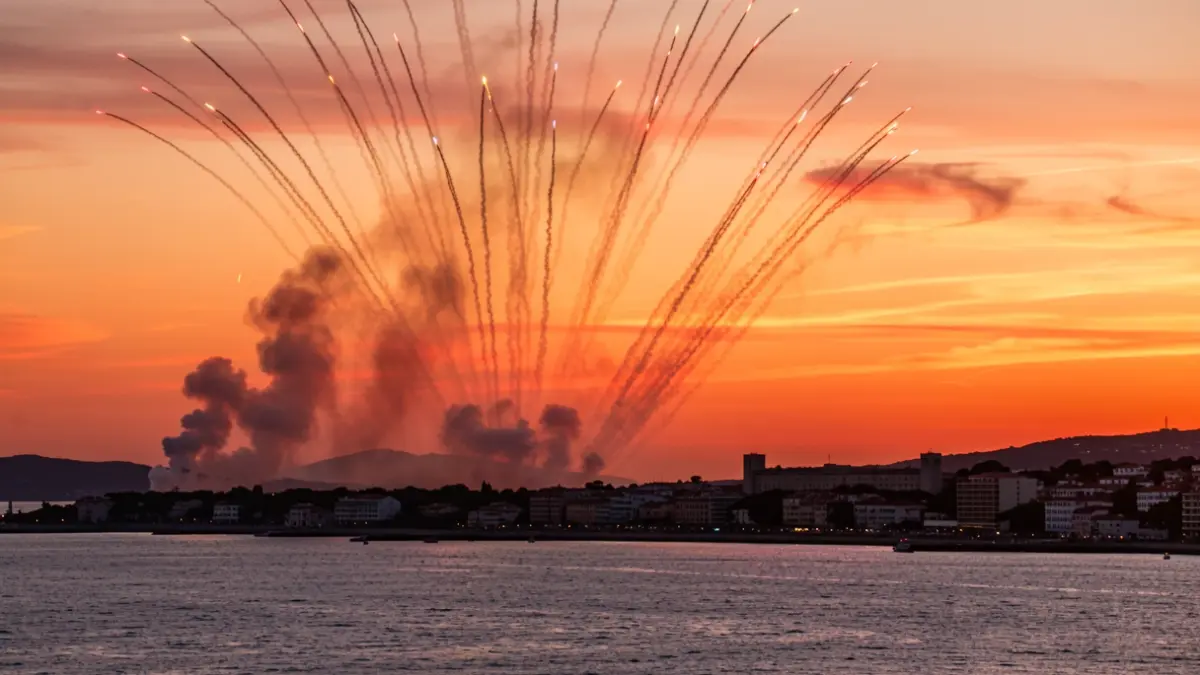
This event, which included a drone show, generated a wave of global admiration and boosted the temple's social media metrics, with 28 million views and a potential reach of 523 million people. The visual production by Igor Cortadellas and the television direction by Paulí Subirà for 3Cat achieved significant international media coverage, even drawing comparisons to the impact of the 1992 Olympic Games.
The magnitude of the Sagrada Familia as an icon is further reinforced by its inclusion in Lego's Architecture collection, alongside other emblematic monuments like the Eiffel Tower. This uniqueness was already anticipated by Gaudí himself, who foresaw the global appeal of his work. Experts like Jordi Tresserras, a Unesco consultant, highlight its exceptional universal values, which justified its inclusion in the United Nations agency's heritage catalog.
From an urban projection perspective, Alex Dobaño, from the Avanti firm, points out that the completion of the main tower enhances its silhouette as a recognizable element, transforming it from a mere 'landmark' into a 'node' within Barcelona's urban environment.
José Luis Nueno, a professor at IESE, compares the Sagrada Familia to other 'wonders of the world' due to its architectural, technical, cultural, symbolic, and religious uniqueness. He considers the tower's inauguration to be the most significant tourist and cultural event in Spain since the 1992 Olympic Games, with the potential to increase tourism by 10% to 15% by 2030.
Jordi Arcos Pumarola, research director at CETT, emphasizes that the basilica allows visitors to experience history in real-time, combining religious, architectural, and historical attractions with a contemporary approach through technology and social media. While celebrating its consolidation as a cultural and religious icon, he warns about the need to manage the high tourist influx, a priority already included in the City Council's plans.
The president of the Constructing Board, Esteve Camps, has admitted the risk that the Sagrada Familia might 'die of success,' although they are considering extending opening hours. The Commissioner for Sustainable Tourism for the City Council, José Antonio Donaire, highlights the emergence of a 'global icon' that will require redefining its meaning and associating it with new values, advocating for 'glocalization' to balance international projection with the city's daily life.
The mayor of Barcelona, Jaume Collboni, stated that the city has projected a qualitative message of peace and dialogue, emphasizing that the event was not merely a promotional act. Meanwhile, urban anthropologist José Mansilla believes that despite the temporary notoriety, global competition between cities makes such events ephemeral, seeing a 'mutual functionality' between the city and the economic elites driving tourism for the completion of the works.