
Fifty years ago, just over six months after the dictator Francisco Franco's death, the government aiming to continue the regime took its first steps to balance social pressure with the reformist intentions of a few young technocrats. This was a challenging environment, marked by the deep state's resistance, far-right support, and a severe economic crisis that sent basic consumer prices soaring and fueled daily protests across the country. These included demonstrations for amnesty, freedom, and, in Catalonia, the Statute of Autonomy.
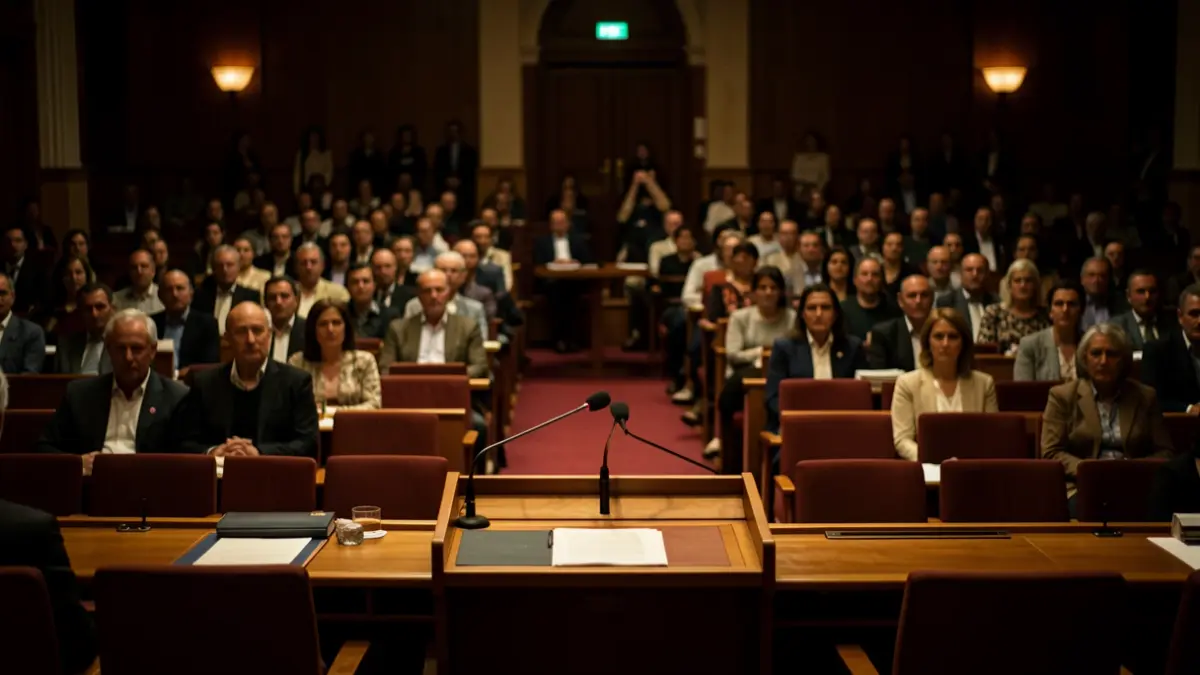
The government led by Arias Navarro found its ground eroding. In June 1976, as the Minister Secretary-General of the Movement, Adolfo Suárez, presented the Law on the Right to Political Association, the situation was precarious. On June 8 and 9, 1976, the Cortes debated this law. The political instability forced the reformists to propose a text that referred to 'political associations' rather than 'parties,' carefully justifying it within Franco's fundamental principles. King Juan Carlos I and Adolfo Suárez managed to persuade the majority of procurators to embrace pluralism, effectively ending the 'organic democracy' system.
The law passed with the support of nearly all procurators, despite notable protests from certain sectors of the establishment. One of the few female procurators, Mónica Plaza de Prado, pointed out that the law would abolish the National Council of the Movement as the sole body for political association. Other procurators, such as Fernández de la Vega and Gías Jové, opposed it, viewing partisan freedom as a "decisive factor of regression." Supporters of the law argued it respected the "fundamental principles" of the "constitutional order," even though a constitution did not yet exist.
Adolfo Suárez defended the bill, emphasizing the need to politically acknowledge the existing social plurality: "If this society is plural, we cannot afford to ignore it." Shortly after, Suárez replaced Arias Navarro as head of government. The law was published in the Official State Gazette on June 14, 1976, permitting political associations. The first parties were approved in October, including Convergència Democràtica de Catalunya. However, key organizations like Adolfo Suárez's UCD, Felipe González's PSOE, Manuel Fraga Iribarne's Alianza Popular, and Santiago Carrillo's Communist Party of Spain (PCE) were not registered until February 1977, following a Supreme Court ruling that allowed their inclusion.
The legalization of the PCE, a primary adversary of the regime, occurred during the Easter holiday of 1977. Esquerra Republicana de Catalunya, another party strongly opposed to Francoism, was among the last to be legalized. Paradoxically, Suárez's government was secretly negotiating the return of the President of the Generalitat in exile, Josep Tarradellas. Tarradellas eventually returned three months after the June 15, 1977, elections, in which ERC had to form an instrumental coalition led by Heribert Barrera.
Contemporary studies of the Transition tend to demystify the "law to law" process, highlighting the role of mobilized civil society and the monarchy's need to establish a democratic state to survive. Professor Martí Marín emphasizes the significance of previously prohibited trade unions and organizations like the Assemblea de Catalunya, which led demonstrations and general strikes, such as those in Sabadell and Baix Llobregat, compelling legislative change.


