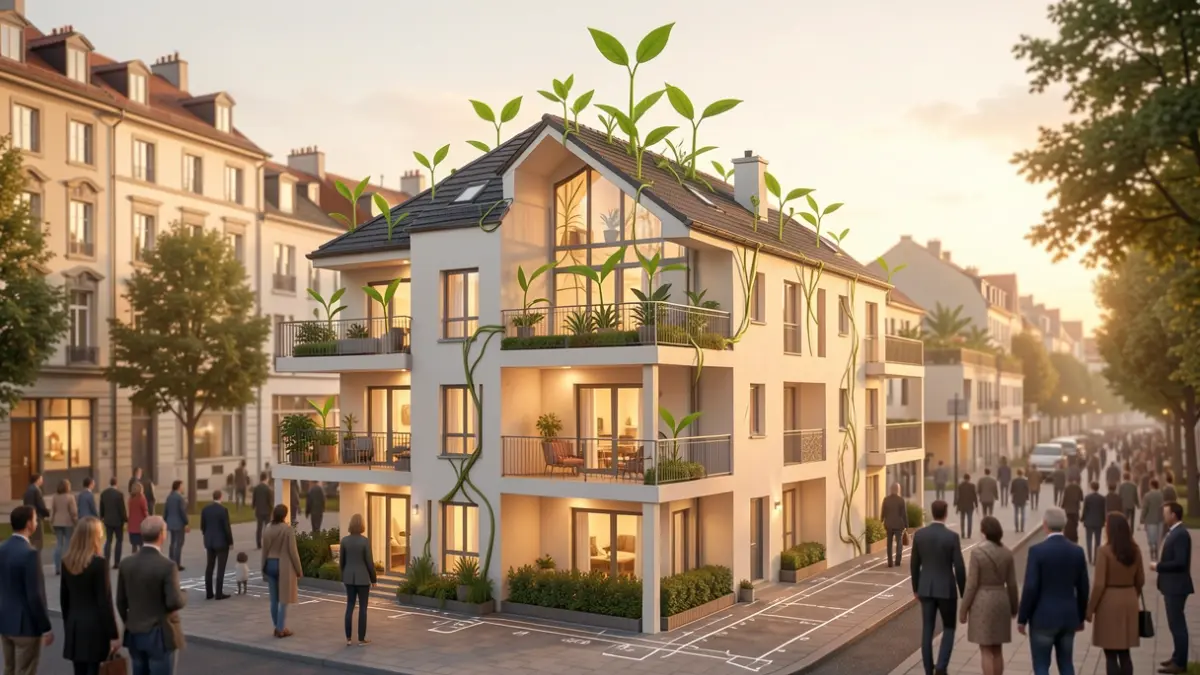
The exhibition, part of the program for Barcelona 2026, World Capital of Architecture, focuses on the primary function of housing as a space to be lived in, contrasting with its speculative value as a market commodity. It examines the actions and agents involved in public housing promotion, the transition towards new forms of tenure, and the need to preserve public ownership of land.
The research, compiled in the eponymous book, organizes the narrative into two processes: 'gestar' (to gestate), encompassing decisions, resources, and methodologies to make social housing possible, and 'habitar' (to inhabit), focusing on people and how they adapt spaces to their needs.
The exhibition identifies seven strategies to increase the stock of social and affordable housing, such as improving vulnerable neighborhoods, promoting cooperative housing, public-private collaboration, conventional public promotion, construction with industrialized systems, rehabilitation of acquired buildings, and the use of vacant homes. These avenues are explained through seven case studies like Carrer Ample, La Balma, R16 La Catalana, Glòries, Aprop Ciutat Vella, Encuny, and Llar Casa Bloc.
The installation invites visitors to experiment with space. Five life-size dwellings, linked to projects like La Balma and Glòries, are laid out on the floor. Various mobile volumes evoke everyday furniture and objects, allowing visitors to try different configurations and imagine new ways of living.
An artificial intelligence tool facilitates interaction with the content and collects visitor reflections to enrich the collective debate. The exhibition also contextualizes the discussion with data on the social housing situation in Spain, where it represents 2.5% of the residential stock, compared to the European average of 8%.
The exhibition opens questions about the future of housing, debating whether to build more or better manage the existing stock, whether housing can exist outside the speculative logic, and what model of public housing should be promoted to ensure its permanent social function.