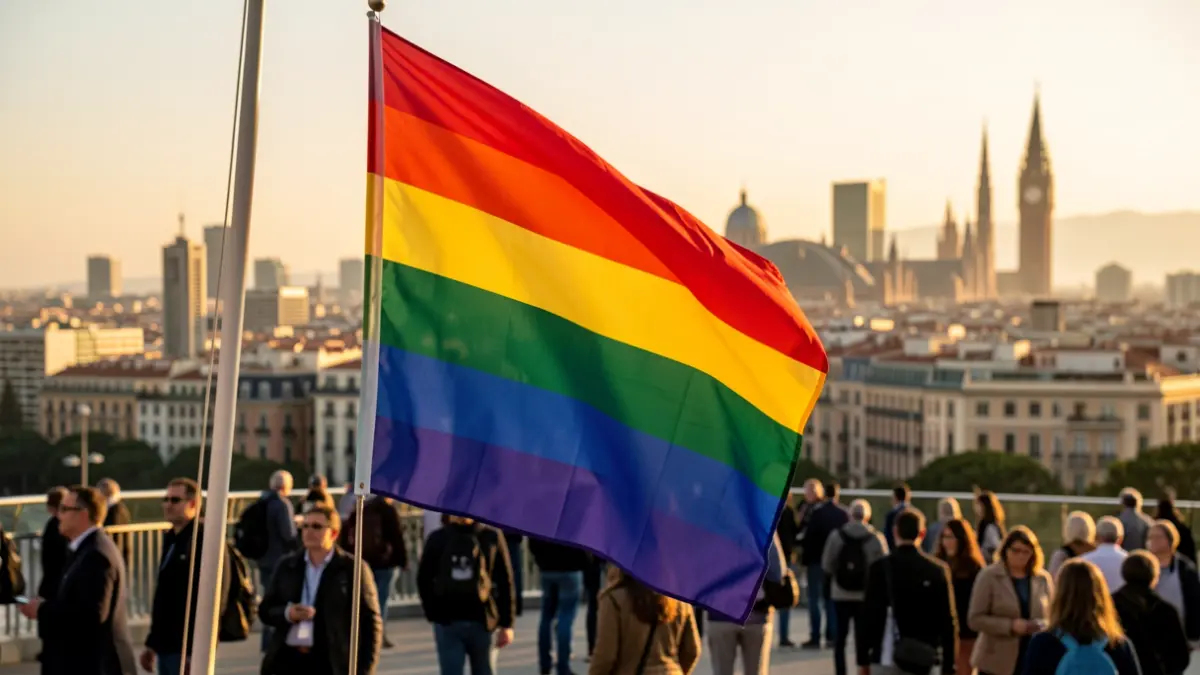
The Stonewall events on June 28, 1969, marked the beginning of the modern LGBTI+ liberation movement. This year, Catalonia stands on the cusp of the 50th anniversary of the first demonstration for sexual and gender liberation, held in Barcelona on June 26, 1977. This mobilization, called by the Front d’Alliberament Gai de Catalunya, took place amidst severe Francoist repression, positioning the region at the forefront of the fight for the collective's rights.
The defense of LGBTI+ rights is intrinsically linked to Catalonia's republican and anti-Francoist democratic tradition. For years, many individuals faced persecution for challenging social norms regarding gender, bodies, and identities. Therefore, this struggle not only seeks equality for the collective but also the expansion of freedoms for society as a whole.
Catalonia has achieved significant legislative progress. Last December, Law 13/2025 on the rights of LGBTI people and the eradication of LGBTI-phobia was approved, and Law 19/2020 on equal treatment and non-discrimination is being implemented. Furthermore, Congress recently approved, with the support of Esquerra Republicana, a law criminalizing conversion therapies. These milestones underscore the country's commitment to diversity and human rights.
“"Harassment, verbal violence, physical assaults, sexual assaults, and labor or social discrimination are the most common aggressions suffered by the LGBTI+ collective."
However, the work continues. The LGBTI+ collective still faces harassment, verbal and physical violence, and labor and social discrimination. In Lleida, discrimination complaints based on sexual orientation or gender identity account for nearly 40% of hate crime reports. The fragility of the progress made is evident in the face of a reactionary wave questioning fundamental rights across Europe and the world, casting doubt on diversity education, trans rights, the recognition of diverse families, and public equality policies.
Therefore, it is essential to persist in the fight for human dignity, as collective freedoms depend on each individual's right to be who they wish to be.