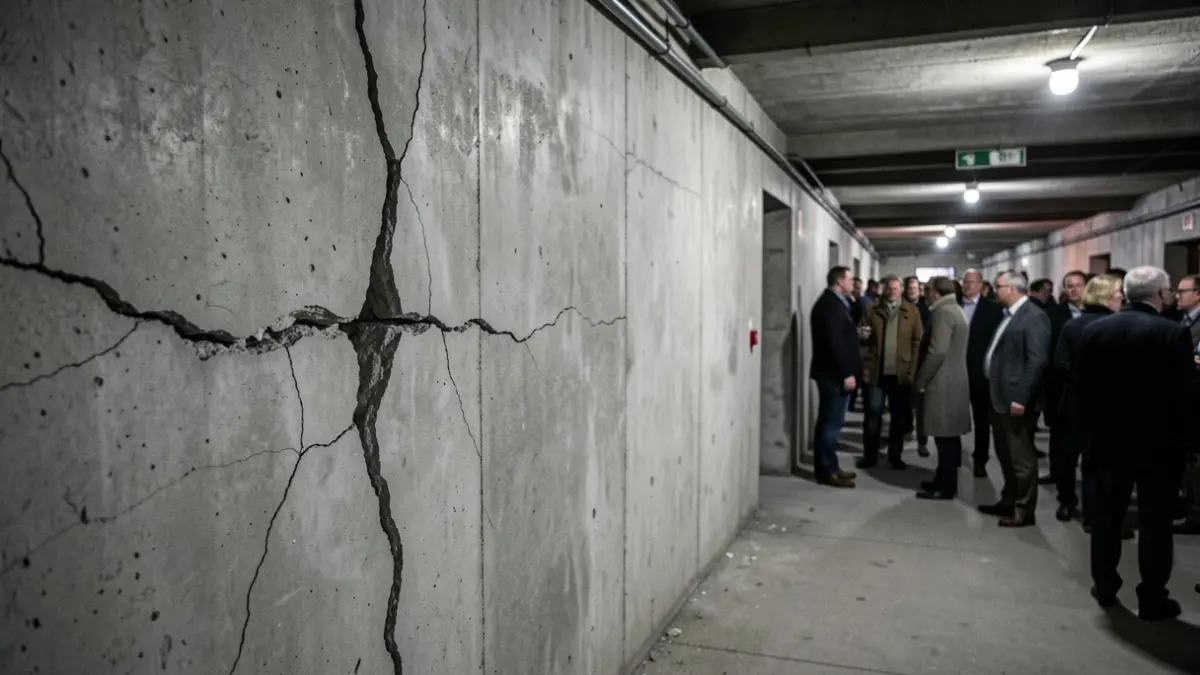
The situation of public works in Catalonia remains critical with the appearance of new structural fissures in the basement of Rubinstein street, 2. This property, along with three others (Rubinstein, 2 and 4, and Teodora Lamadrid, 3 and 5), were evacuated on July 7th following the collapse during the L9 works. Nearly 40% of those affected will not be able to return home until at least September.
Residents of Sant Gervasi de Cassoles, 54, are expected to return to their homes next week. The head of the Firefighters of the Barcelona City Council, Sebastià Massagué, acknowledged that these new fissures, although "small," have reversed the positive trend. The detection occurred Wednesday night and, for now, does not imply further evacuations or affect the return of residents from Sant Gervasi de Cassoles, 54.
According to the Director General of Mobility Infrastructure, Ramón Ramírez, a "cavity, much smaller than the initial one," has also been found, which is compatible with the current safety perimeter. The delegate of the Generalitat Government in Catalonia, Pilar Díaz, confirmed that economic aid requested by 48 residents and merchants will be paid next week as advances for extraordinary expenses.
Furthermore, about forty tenants have opted for the suspension of rent payments during August, and 16 merchants have applied for credit offered by the Institut Català de Finances. This information was provided at a press conference in Plaça de Frederic Soler. The L9 tunnel boring machine is currently stopped, and updates will be provided when activity resumes. The stoppage could further delay the line's completion, scheduled for 2032, with a current cost overrun of 252% compared to initial budgets.
This incident adds to other recent accidents in the city's infrastructure during July: the collapse of a crane in Vallbona-Montcada, a gas leak and explosion in Plaça de Sants that caused eight injuries, two serious, and a fire in the L1 catenary between El Clot and Glòries, which necessitated the evacuation of a train.