This substantial increase, affecting all primary and secondary education levels, is primarily attributed to the rise in vulnerable and newly arrived students, who now constitute 87% of those needing this support. Furthermore, within the same period, there has been a doubling in autism diagnoses and a 30% increase in learning-impacting disorders, such as attention deficit hyperactivity disorder or dyslexia.
The Department of Education acknowledges the complexity of the situation, with a growing number of students with special needs in each group. Currently, 14,700 professionals are dedicated to supporting these students, and the budget allocated to this area has grown by over 60% in five years, from 142 to 230 million euros.
“"We need more hands, as teachers say, and more multidisciplinary professional figures."
Education sector unions, amidst various mobilizations, have emphasized the need for greater investment in inclusive schooling. Although a recent agreement with some unions foresees an investment of 300 million euros for this purpose, others, such as USTEC (the majority union), consider this figure insufficient given the magnitude of the needs.
The department, for its part, values the signed agreement and announces a review of school complexity and the distribution of educational support staff, including integrators, social educators, and special education teachers. Early detection of learning difficulties is also planned to improve, expanding tests already conducted in first and third grade to fifth grade.
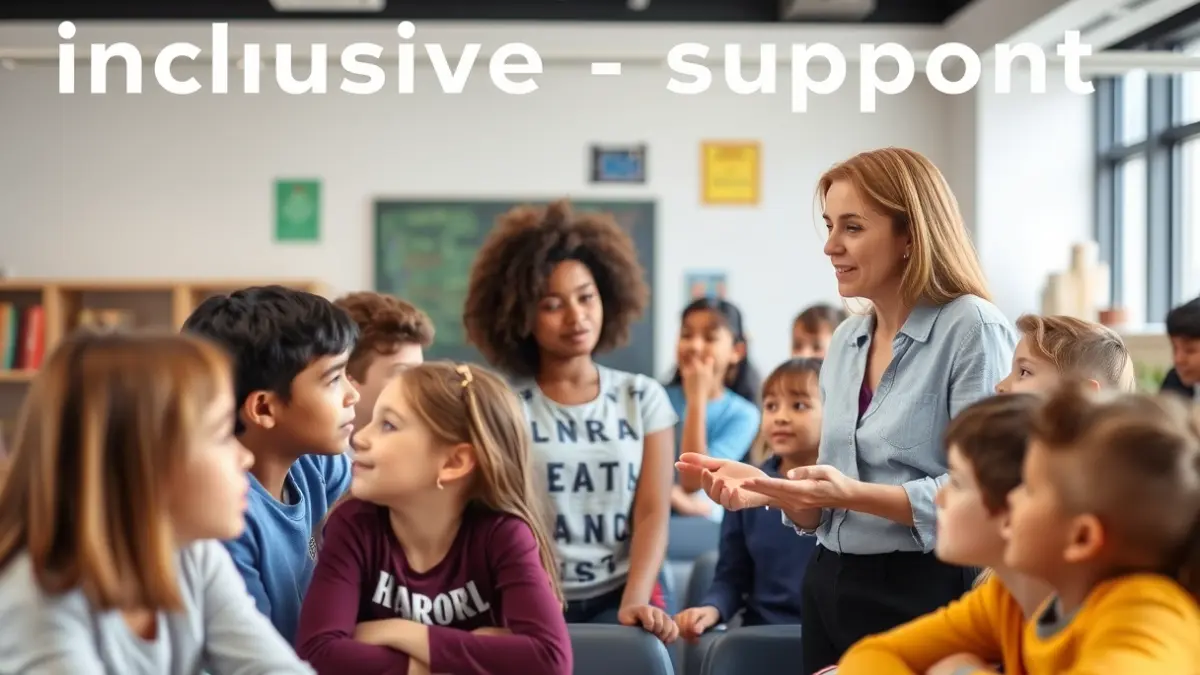
Additionally, practical training for teachers is being promoted to equip them to address diversity in the classroom. An initial training session involved 400 educators, and a second call in February attracted approximately 3,000 professionals, aiming for teachers to apply university theory and personalize learning.