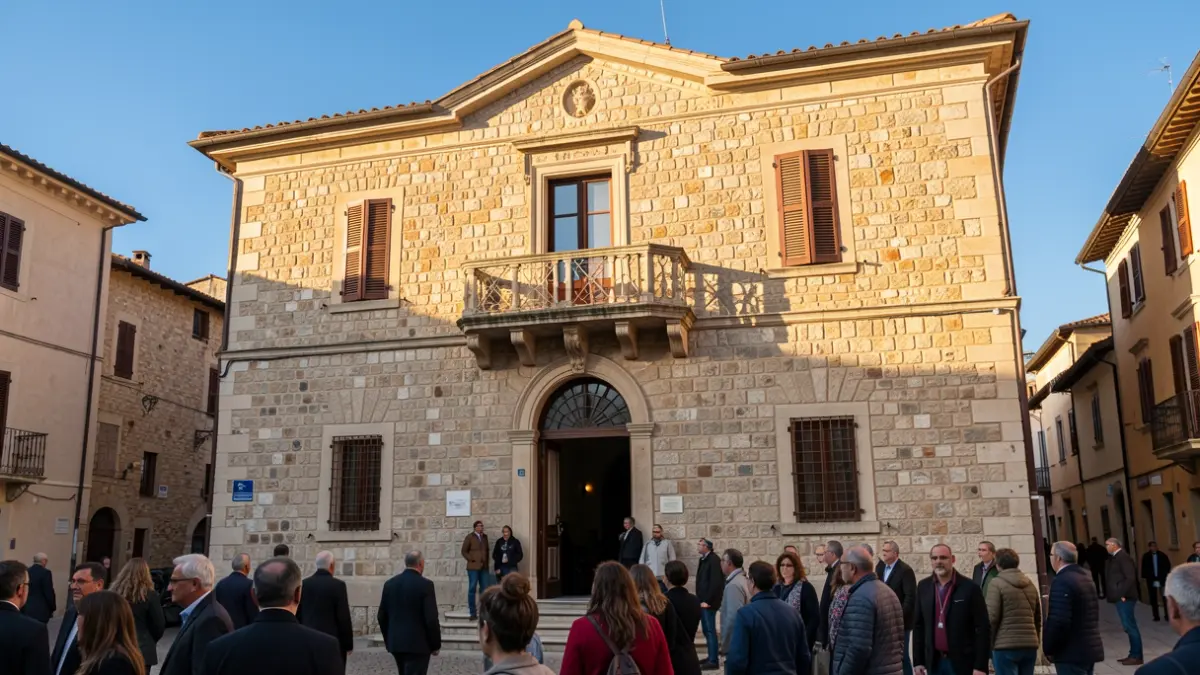
Catalan agrarian entities and the Government of Catalonia have demonstrated their unity against the European Commission's proposals for the 2028-2034 multiannual financial framework, which involve significant changes to the Common Agricultural Policy (CAP). The Minister of Agriculture, Òscar Ordeig, outlined the disagreements at an event held at the department's headquarters, expressing his opposition to the proposed "cuts, the elimination of the two pillars, and a recentralization of competences."
Leaders from the country's main agrarian organizations have supported Ordeig, voicing concerns about the survival of many Catalan farms. Joan Carles Massot, national president of the Young Farmers and Ranchers of Catalonia (JARC), criticized what he sees as a recurring pattern in European budgets, where initial messages are distorted during negotiations. According to Massot, Brussels is losing focus on European food sovereignty, a fundamental aspect of the CAP.
Similarly, the national coordinator of Unió de Pagesos, Raquel Serrat, lamented that the reduction in CAP resources is accompanied by stricter environmental and social demands. Serrat warned that without an adequate budget, family farming will be the most affected. Ramon Sarroca, president of the Federation of Agrarian Cooperatives of Catalonia (FCAC), pointed out that the declining political influence of agriculture in Brussels negotiations is a cause of these cuts.
Minister Ordeig defended the CAP's two-pillar model, which includes support for agricultural income and rural development, as crucial to avoid diluting the program's objectives. Beyond resource allocation, the parties have criticized a potential "recentralization" of agrarian decisions, arguing that the proximity of territorial administrations to the productive fabric is essential.
Ordeig emphasized the importance of maintaining autonomy, flexibility, and a regionalization criterion in agricultural policies, as needs vary across the territory. Serrat agreed, warning that centralized decisions might not adequately cover the needs of Catalan farmers.
Agrarian organizations also highlighted CAP resources as a key buffer against the risks posed by the Mercosur trade agreement. Serrat recalled the "disadvantageous conditions" Catalan farmers face compared to certain international food segments, while Massot reiterated the organizations' "frontal opposition" to opening trade borders and stressed the CAP's decisive role in compensating farms affected by new food imports.