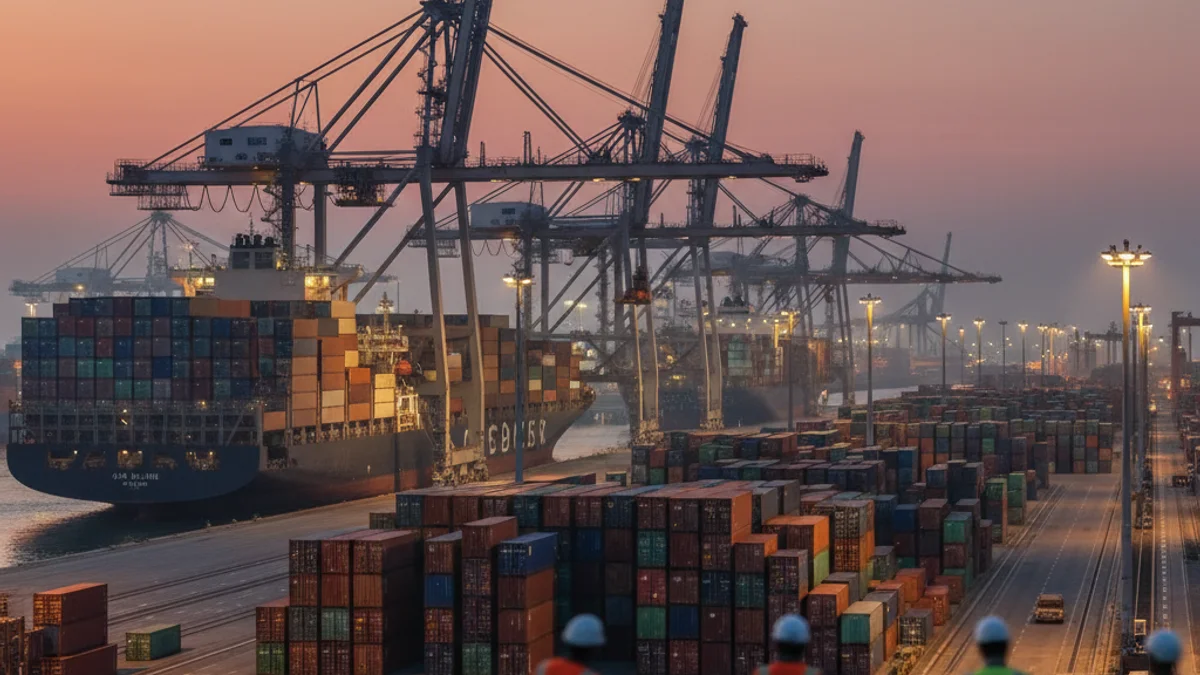
The Barcelona infrastructure achieved this historic figure but recorded a 6% decrease in its net profit, which stood at 47 million euros. Port authorities, including President José Alberto Carbonell, attributed this reduction to the 10 million euro investment dedicated to the new BIT coffee terminal, a joint venture between SGS and Masiques.
Without this additional expenditure, net profit would have amounted to 57 million euros, 14% more than the previous year. Financially, the Port's debt was reduced by 18 million euros, closing the year at 88 million euros.
Regarding goods traffic, the total remained stable at 69.5 million tons. Although container traffic (TEUs) fell by 4.2%, Director General Àlex Garcia highlighted the increase in “higher added value” containers (imports and exports), which grew by 4% and 3% respectively. He also noted the 21.7% increase in bulk liquids traffic, driven by hydrocarbons and liquefied natural gas.
“"The railway chaos of recent weeks has not had a particularly relevant economic impact on exports, although it warns of the serious reputational damage it entails for the country."
Regarding the mobility crisis caused by the railway accident in Gelida on January 20, Carbonell acknowledged that the rail chaos has not had a significant economic impact on exports, as rail transport accounts for only 5% of goods traffic. However, he demanded an urgent “contingency plan” to prevent a recurrence of a situation that damages Catalonia's image.
Finally, Carbonell emphasized the ongoing investment cycle, highlighting seven projects tendered in 2025 worth a total of 332.5 million euros. For 2026, nine more projects are planned, with an investment close to 339 million euros, focusing on infrastructure and road accessibility.