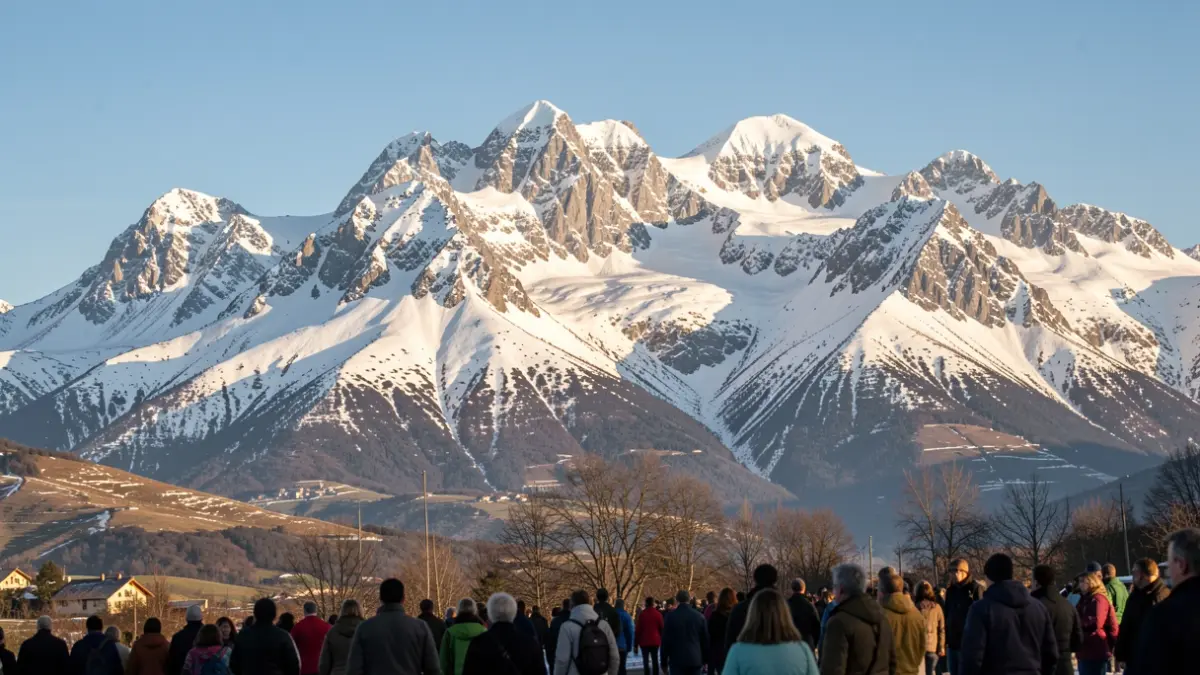
Snow reserves in the Pyrenees have experienced a significant decline, falling below the usual levels for this time of year. The river basins of the Garona, Ribagorçana, Pallaresa, Segre, and Valira have seen their water volume from accumulated snow reduced, mainly due to the extreme temperatures recorded during April. This phenomenon, known as sublimation, has accelerated the loss of snow reserves, according to data from the Ebro Hydrographic Confederation (CHE).
In mid-February, snow accumulation had reached exceptional figures, exceeding 1,000 cubic hectometers, a volume not seen in decades. In some parts of the Pyrenees, snow depths of up to 6 meters were recorded, setting historical records. This abundance of snow allowed the Segre reservoirs to reach over 95% of their capacity and the CHE's managed reservoirs to stand at 90.5%.
April was the warmest on record in Spain, according to Copernicus data, with temperatures exceeding 30 degrees Celsius in several areas, including the Ebro valley and the Lleida plain. Although temperatures in the Pyrenees were not as extreme, intense solar radiation and above-average temperatures led to accelerated melting and increased sublimation at high altitudes.
This situation contrasts with the previous year, as most basins currently have fewer snow reserves, with the exception of the Valira and Segre. Current reserves are around 189 cubic hectometers, a figure close to or even below the seasonal average. Experts point out that, although there is still snow in the mountains, such a hot April has prevented the maintenance of historical snow figures for May.
In recent days, temperatures in the Pyrenees have normalized, falling below the average. This is helping to slow down the accelerated melting rate. Snowfall is expected at high altitudes in the coming days, even from 1,400 meters. Regarding river flows, the Segre has not exceeded 20 m³/s at its source, while the Noguera Ribagorçana has reached 22 m³/s and the Noguera Pallaresa has surpassed 54 m³/s.