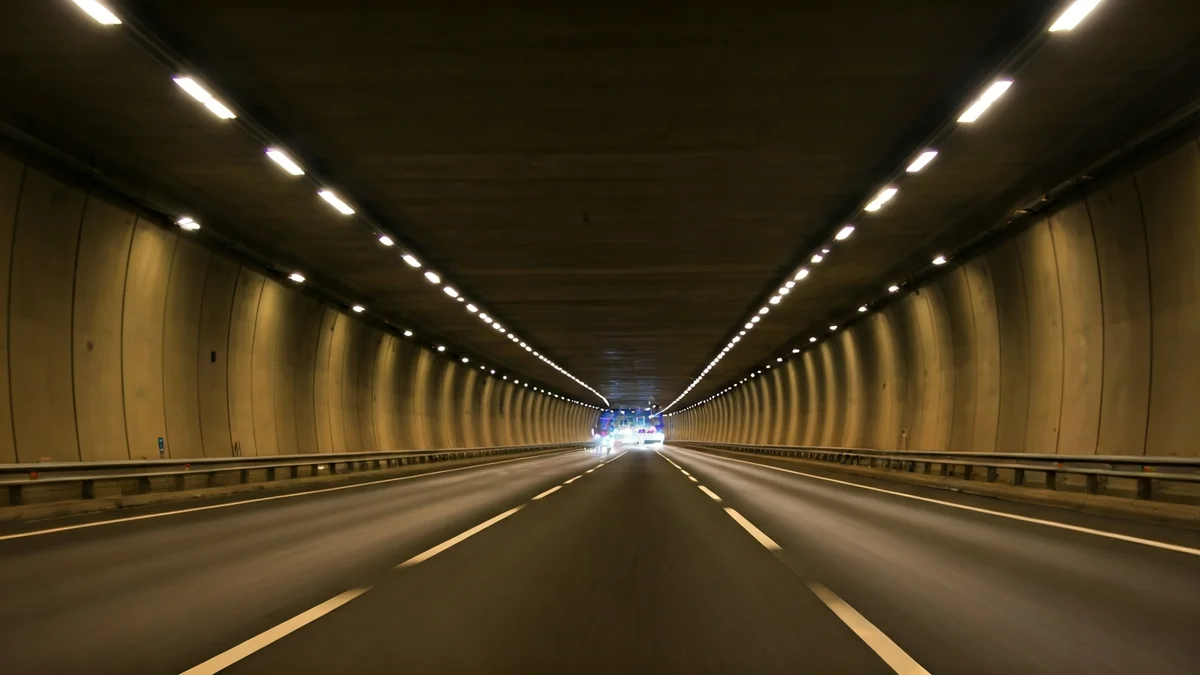
The reopening of the sea-bound lane, which has been closed since March of last year, will commence progressively from six in the evening. Initially, only one lane will be operational from the Ronda de Dalt to the tunnel entrance due to the removal of machinery and fences, temporarily affecting the V21 bus service. Full normality will be restored the following morning.
From now on, the tunnel will enter a phase of daily normality combined with nightly closures. These closures will take place from 10:30 PM to 5:30 AM, Sunday through Thursday, always respecting public transport schedules. The objective is to finalize pending adjustments, such as the installation of the public address system, and the infrastructure is expected to regain full normality by early summer.
“"It is a highly anticipated project. It broke the isolation. The 1,300 meters of tunnel needed to be updated. Now the tunnel is much safer than it was before."
The works, which began in November 2024, involved an investment of nearly 21 million euros and focused on adapting the infrastructure to new safety regulations. Both structural elements and technological systems have been improved. This renovation is part of the Pla Endreça by the Barcelona City Council, which aims to enhance public spaces and safety in the city.
The Rovira Tunnel, inaugurated in 1987, is a vital connection between the neighborhoods of Baix Guinardó and El Carmel. Although the uphill lane has not been closed at any point, the recovery of the sea-bound direction is crucial for the Horta-Guinardó district, as its importance 'is not perceived until it is interrupted,' as highlighted by the mayor. With the completion of this work, other long-demanded projects, such as the renovation of the Rambla del Carmel, can be promoted.