
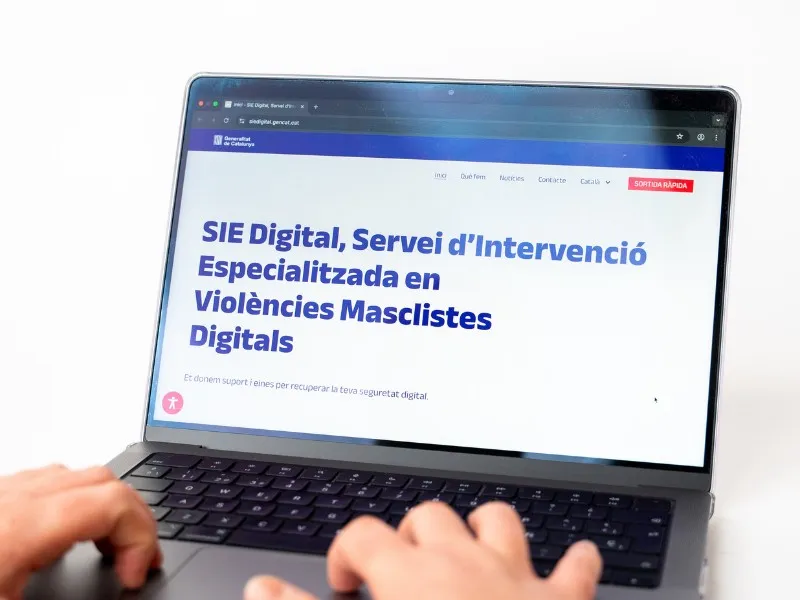
According to information from the Generalitat de Catalunya, data collected by the service confirms that digital gender-based violence has a real impact on women's safety, emotional well-being and autonomy. During this first year, the SIE Digital has attended a total of 515 people linked to the 279 cases, with an average of 8.1 interventions per file.
The figures dispel the idea that digital aggression primarily comes from strangers. 60% of cases occur within the framework of a sexual-affective, partner or ex-partner relationship. This reality facilitates situations of control and digital surveillance thanks to shared access during cohabitation, such as passwords, locations or linked devices. The service also attends to cases in the family, work or community sphere, as well as aggression from anonymous profiles or organised groups.
Regarding the types of violence detected, cyberstalking accounts for 26.9% of cases, followed by surveillance and tracking (22.6%) and unauthorised access to accounts or devices (17.6%). Violations of privacy, data manipulation, threats and non-consensual disclosure of intimate content are also registered. The data show that 60% of the women attended are between 30 and 50 years old, although there is a significant presence of women over 50.
The service's approach combines technological, legal and psychological support. In two out of three cases, women have needed more than one type of intervention. Technological attendances account for 42% of the total, followed by legal (32%) and psychological (13.8%) support. The service helps detect unauthorised access, strengthen digital security, remove content and preserve evidence. Furthermore, it is evident how artificial intelligence can facilitate new forms of control, such as the creation of fake sexual content.
In the broader context of the fight against gender-based violence, the Specialised Intervention Services (SIE) have attended 13,074 people between January and September 2026, including 11,315 women, 378 adolescents and 1,035 children. The telephone line 900 900 120 has registered 12,714 attendances in the same period. Meanwhile, the Medical Emergencies System (SEM) has attended 562 people with suspected sexual violence between January and October 2026.