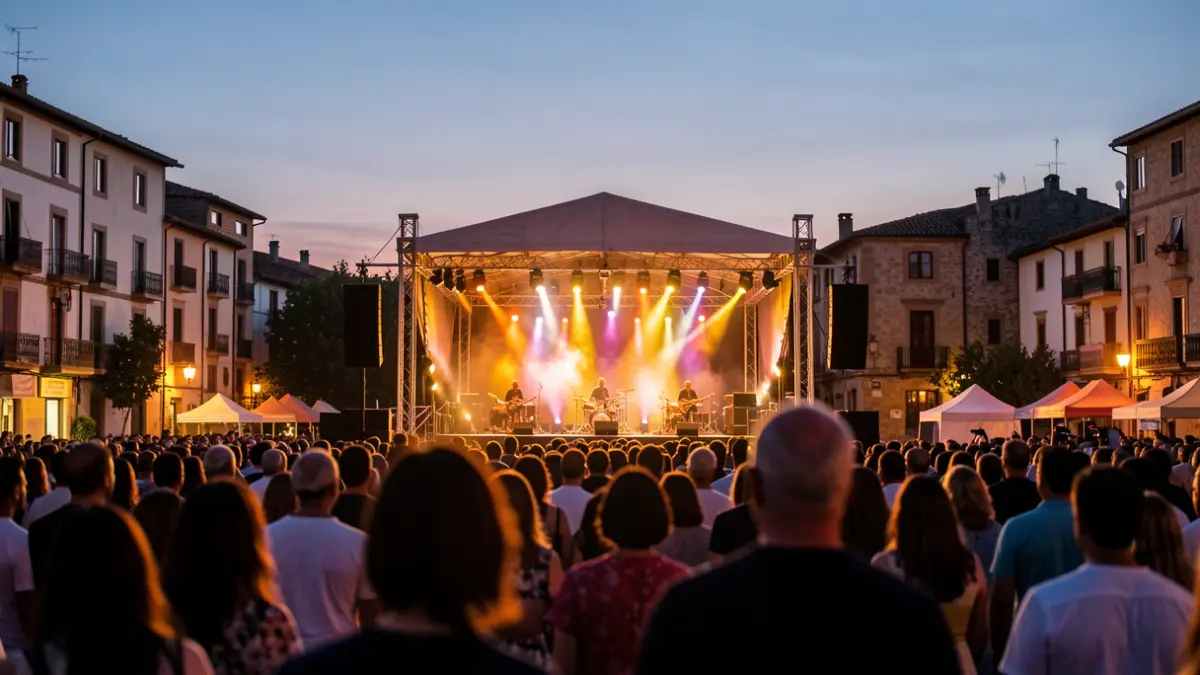
As warmer weather arrives, Barcelona province becomes a large open-air stage, aiming to bring culture beyond the capital's limits. From late June to late August, approximately fifty festivals will animate towns and cities with a diverse program including music, theater, circus, poetry, visual arts, and street performances. These events not only attract thousands of spectators but also boost cultural and economic activity in municipalities far from mainstream cultural trends.
According to Pau González, delegate president of the Culture area at the Diputació de Barcelona (DIBA), festivals serve as "spaces for meeting, participation, and community building that help make culture an effective right." The institution supports these initiatives with 1.5 million euros, valuing not only artistic quality but also territorial roots, participation, cultural access, inclusion, sustainability, and openness to emerging creation.
Vilanova i la Geltrú stands out as a musical hub with four festivals: 'Vida' (July 2-4), with international scope; 'Tingladu' (July 23-25), focusing on music from the Catalan Countries; 'Nowa Reggae' (July 17-18), dedicated to its genre; and the 'Festival Internacional de Música Popular i Tradicional' (July 9-12), with over 40 years of history. Other municipalities like Calella, Canet de Mar, Moià, and Sant Hipòlit de Voltregà will also host significant cultural events.
“"More than attracting tourism, we create a festival designed for the community."
Music dominates the summer calendar with events like 'Vida', featuring artists such as Fatboy Slim, Amaia, and Guitarricadelafuente. 'CanetRock' in Canet de Mar is a meeting point for Catalan music, with sold-out tickets and bands like Figa Flawas and The Tyets. The 'Nits d’Estiu de Calella' (NEC) festival, in its fifteenth edition, offers about twenty shows at the Calella Lighthouse and Parc Dalmau, with artists like Kiko Veneno and Judit Neddermann.
The 'Nosaltres' festival in Mataró, running from July 7 to August 20, combines concerts, humor, and family activities with local artists. Its director, Eloi Aymerich, highlights that the festival was created to fill the cultural gap in August and that institutional support is crucial for its professionalization.
The offerings are complemented by festivals that blend heritage and landscape, such as the 'Festival Música a les Vinyes' in Subirats, 'Desfolca't' in Calaf, and the 'Festival Francesc Viñas' in Moià. Also noteworthy are 'Cantilafont' in Lluçanès, 'Calima' in Vilafranca del Penedès, and the 'Festival de Música Antiga dels Pirineus', which spans around 40 municipalities. Events like 'Llegendes de Catalunya' in Sant Martí de Tous or 'Poesia i +' expand the experimental side.
Performing arts are also featured with 'TIFA' in Borredà (July 17-19) and the 'Test' festival in Artés, Avinyó, and Gironella (July 3-4 and 10). In Osona, 'ARTOT' in Sant Hipòlit de Voltregà (July 1-17) and 'Clec Festival' in Muntanyola (July 10-11) join options like 'Al Carrer' in Viladecans (July 3-5) and 'Ple de Riure' in El Masnou (July 14-18).
The late summer season includes established events like the 'Festival Terramar de Sitges' (July 31 - August 12), featuring artists such as Sílvia Pérez Cruz and Sergio Dalma. The 'Mar d’Estiu' in Santa Susanna (July 31 - August 17) presents names like Loquillo and Miguel Ríos. For more intimate settings, 'Nits als Pins de Vilada' and 'Embosca’t' in Argençola offer concerts in natural surroundings.
The summer cultural cycle will conclude with the tenth edition of 'GiraCirc' in Collsuspina (August 28-29), gathering contemporary circus companies, marking the end of a calendar that solidifies Barcelona province as a key summer cultural reference.