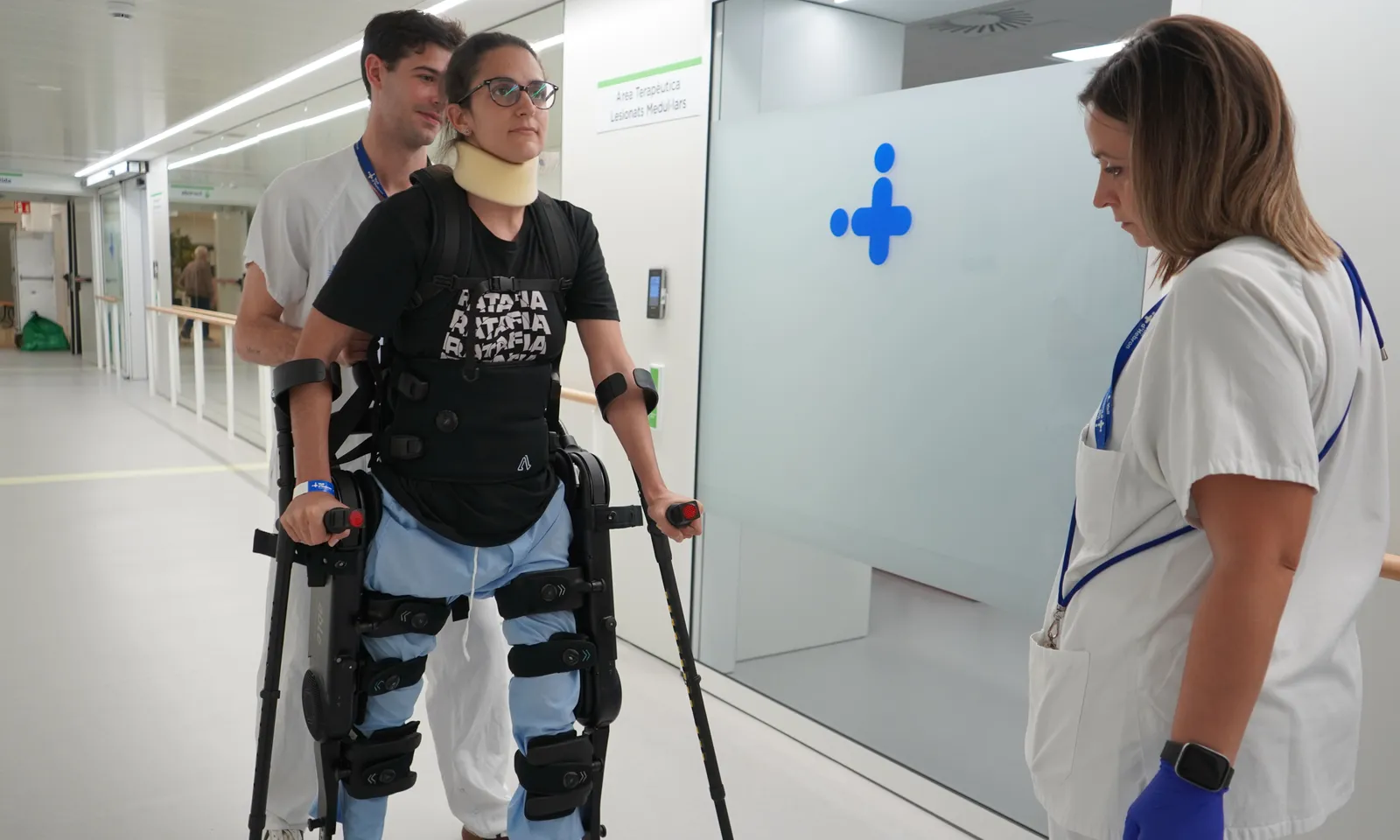
The study, which also involves the National Hospital for Paraplegics in Toledo and the University of Lleida, is the first to explore the potential of this technology in the initial phases of injury, up to six months after the accident. This therapy aims to offer more personalized and intensive treatment, overcoming the limitations of current devices, such as their high cost and weight.
The ABLE device, designed by the Catalan company ABLE Human Motion, is notable for being lighter, allowing for quick fitting, and incorporating adaptive software. "The objective of the study is to evaluate the clinical and biomechanical benefits of using the exoskeleton in the acute and subacute phase of traumatic spinal cord injury, as well as the efficiency of exoskeleton treatment in this rehabilitation phase," explains Dr. Lluïsa Montesinos, head of the Spinal Cord Injury Unit at the Physical Medicine and Rehabilitation Service of Vall d'Hebron University Hospital and head of the Physical Medicine and Rehabilitation group at the Vall d’Hebron Research Institute (VHIR).
Currently, the study is in the patient recruitment phase, with 5 participants at Vall d'Hebron and 10 in Toledo. The University of Lleida will be responsible for analyzing the economic impact of robotic therapy on the National Health System. The ultimate goal is to improve patients' quality of life in the medium and long term through optimal rehabilitation.
Vall d'Hebron University Hospital already uses three exoskeletons in various rehabilitation areas, reaffirming its commitment to incorporating new technologies for patient treatment.