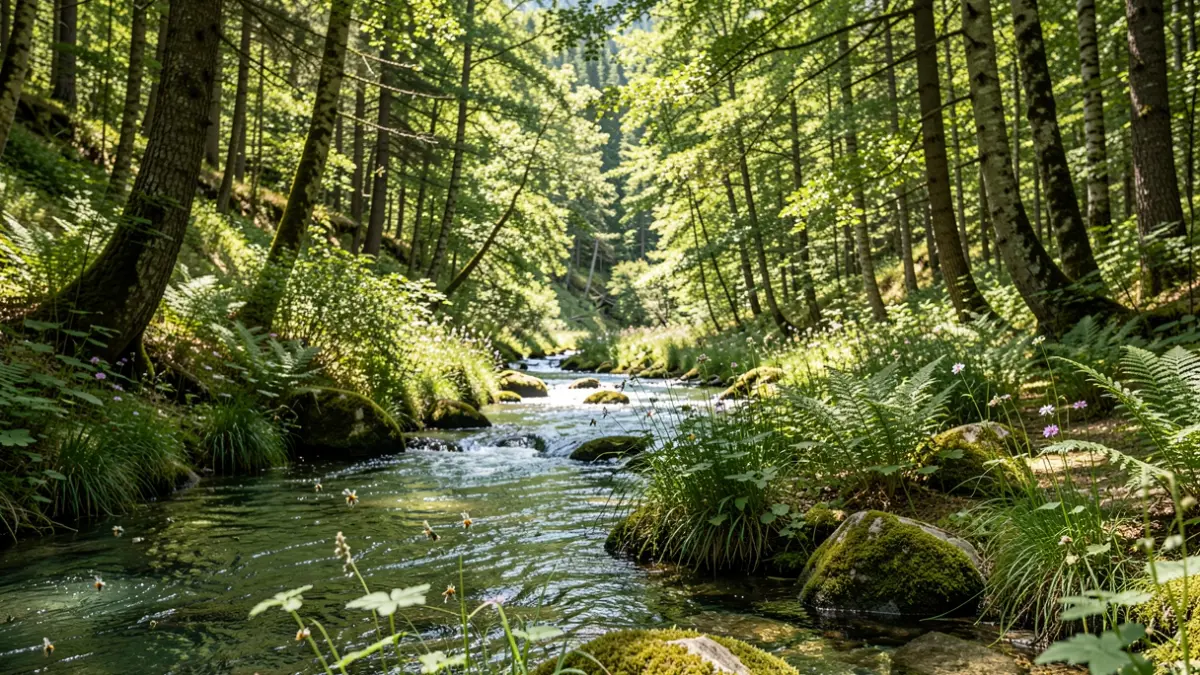
Last Saturday, June 13th, the second bioblitz took place in Cerdanya, an initiative focused on the intensive sampling of biological species within a defined natural area. This year, the event was held at the marked riparian forest circuit in Ger, near Molí de Ger.
Organized by the entities Cerdanya en Acció pel Clima, the Grup de Recerca de Cerdanya, and the Grup de Naturalistes de Cerdanya, the bioblitz aims to document local biodiversity. The previous year, the chosen area was the Gallissà ponds in Bellver de Cerdanya, known for its biological richness.
A team of experts participated in the sampling: David Potrony and Eva Sanchis covered birds, Pep Monterde handled butterflies and dragonflies, and Enric Quílez focused on vegetation (trees, shrubs, and flowers). The Grup de Recerca de Cerdanya (GRC) will soon publish the complete list of identified species on its website.
As a notable finding, several specimens of Heracleum sp., possibly Heracleum mantegazzianum (Giant Hogweed), a plant known for its dangerous touch, were located. Forest rangers were alerted, as campaigns are underway to eradicate this invasive species.
Regarding butterflies and dragonflies, a decrease was observed compared to previous years. Despite a record proliferation in mid-spring, subsequent heatwaves appear to have negatively impacted their populations.
For birds, a citizen science mobile application was used to accurately identify their songs. The vegetation found was considered typical for a riparian forest, including specimens of oak (Quercus sp.) and some walnut trees (Juglans regia).