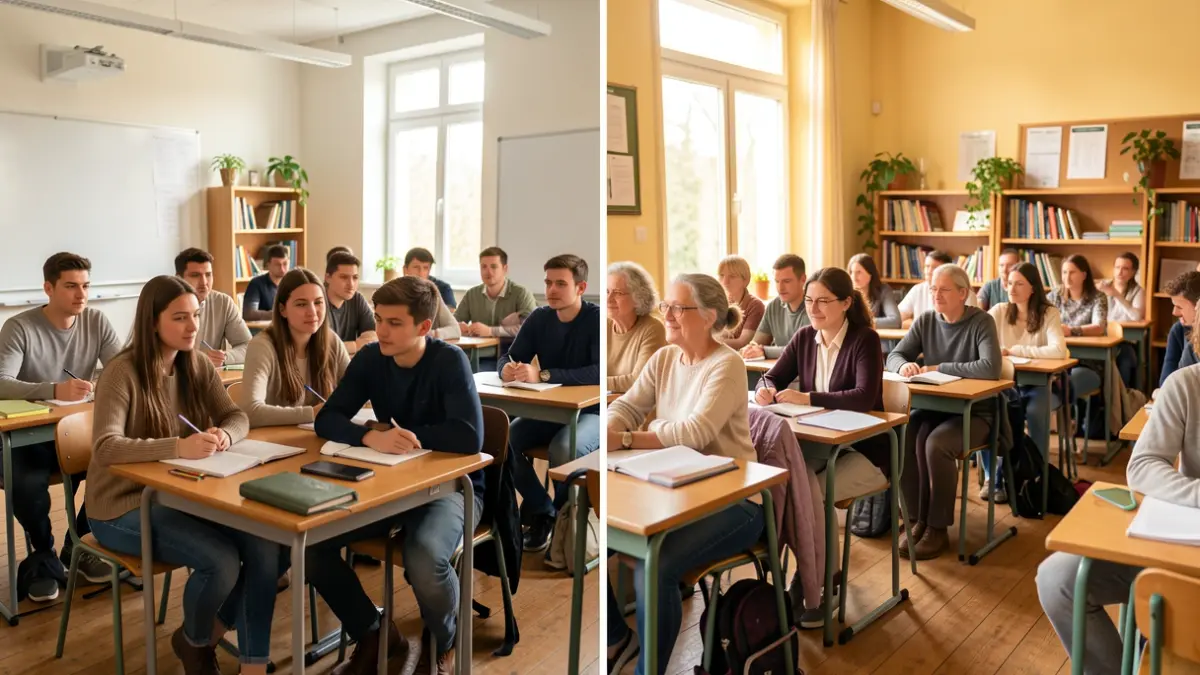
According to data from the Institut d’Estadística de Catalunya (Idescat), 30.4% of the population aged 15 and over in Conca de Barberà holds higher education qualifications, a figure lower than the Catalan average of 36.7%. However, 39.9% of young people aged 18 to 24 are pursuing higher education, a percentage that exceeds the 37.9% recorded in Catalonia, suggesting a positive trend for the region's educational future.
The adult educational profile in the region shows a concentration in intermediate levels. The first stage of secondary education accounts for 33% of the population, nearly six points above the Catalan average. The second stage of secondary education stands at 23.3%, in line with the country as a whole. The main difference with Catalonia lies in access to higher education, an area where Conca de Barberà still has room for improvement.
In the regional ranking, Conca de Barberà occupies a low-intermediate position, ranking 28th out of 43 comarques and Aran for adults with higher education. It surpasses territories like Alt Camp, Baix Penedès, or Terra Alta, but remains far from leaders such as Barcelonès, Pallars Sobirà, or Garraf.
Within the region itself, significant municipal variations are observed. Savallà del Comtat leads the ranking with 55.3% of adults holding higher education qualifications, followed by Vallfogona de Riucorb (43.8%) and Llorac (41.9%). In contrast, Vilaverd records the lowest percentage (24.2%), while Montblanc, the most populous municipality, is slightly below the regional average (29.9%). Municipalities like Santa Coloma de Queralt (31.9%) and Vimbodí i Poblet (30.2%) present more balanced profiles.
The most positive data for the region is the high proportion of young people pursuing higher education. This trend places Conca de Barberà in the 9th position in the Catalan ranking for students aged 18 to 24, ahead of regions like Barcelonès or Tarragonès.
Another relevant aspect is the gender gap: 49% of young women pursue higher education, compared to 32% of young men, exceeding the Catalan female average and highlighting greater educational dynamism among young women in the region.