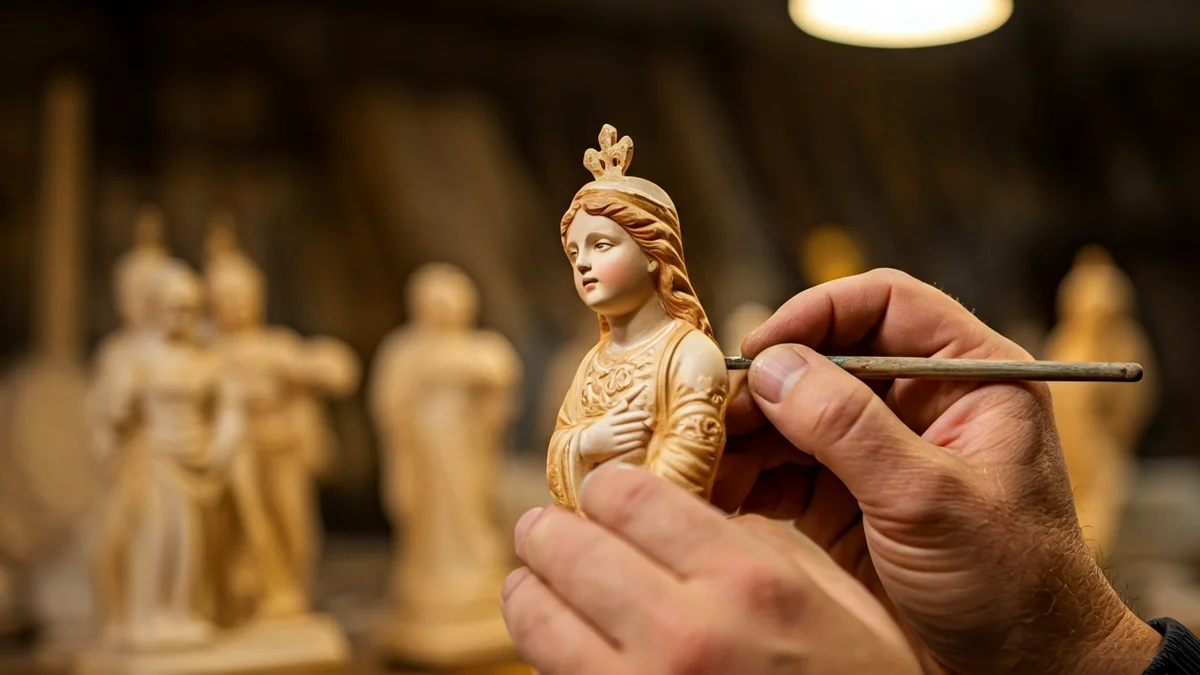
This artisanal industry, which particularly flourished during the post-war period, has seen most of its workshops disappear. Today, El Arte Cristiano, founded in 1880, remains a benchmark in the creation and export of religious carvings worldwide.
About 30% of its production is primarily destined for South American countries, but it also reaches markets such as the United States and Italy. In Spain, many Holy Week processions display figures bearing the Olot seal, such as the triumphal entry of Jesus into Jerusalem delivered recently in Noblejas (Toledo).
The manufacturing process for a carving can take about three months and involves the work of various artisans, including sculptors, retouchers, molders, and painters. The company, which currently has 15 employees, once employed over a hundred at its peak. Sector crises, such as wars, Asian competition, crises of faith and economics, difficulty in finding artisans, and the COVID-19 pandemic, have all impacted the industry.
“"After the impact of COVID, sales have stabilized."
Pep Oliveras, the company's manager, explains that his great-grandfather Marià Vayreda, author of the novel La punyalada, founded the company along with his brother Joaquim and the painter Josep Berga Boix. The latter was the director of the Olot Public School of Drawing, and sacred figure companies offered employment opportunities to many of its students during the religious effervescence period of the late 19th century.
Recently, Oliveras has observed an increase in requests for child figures, especially for Andalusia, where there is great devotion, as well as in image restoration work. This trend reflects an interest in maintaining religious heritage.
Churches want to look beautiful, and we have quite a few demands.
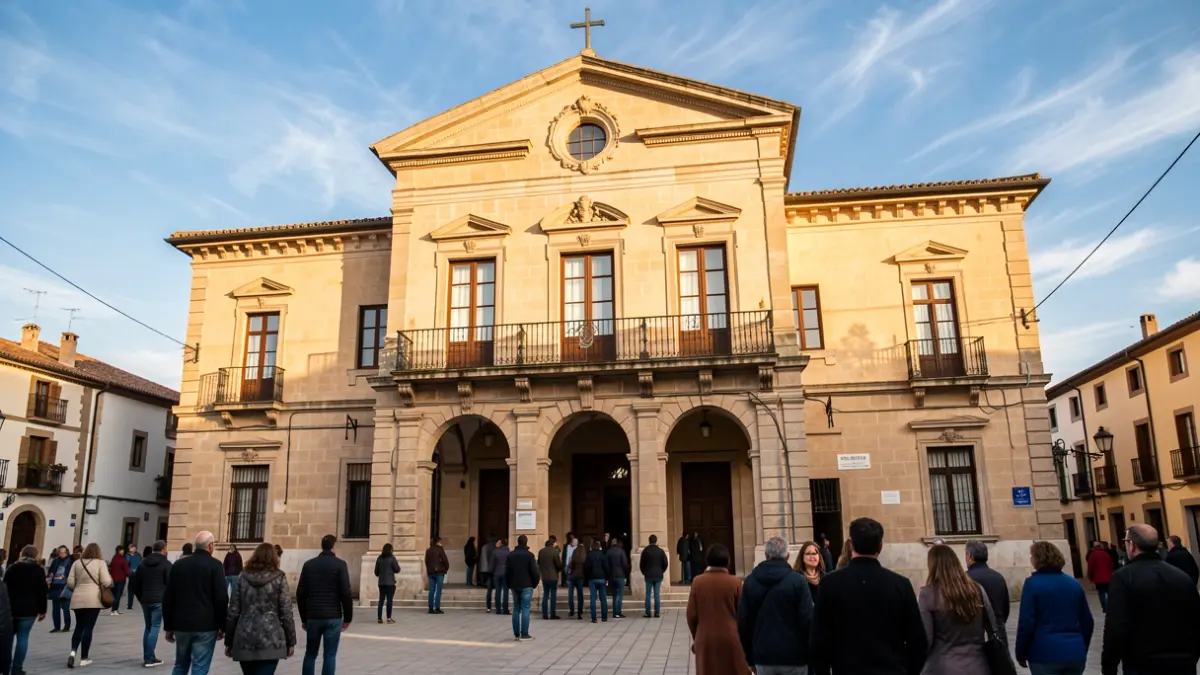
To promote this tradition, the Sacred Triangle of Olot offers a tourist and cultural proposal that includes the Museu dels Sants, inaugurated in 2007, the Basilica of Sant Esteve, and the Sanctuary of El Tura. These visits, conducted upon request, attract individuals, groups, brotherhoods, and parishes, highlighting the religious and spiritual heritage of the city.
The Councillor for Business, Tourism, and City Promotion, Gemma Canalias, emphasizes the success of these visits, particularly among families, students, and tourist groups from Spanish, French, and South American cities. This initiative not only reinforces religious identity through heritage but also contributes to tourism desesonalization and benefits the restoration and hospitality sectors in Garrotxa.