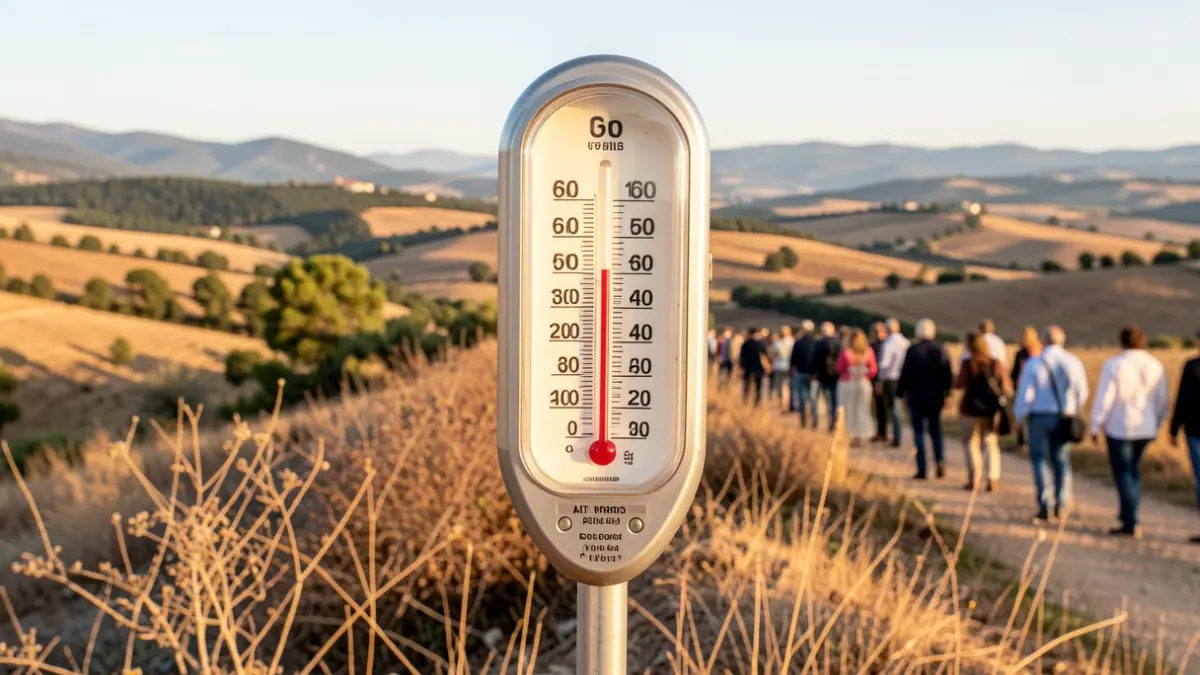
The Copernicus climate program has confirmed that 2025 was the third warmest year on record, with global temperatures 1.47 °C above pre-industrial levels. This figure, only 0.13 °C below 2024, solidifies the last three years (2023-2025) as the first period of 3 consecutive years to exceed an average of 1.5 °C. The report attributes this to the accumulation of greenhouse gases and exceptionally high ocean temperatures.
This global warming has resulted in extreme phenomena across various regions, including heatwaves, storms, and wildfires. According to data from the Copernicus Atmosphere Monitoring Service (CAMS), half of the Earth's land surface experienced more days than normal with intense heat stress.
Specifically, the Alt Empordà region recorded 139 days of moderate heat stress (above 26 °C), 61 days of intense heat stress (above 32 °C), and 14 days of very intense heat stress (above 38 °C) during 2025. Additionally, the region experienced 56 tropical nights (between 20 and 24.9 °C) and 12 torrid nights. On the night of June 29th, a minimum temperature of 29.8 °C was reached, nearing the threshold of an extremely hot night.
These figures represent an increase compared to 2024, which saw 55 days of intense stress and 49 tropical nights, and 2023, with 56 days of intense stress and 64 tropical nights. Heat stress occurs when the body struggles to regulate its temperature due to prolonged exposure to high temperatures, potentially causing symptoms ranging from dizziness to heatstroke.
Claudia Di Napoli, a scientist at the European Centre for Medium-Range Weather Forecasts (ECMWF), highlights the direct link between heat and health, noting an increase in deaths and heart attacks following heatwaves, particularly among the elderly. Tropical nights, which prevent the body from recovering, also exacerbate the harmful effects of high temperatures.