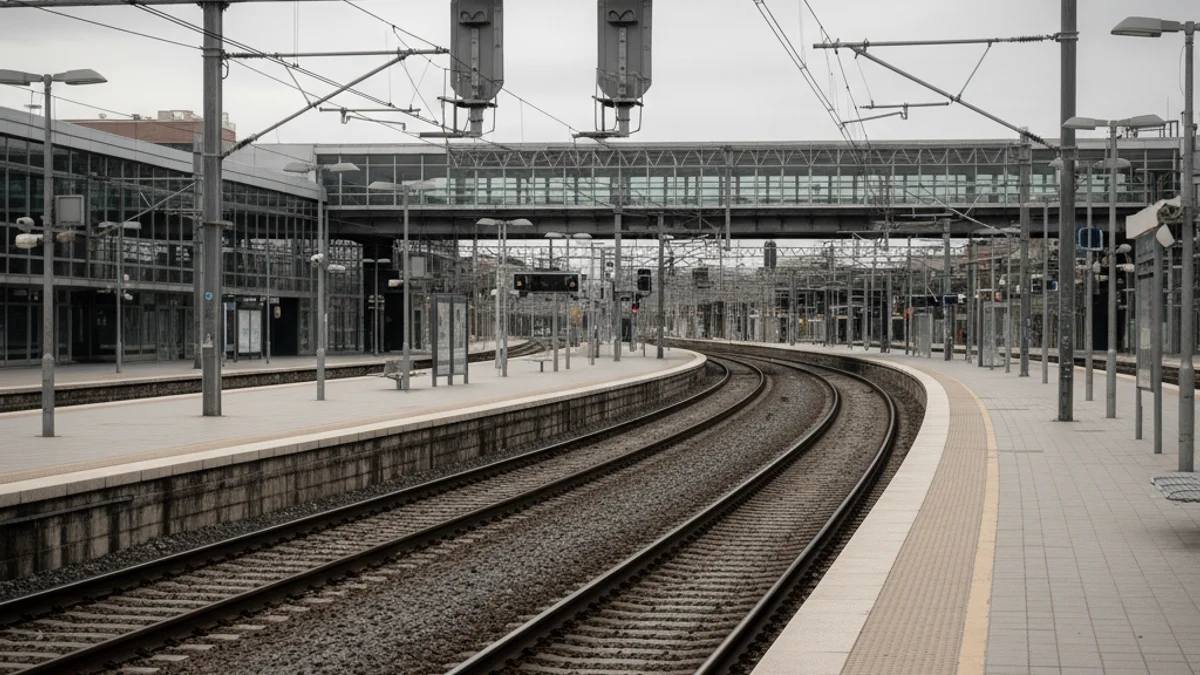
The poor functioning of the Rodalies network, which affects half a million Catalans daily, has become the greatest risk premium for the stability of the Executive. Following the Gelida accident and service interruptions, the Government admitted that previous measures are insufficient and that more contingency plans are required.
“"We are affected by a chain of unexpected events, starting with the scare involving the president. The watchword has been to show our face at all times to confront a situation we describe as unpleasant."
Crisis management has fallen to the Minister of the Presidency, Albert Dalmau, and the Minister of Territory, Housing, and Ecological Transition, Sílvia Paneque. Although they initially avoided direct confrontation with Adif and Renfe, the Generalitat has increased its tone due to contradictory messages regarding service restoration.
The conflict is exacerbated by the latent unrest among Renfe train drivers, who demand safety guarantees and who, according to sources from Palau, carried out a "covert strike" after the Gelida accident. The Executive aims to deactivate the three-day strike called for February once normal service is restored.
Given the network's vulnerability, the Government has confirmed the need for more tools to improve infrastructure. In addition to reviewing tracks and catenaries, plans are now being added for the supervision of slopes, retaining walls, and drainage systems, acknowledging that the network is more susceptible to damage during storms. The goal is to expedite the transfer, starting with the R1 line.