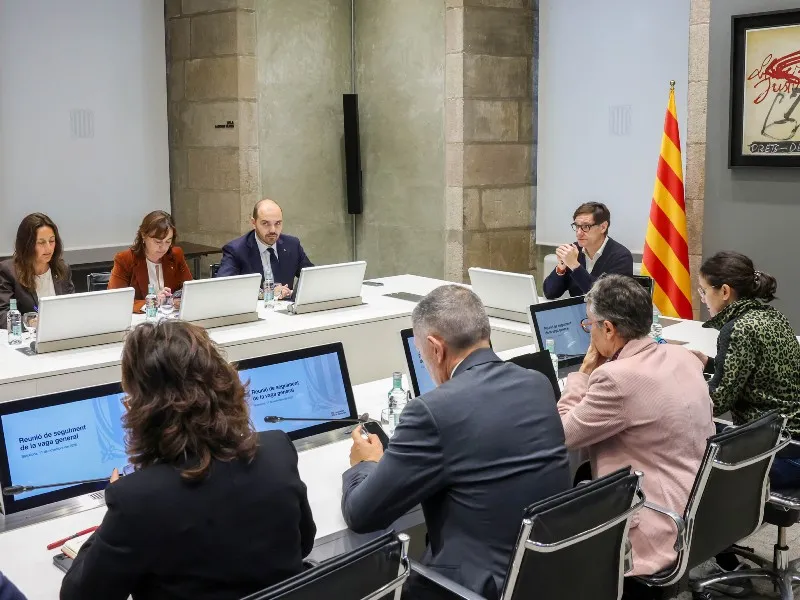
The strike called in Catalonia has seen mixed participation, with particular attention paid to mobility, essential public services, and public safety. Over 50 road incidents have been reported across the territory, with significant disruptions on major routes such as the AP-7, A-2, and C-58, as well as access roads to ports and industrial estates. There was a notable reduction in departures and arrivals in the Barcelona metropolitan area.
Regarding public transport, minimum services were generally met. Ferrocarrils de la Generalitat de Catalunya, interurban buses, Barcelona metro, and buses operated as scheduled, although Rodalies experienced isolated incidents with 78% compliance with minimum services. There were temporary difficulties at the entrances to Barcelona-Sants station.
In terms of security, the Mossos d'Esquadra deployed a specific operation. Road blockades and tire burning were observed in some areas. One person has been arrested for public order disturbances in Barcelona, and six officers received treatment for minor injuries during an intervention on the B-23 in Molins de Rei. The 112 emergency line handled 494 incidents related to the strike.
In the healthcare sector, essential services are functioning normally, with a 6.9% participation rate among professionals in SISCAT centers. The impact on primary care centers varies. The Emergency Medical System (SEM) attended to two individuals who were run over by picket lines in Tarragona and Reus.
In education, over 19,000 teachers went on strike (21.9% of staff), and about twenty educational centers reported access issues. University student participation in the strike exceeded 80%, while teaching and research staff (PDI) and technical, management, and administrative staff (PTGAS) showed lower percentages. Electricity consumption decreased by approximately 15%.