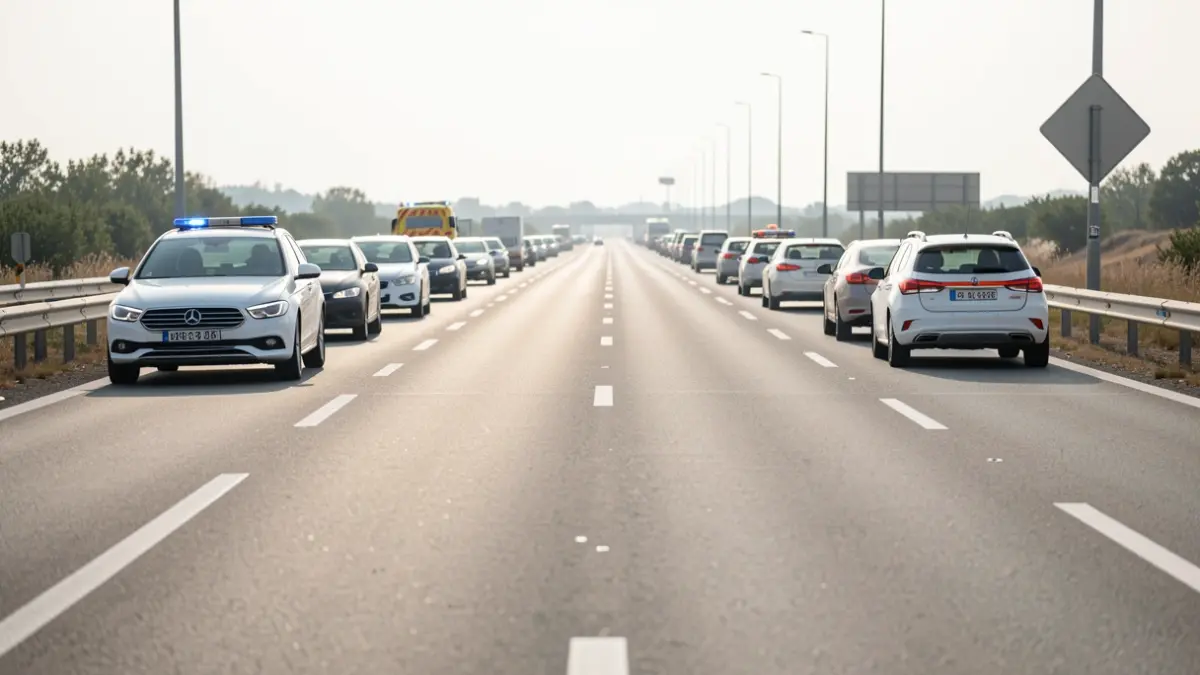
This measure, included in Royal Decree 518/2026, dated June 24th, primarily aims to ensure that emergency vehicles such as ambulances, fire trucks, and police can quickly access response areas, avoiding delays that could be critical in emergency situations.
Previously, creating a space for priority vehicles was a spontaneous action by drivers. With the new regulation, this behavior becomes a legal obligation, seeking to standardize and enhance its effectiveness.
According to Francisco de las Alas-Pumariño, head of the DGT's Regulatory Unit, the goal is to formalize a common practice to make it more effective, facilitate emergency team access, and speed up victim evacuation.
The maneuver will require vehicles in the left lane to move left and those in the central or right lanes to move right, thus creating a central corridor. The DGT emphasizes the importance of performing this maneuver progressively and safely, avoiding sudden braking.
Additionally, the DGT is developing an early warning system through the DGT 3.0 platform. This system will use the geolocation of emergency vehicles to alert nearby drivers before their arrival, allowing them to prepare the emergency lane in advance.
Ana Blanco, deputy assistant director of Traffic at the DGT, stated that this technology will be ready by the end of 2026 and will require the collaboration of all administrations and emergency services to function correctly.
This measure aligns with systems already in place in other European countries, aiming to reduce emergency service response times and improve road safety in congested situations.