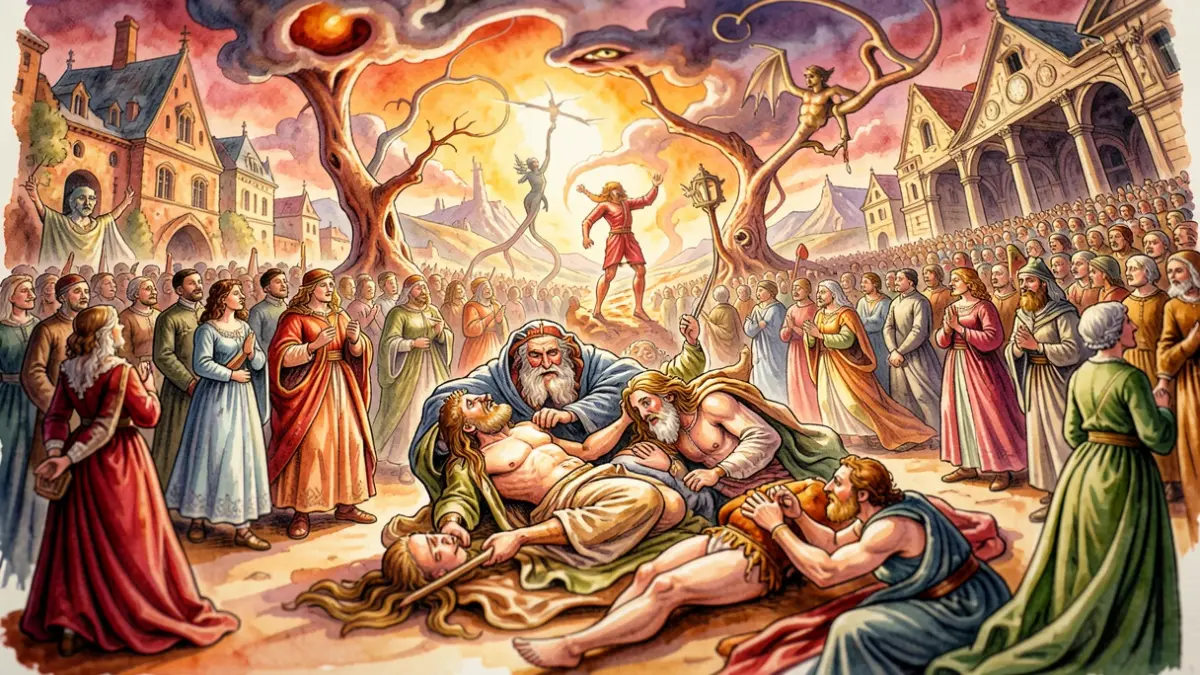
Named after the artist's rotating graphic art exhibition space, 'Rue Trajan', the Gala-Dalí Foundation aims to highlight Dalí's graphic output and raise awareness of this area on the museum's third floor. Currently, the space features a temporary exhibition focused on Dalí's illustrations for Dante's 'The Divine Comedy'.
The connection between Dalí and Dante dates back to 1949, when the Italian government commissioned the artist to illustrate a new edition of the poet's masterpiece to commemorate the 700th anniversary of his birth. Dalí spent nine years creating a hundred watercolors, first published in 1960. This artistic endeavor coincided with Dalí's return to Europe after his American period.
The cycle comprises two talks. The first, by Juliette Murphy, a specialist in graphic works at the Dalí Foundation, takes place this Friday, May 29th. The second, delivered by professor Rossend Arqués, will be held on June 11th. Both lectures will start at 7:15 PM under the dome of the Dalí Theatre-Museum. Advance booking is required via a provided link.
Juliette Murphy's conference, titled 'The Bread of Angels: Dalí and Dante', will delve into the genesis and meaning of the illustrations, exploring the personal and spiritual links between Dalí and Dante, and how the artist reinterprets themes like exile and idealized love through his own life journey. This project aligns with Dalí's turn towards classicism and his renewed perspective on faith.
Rossend Arqués will present 'Dante and Women: Francesca da Rimini in Dante's Comedy, the Poem of Desire'. This lecture will focus on the modern reception of Dante, particularly Francesca da Rimini as a symbol of desire, and will review the character's reinterpretations across various art forms in the 19th and 20th centuries.
The 'Rue Trajan' room is named in homage to the Roman Emperor Trajan, a figure for whom Salvador Dalí held great fascination. The space greets visitors with a sculpture of a Dalí-esque slave by Michelangelo, a hydrogen atom, and the object that gives the room its name.