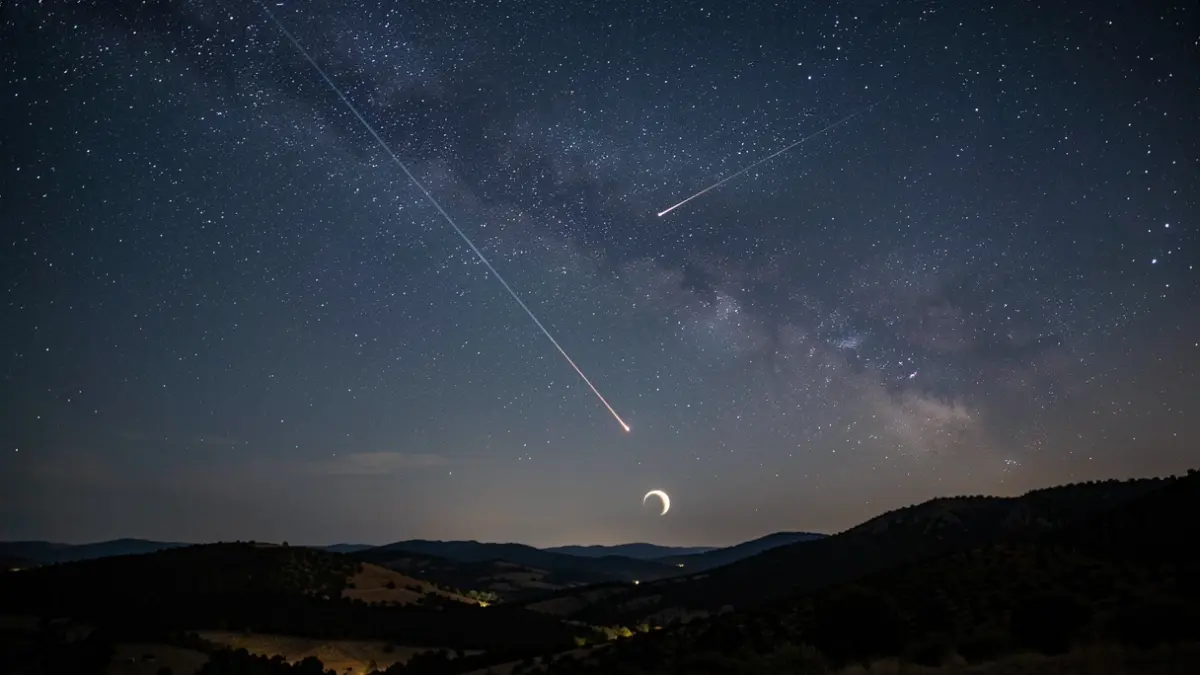
The popular Perseids, also known as the 'tears of San Lorenzo', occur annually around August 12th. This astronomical phenomenon happens when tiny particles from comet 109P/Swift-Tuttle collide with Earth's atmosphere, disintegrating and creating luminous trails that resemble shooting stars.
According to NASA data, between 50 and 100 meteors per hour can be observed during the peak activity. This year, the coincidence with the new moon and the proximity to a total solar eclipse promise exceptional visibility, making it one of the best meteor showers in recent years, provided the sky remains clear.
Although named after the constellation Perseus, the apparent origin point of the meteors, there is no connection between the stars of this constellation and the meteors, which occur about 100 kilometers from Earth. These meteors enter the atmosphere at over 210,000 kilometers per hour.
Experts recommend traveling to dark locations, away from light pollution, allowing time for eyes to adjust to the darkness, and being patient. The best time for observation will be between midnight on Wednesday the 12th and dawn on the 13th.