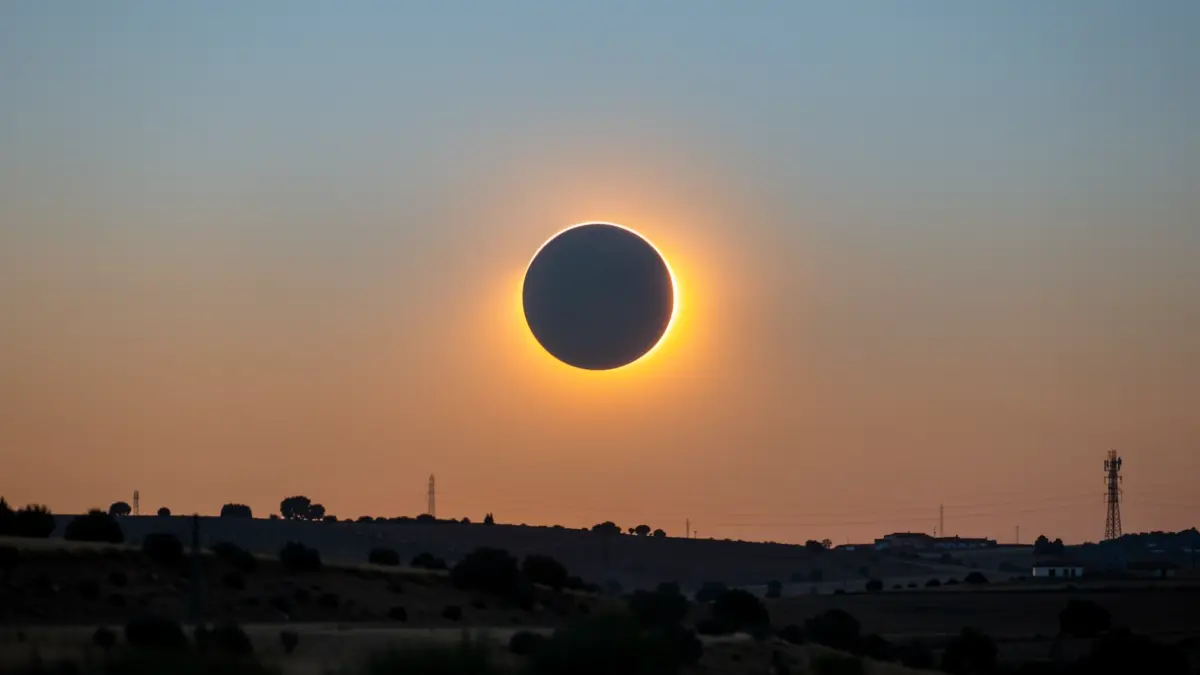
The moon's passage across the solar disk caused a significant reduction in solar radiation, leading to a drastic drop in photovoltaic energy generation in Spain. According to data from Red Eléctrica, at 8:30 PM, instantaneous photovoltaic power was around 500 megawatts (MW), representing only 1.5% of the total generation. An hour earlier, this technology contributed 16,000 MW (35.5%).
To compensate for the loss of solar generation, combined cycle power plants and hydraulic facilities increased their output. In electrical terms, gas and water served as the primary substitutes for the sun during the astronomical event.
The electrical system operator had already prepared with preventive measures. However, the estimated impact on the grid was minimal, as the eclipse occurred when the sun was already low and solar energy was naturally declining. The phenomenon simply advanced and accentuated this decrease.
Telecommunications networks also posed a potential critical point due to the anticipated increase in data traffic from simultaneous use of social media, messaging, photos, and videos. Nevertheless, neither Telefónica nor Vodafone reported significant incidents, according to company sources.
Telefónica implemented a specific plan, including mobile units at locations with the highest concentration of people and reconfiguring technical parameters of base stations in 31 provinces. Vodafone also prepared a special deployment, optimizing service at 200 observation points and monitoring over 1,700 mobile telephony cells.
The eclipse, which began obscuring the solar disk in A Coruña at 7:30 PM and completely covered Formentera an hour later, was observed by numerous people at key viewing locations across the country.