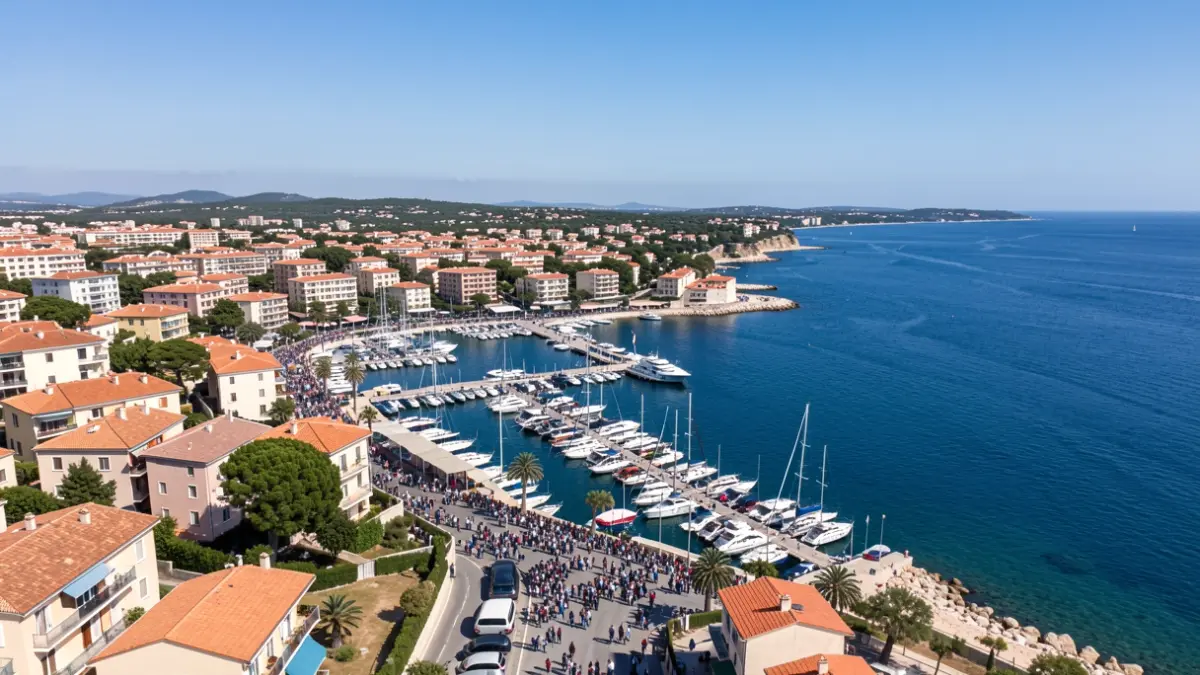
Platja d'Aro Town Council has opted not to request the execution of the National High Court's ruling, which contemplates the de-registration of 850 properties located within the Coastal Law. This decision will allow owners to reclaim their homes, and the council prefers to give the State time to find a legal formula for this recovery at a symbolic price, preventing the State from profiting.
The mayor of Castell d'Aro, Platja d'Aro i S'Agaró, Maurici Jiménez, explained that, from a legal standpoint, the property still belongs to the State. This situation could lead to scenarios such as renting the properties to the owners themselves or auctioning them off. Jiménez met with the Spanish government's sub-delegate in Girona, Pere Parramon, who confirmed the intention not to appeal the ruling and to seek an agreed-upon solution.
The mayor indicated that the State's intention is to find a way for residents not to bear a high financial cost. A "reasonable" period has been granted, and a new meeting with the Spanish government is planned for September to assess progress. Several affected individuals have already requested de-registration upon learning that the ruling would not be appealed.
The Town Council reminds that, legally, the properties still belong to the State and could generate revenue. Therefore, it is considered appropriate to allow a negotiation period after August. Jiménez is confident that the State will act once it has legal guarantees to resolve the patrimonial issue.
Another area of concern is the port marina, where the Town Council rejected an expansion project initially planned with a new channel, apartments, and a hotel. Licenses are suspended until the end of the year. The council is receiving proposals but insists that the Municipal Urban Planning Plan (POUM) contemplates the area's development, seeking a balance between attractiveness for owners and public benefit.
The modification of the POUM could allocate 50% of housing to official protection, which might disincentivize private investors if the remaining 50% is not attractive, potentially leading to a "stagnation" of the area for years.