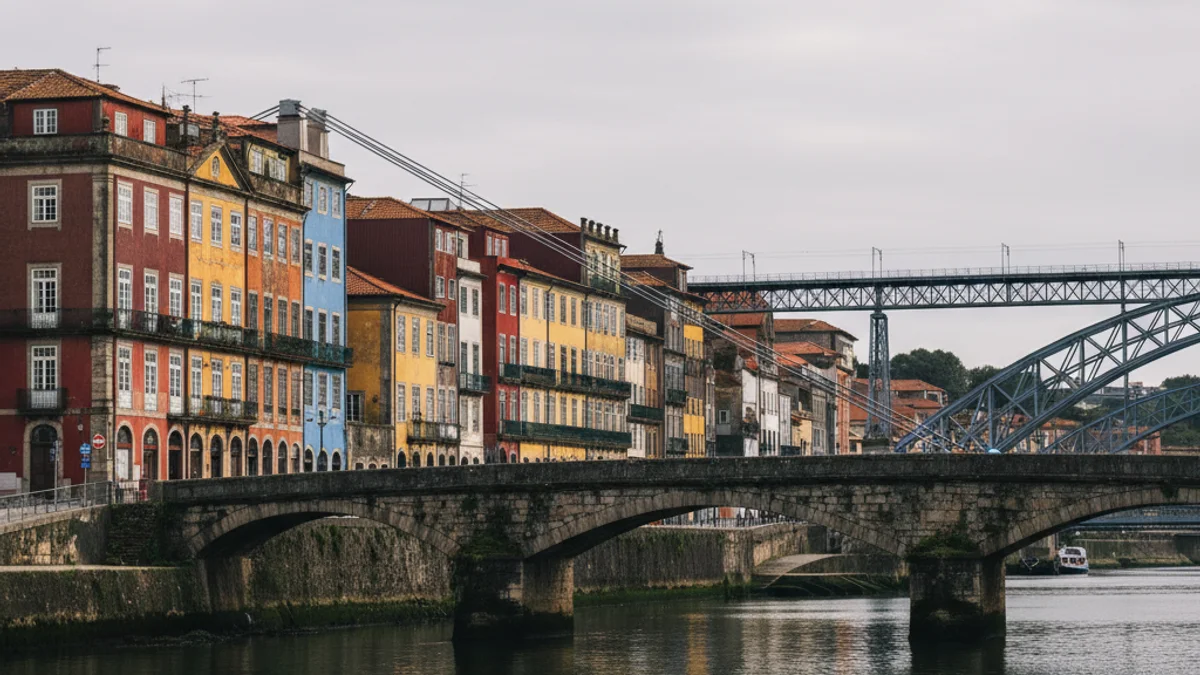
The city of Girona is known for being the confluence point of four different rivers: the Onyar, the Ter, the Güell, and the Galligants. This geographical feature means the city boasts numerous bridges, with the Onyar river, which runs through the center, concentrating the most notable crossings featuring diverse architectural styles.
Crossing these bridges allows visitors to contemplate the city's most photographed scene: the famous colorful facades reminiscent of the Tuscan capital, Florence. The most modern bridge is the Pont de Sant Feliu, which connects the Canalejas promenade and the area featuring the Cul de la Lleona (Lioness's Rear) sculpture. Tradition holds that any visitor wishing to return to the city must symbolically kiss the animal.
One of the most historic crossings is the Pont de Pedra (Stone Bridge), constructed in 1856, which links the Barri Vell (Old Quarter) with the Eixample (Expansion). From this vantage point, one can enjoy a privileged view of the Onyar houses. The route can continue across the Pont d’en Gómez, a work by Lluís Homs dating back to 1916, and named after the owner of the house that had to be partially demolished to allow for its construction.
The most emblematic and photographed bridge is the Pont de les Peixeteries Velles (Old Fish Market Bridge), also known as the Pont del Ferro (Iron Bridge) or Eiffel. It was built by the same workshops that erected the famous Parisian tower, and its reddish color makes it unmistakable. Finally, the walk can conclude at the Pont de Sant Agustí, which provides access to the square of the same name, known for its wide gastronomic offerings.