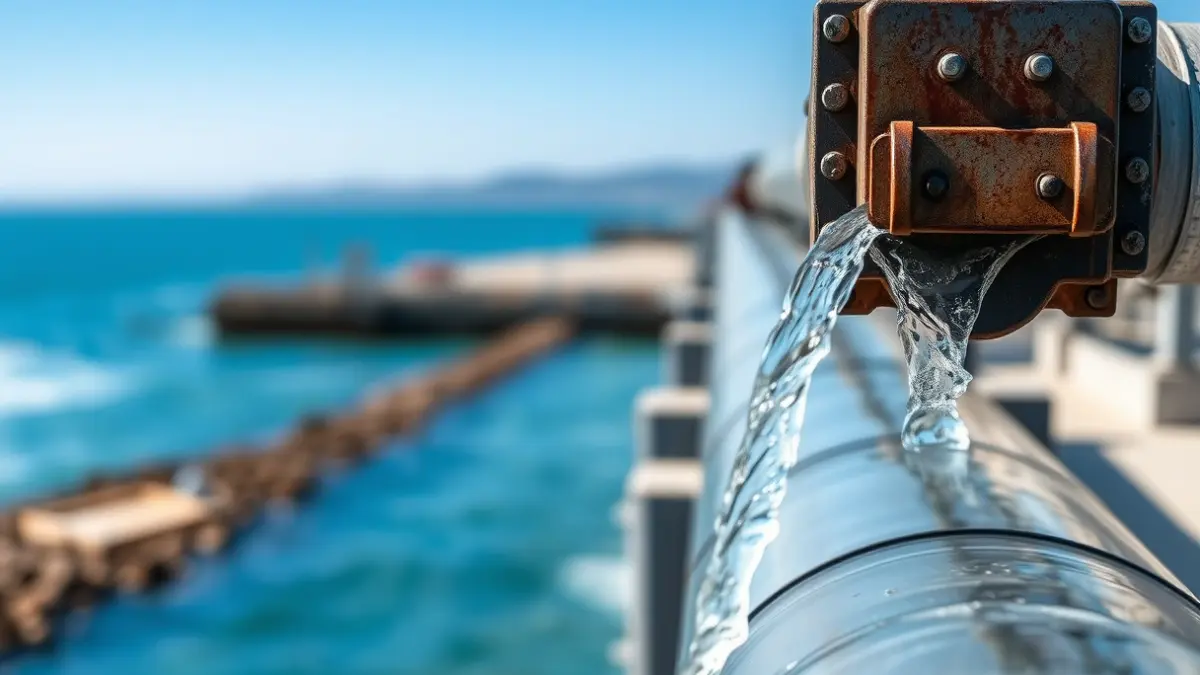
The significant improvement in Catalonia's water reserves, with reservoirs almost at maximum capacity, has caused surprise as desalination plants maintain a high production rate. While they no longer operate at 100% as during the most critical months of the drought, the Prat plant produces at 60% and the Tordera plant at 50%, according to data from the managing entity.
This decision, which entails considerable energy consumption and, consequently, higher water costs and increased emissions, is justified by the need to replenish aquifers. These underground reserves, vital for over half of Catalan municipalities and playing a key environmental role, also suffered a drastic decline during the drought.
“"As we exploit them, these coastal aquifers favor the entry of seawater."
During the drought period, the aquifer in the lower Llobregat valley and delta dropped to 9 meters below sea level, leading to saltwater intrusion. To counteract this, regenerated water has been infiltrated to create a barrier and improve the quality and quantity of groundwater.
The Catalan Water Agency (ACA) plans to progressively reduce desalination plant production to 10%, considered the technical maintenance threshold to prevent complete shutdowns and facilitate rapid reactivation if necessary. Furthermore, the construction schedule for expanding the Tordera plant and building two new ones in Foix and Muga remains in place.
These investments are part of the Government's strategy to guarantee water supply, aiming to add an additional 280 cubic hectometers annually to the system and for 70% of water to come from unconventional sources by 2030. The Aigües Ter Llobregat entity plans to invest 1.403 million euros between 2025 and 2029, a figure that has drawn criticism due to its impact on water bills.