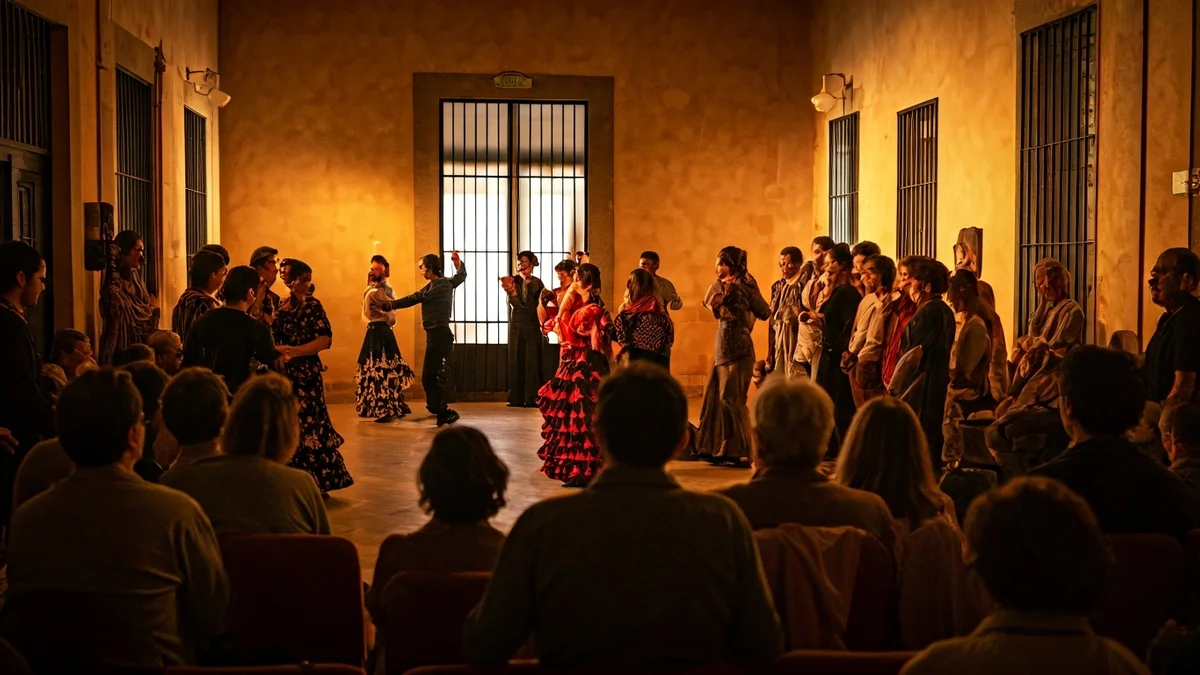
In 2023, the Casa de Andalucía de Mataró faced a critical juncture. With an aging board of directors and a lack of new members, the future of the entity, which had been a cultural and social pillar in the city for decades, was uncertain. However, three years later, the association has not only overcome this challenge but is celebrating its half-century of existence with a rejuvenated leadership and a clear commitment to remain a key reference in Mataró.
The origins of the Casa de Andalucía date back to Mataró in the 1950s and 1960s, when thousands of people from Andalusia arrived in the city, contributing to its transformation and construction. In this context, in 1976, the entity was founded with the aim of preserving roots, fostering community, and maintaining the cultural identity of the newcomers. Figures like Paco Luque, its first president for thirty years, were crucial to its establishment.
“"The people who came wanted to be here… it was a way to reconnect, to come together, and to ease homesickness."
Over time, the entity's profile has evolved. While initially an emotional refuge for those who had left their homeland, today it has transformed into a space for cultural transmission and coexistence, open to everyone. President Ángel Espartero highlights that new generations experience Andalusia in a more festive and cultural way, with flamenco as a major driving force.
Flamenco has become the central activity of the Casa de Andalucía, with daily classes attracting over a hundred people of all ages. This artistic discipline no longer requires a direct link to Andalusia but is understood as a form of dance open to all. This openness, along with a strong sense of community, has been key to its continued relevance.
“"We are no longer Andalusians, we are Catalans, but with Andalusian roots."
Internal renewal, with a board featuring more women and a lower average age, symbolizes this change of cycle. The entity's calendar of activities is intense and diverse, including participation in the Three Kings Parade, the organization of the Rocío pilgrimage, and a presence at the Fira de Mataró. The 50th-anniversary celebration will extend throughout the year with a program combining memory and future projection, including a documentary on the history of Andalusian immigration in the city.