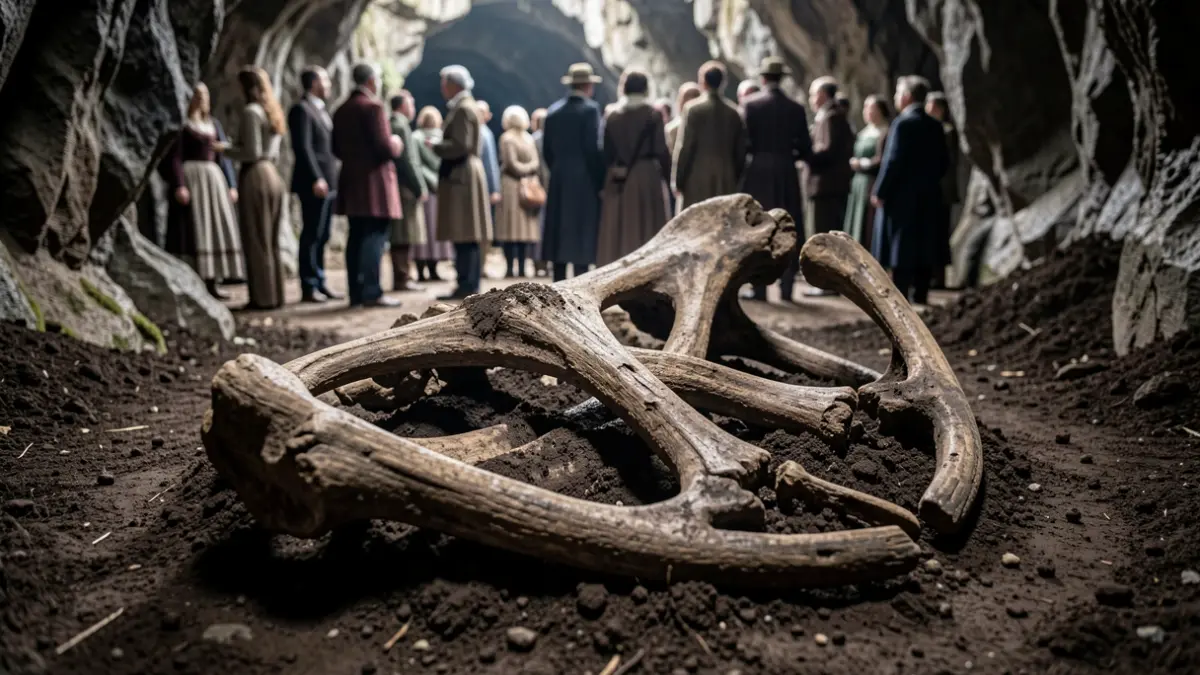
The fossil remains are the only ones of this species documented in the Iberian Peninsula and are among the few located in Europe, with only two previous cases known in Germany and Italy. The discovered rhinoceroses could weigh over one and a half tons.
The extraordinary state of preservation of the bones has surprised researchers. It is expected that, once cleaned, it will be possible to determine if the carcasses were utilized by Neanderthals or by local carnivores such as hyenas, cave bears, or wolves. Around the skeletons, lithic tools have been found, along with flakes and a fragment of a broken bone point, an unprecedented tool for this period.
Steppe rhinoceroses disappeared around 20,000 years ago. The presence of this species in lower strata indicates significant climatic changes that led to the replacement of temperate-climate animals by others more adapted to the cold. In more recent strata, remains of woolly rhinoceroses associated with Neanderthal camps have been found.
The excavation team, including researchers from the UB, UAB, and universities in Madrid, China, Argentina, and Portugal, has also excavated a hearth dated at 40,000 years old, associated with animal remains and tools. The lithic industry found is similar to that of the lower strata, indicating the species' technological adaptation to climatic changes.
In the nearby Cova del Toll, known as a hibernation site for cave bears, lithic industry has also been found. Evidence is being sought to demonstrate that Neanderthals utilized the carcasses of bears that died during hibernation, which would allow for debate on the hunting of cave bears in the Middle Paleolithic.
Both caves, Teixoneres and Toll, served as refuges for many species. The upper strata (between 100,000 and 35,000 years old) show an unusual association of cold-adapted animals like the mammoth and woolly rhinoceros alongside temperate-climate animals such as the roe deer. Remains of other animals, including a horse, an aurochs, and at least three bears, have also been found.