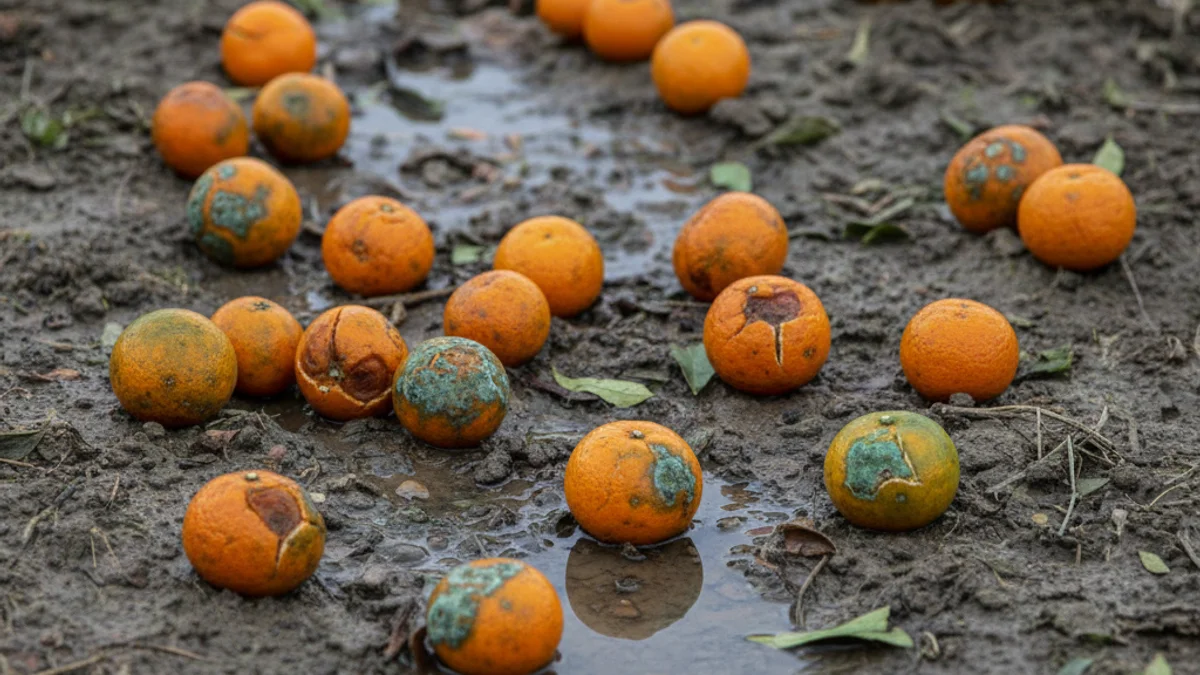
The clementine harvest in the Terres de l'Ebre was severely affected by two main factors: the massive entry of mandarins from South Africa into Europe in October, resulting from Donald Trump's tariff policy, and the continuous episodes of rain late in the harvest season.
At the Exportadora d'Agris d'Alcanar cooperative, production fell by 40%, dropping from the usual 14 million kilos to about 10 million. Furthermore, the December rains caused the loss of 400,000 kilos of fruit. Producer Ramon Itarte, from Alcanar, who decided to wait for a price recovery, estimates he lost nearly 300,000 kilos of clementines rotting on the trees.
“"It was the straw that broke the camel's back."
The arrival of citrus from South Africa and Egypt via the port of Rotterdam caused initial prices to plummet, falling from 0.6 euros per kilo to as low as 0.3 euros. Federico Tarazona noted that in October they sold 30% fewer kilos each week, reflecting the slowdown in commercialization.
“"Then I told myself: well, it will get a little better. Let this (fruit entry) from South Africa finish and we will automatically sell it."
Producers also complain about the additional costs of cleaning the farms and applying phytosanitary products to prevent fungi and diseases like phytophthora, a cost aggravated by European Union limitations compared to importing countries. Due to climate change, cooperatives plan to reduce the dominance of the clemenules variety (currently 80%) to introduce 'second season' varieties like nadorcott or tango.