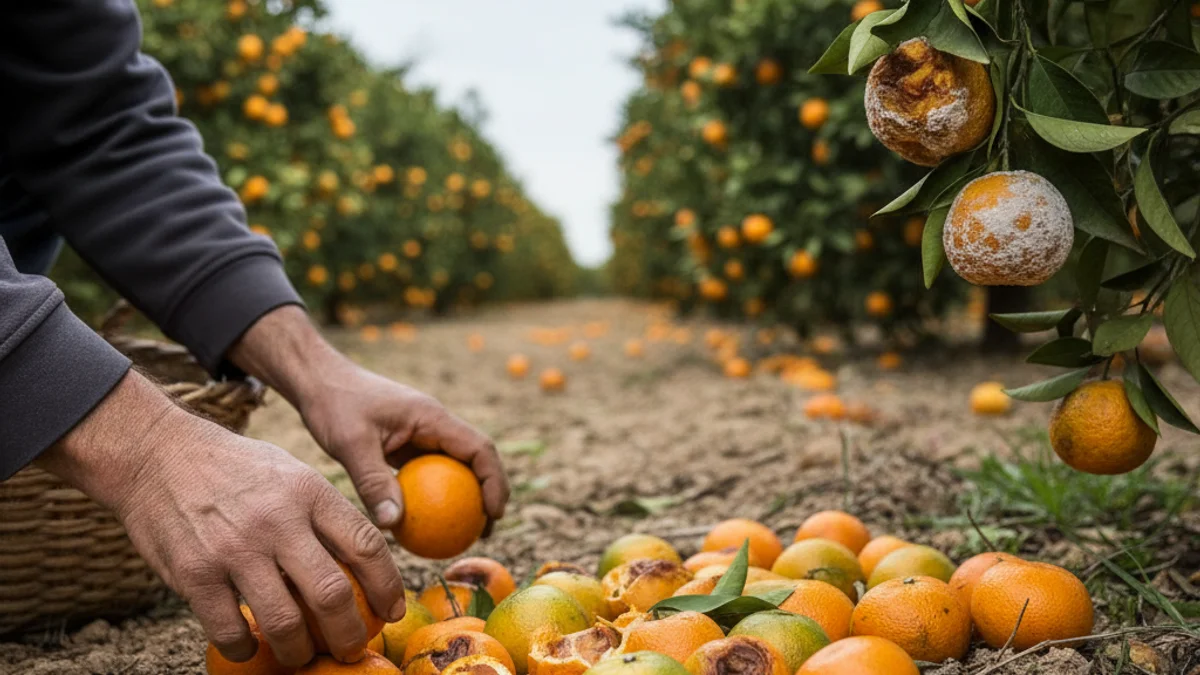
The Exportadora d'Agris d'Alcanar cooperative confirmed that clementine production fell from the usual 14 million kilos to just 10 million, a 40% reduction compared to the previous campaign. This situation is attributed to early summer heatwaves and, especially, continuous rain episodes starting in mid-December.
“"It was the last straw."
The cooperative manager, Federico Tarazona, noted that the rains caused a loss of quality and about 400,000 kilos of production for the cooperative. Furthermore, the campaign started in a complex commercial context, as tariffs imposed by Donald Trump facilitated the massive entry of mandarins from South Africa and North Africa through the port of Rotterdam in October.
This oversupply led to a slowdown in sales and a price collapse, falling from 0.6 euros per kilo at the start to a minimum of 0.3 euros. Producer Ramon Itarte, with farms in Alcanar and Vinaròs, saw the entire clementine harvest from a five-hectare farm (over 200,000 kilos) rot on the tree after merchants refused to buy rain-affected fruit.
Given the climate alteration, which shortens the harvesting window, producers and cooperative technicians are working to reduce the dominance of the 'clemenules' variety (currently 80% of production) to 50%. New "second season" varieties, such as 'nadorcott' or 'tango', seek to adapt crops to the new climatic and market conditions.