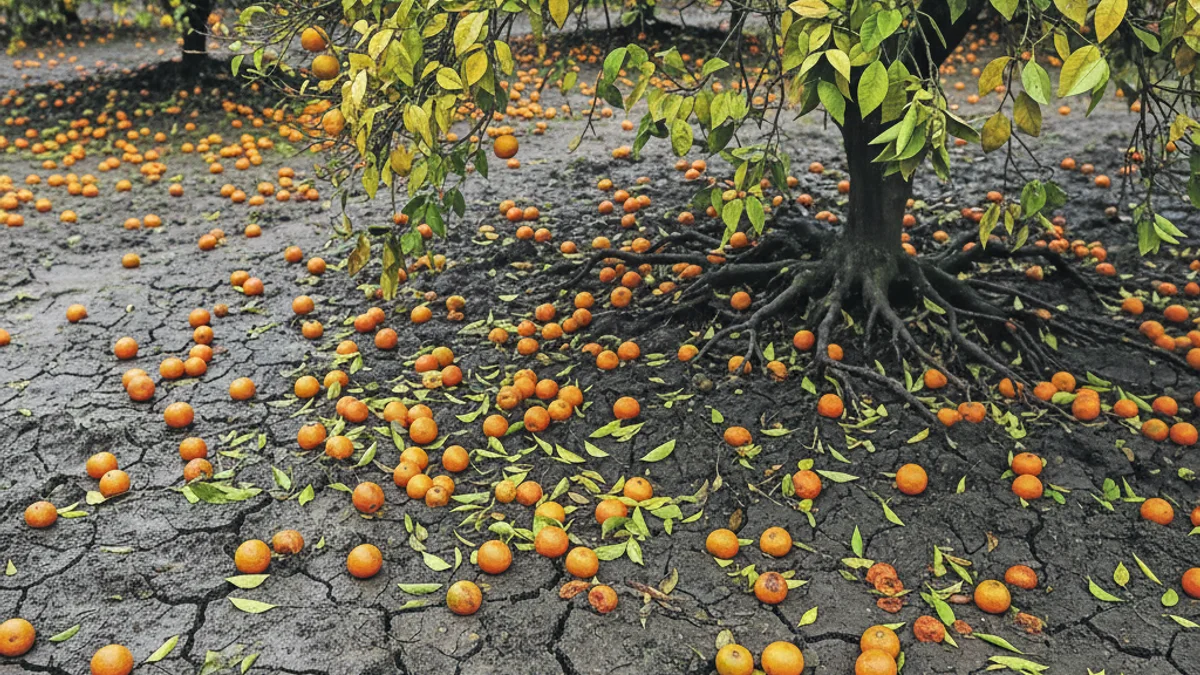
The 40% drop is recorded compared to the average of the last five years, and represents 27% less than last year's harvest, according to data presented by the FCAC. The Federation has called on the Department of Agriculture to implement measures to cope with the impact of extreme phenomena, especially after the storm in October that severely affected the citrus sector in the Ebre region.
The latest citrus campaign was marked by two extreme climatic factors. First, thermal stress caused by "exceptionally high" temperatures in June, which caused the trees to drop "much fruit". This led to a "drastic reduction in the productive potential of the campaign".
The lack of incorporation of young people hinders investments and the modernization of farms that have exceeded the cycle of maximum production.
Subsequently, torrential rains in late September and October caused "structural damage" to crops and irrigation systems, leading to "root asphyxia and the appearance of physiopathies" in the trees. Damages of up to 90% were recorded in many farms.
The Exportadora d'Agris d'Alcanar has quantified that about a thousand tons of the clemenules variety, one of the most widespread clementines in Montsià and the Ebre, have been damaged. This variety is "very sensitive to excess water during harvesting". The FCAC also points out that plantations average over 25 years, reducing the fruit size.