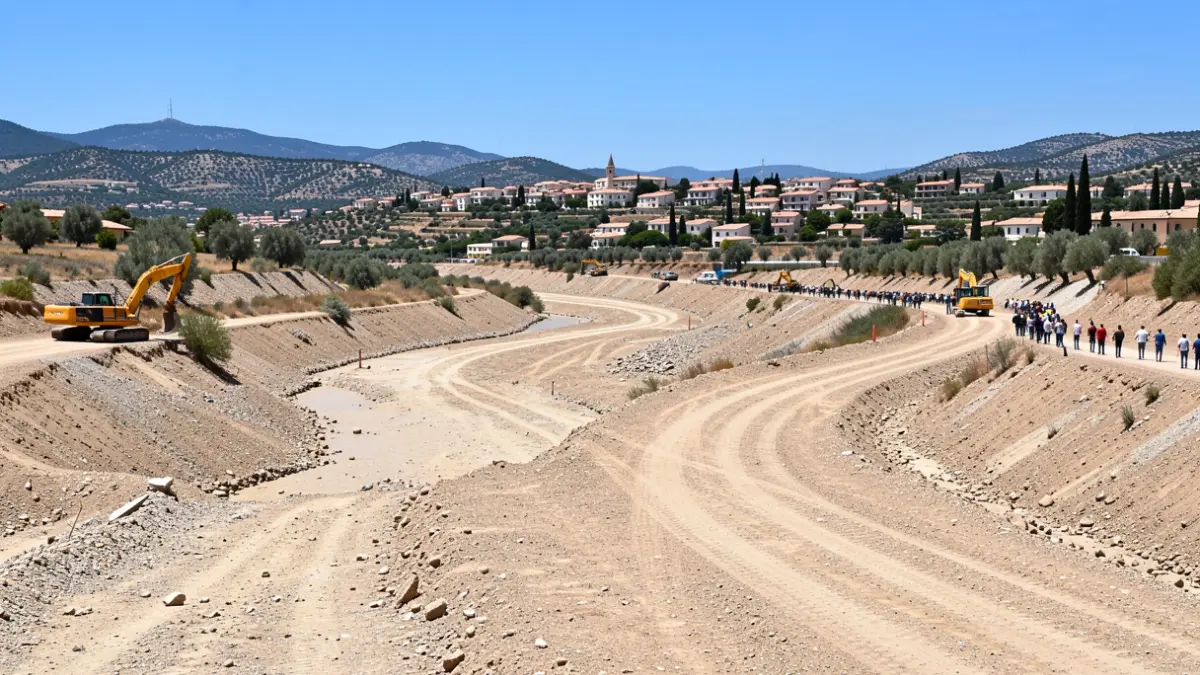
The main objective of these infrastructures is to cushion the impact of flash floods on urban centers by reducing the speed of overflowing watercourses. Although their effectiveness may be limited against heavy rainfall episodes, the ACA considers flood retention basins a priority system for minimizing risks.
In Santa Bàrbara (Montsià), the project for a basin in the Pelós ravine has been unblocked, while in la Ràpita, work is underway to build a similar structure in an old quarry in the Solito ravine. These projects require large strategic spaces to distribute water horizontally and mitigate the destructive potential of overflows.
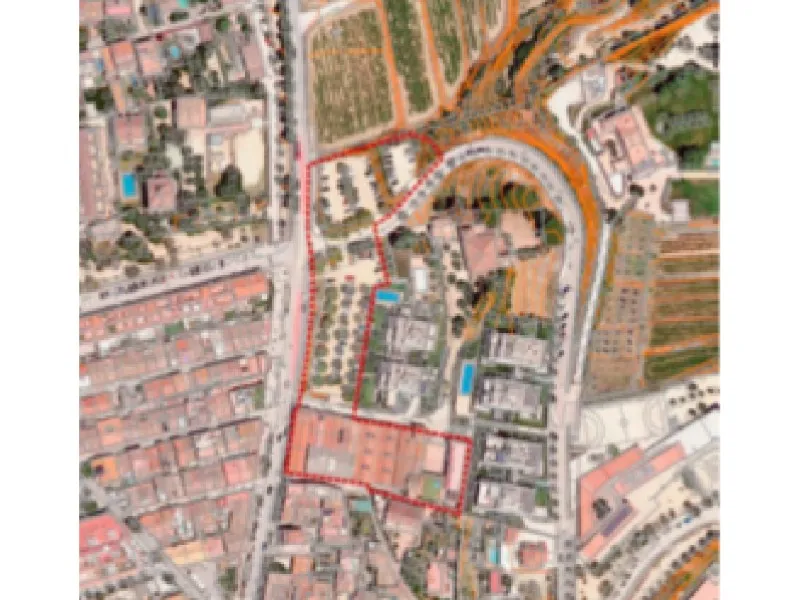
In Santa Bàrbara, the project for the basin in the Pelós ravine, existing since 2021, has progressed after the approval of the planning modification by the Commission of Urbanism of the Ebro Lands (CUTE). The new basin, measuring 100x60 meters and 3.75 meters deep, is located on a 6,430 m² plot and aims to prevent recurrent flooding in homes and businesses, calculated on a 50-year return period.
The mayor of Santa Bàrbara, Josep Lluís Gimeno, is confident that the works, costing 445,000 euros mostly financed by the Government, will be completed by autumn. Gimeno emphasizes that the measure will allow for facing storms with greater preparedness and resilience, improving the efficiency of existing collectors.
However, it is acknowledged that storms exceeding 400 liters per square meter could overwhelm the basin's capacity, although their effects will be minimized. The Department of Territory and the ACA are working on parallel strategic measures to enhance the urban center's resilience. This project is part of about twenty structural actions planned by the Government in the Ebro Lands over the next five years, with an investment of 37.5 million euros.
In La Ràpita, the October 12th floods have accelerated drainage improvement works. Councilor Marc Brunet explains that, with a grant from the ACA, five projects are being drafted, notably the flood retention basin in the Solito ravine, which will utilize an old quarry to retain the water's kinetic energy and release it gradually. Project details are expected to be finalized this year.
Brunet points out that the basin would have prevented damage to bridges and minimized impacts in less intense episodes. Additionally, other projects are being drafted to improve the Solito ravine's slope and channel rainwater in various areas of the municipality to prevent accumulations.
The Ebro Hydrographic Confederation (CHE) has approved the Solito basin. A joint solution with the CHE and the Right Bank Ebro Irrigators' Community is also being sought for the problem of canals converging around the Ebro Maritime Museum, where large amounts of water accumulate.
In Alcanar, the flood retention basin project was proposed in 2021 but is still pending finalization. A small-scale intervention by Tragsa near the N-340 has proven insufficient. In l'Aldea, projects in the Pixadors ravine are more advanced, although without a start date for construction.
The head of Territory in the Ebro Lands, Miquel Alonso, is confident that within a year the ACA will have the commissioned studies to monitor water behavior and the effectiveness of the measures. Alonso acknowledges that no urban structure in the Ebro Lands is prepared for floods of 400 or 500 liters per square meter, hence the commitment to these investments.