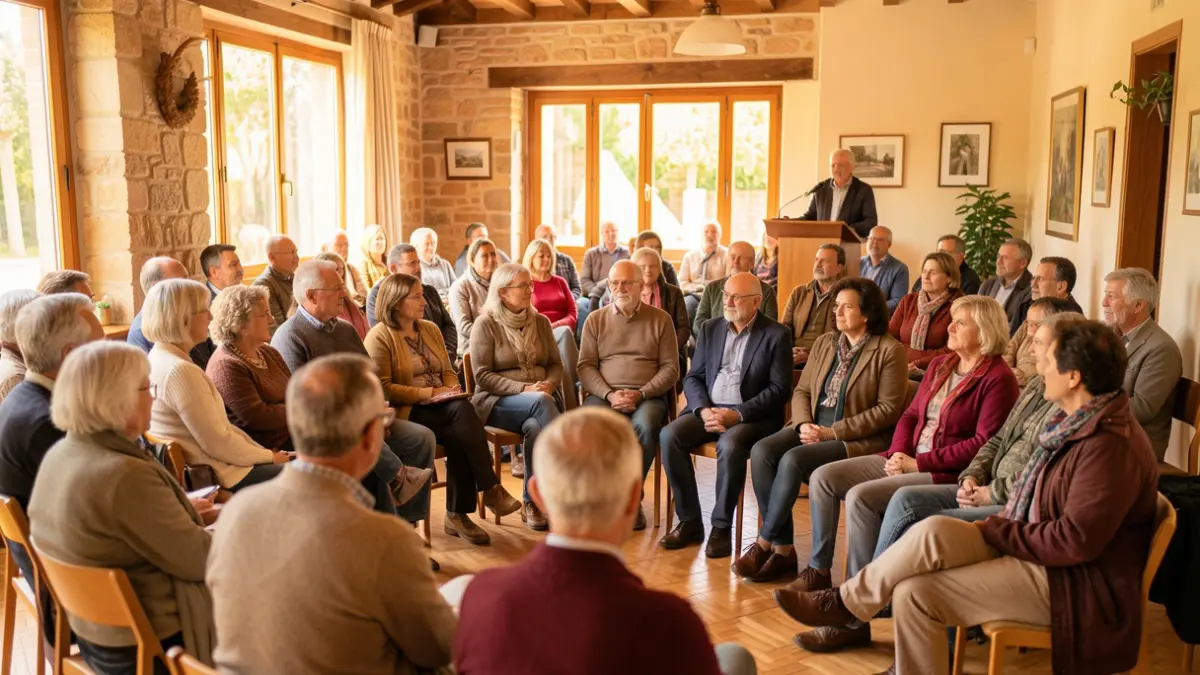
The initiative, driven by the Fundació Privada Gentis with the Cooperativa Idària and supported by the Fundació ‘la Caixa’, presented data reflecting a strong connection to the region, but also the difficulties in staying. The La Ràpita City Council, as a functional municipality alongside Deltebre, hosted the event.
The acting mayoress of La Ràpita, Helena Queral, highlighted the importance of listening to the territory's needs and working together to face shared challenges. The project's motto is "Living villages for life projects".
During the first year, 156 surveys were collected and four participatory workshops were organized in La Ràpita, Deltebre, Ulldecona, and La Sénia, with special attention to women and youth. The results indicate that 80.4% would like to continue living in Terres de l’Ebre, but 73.2% have left or considered leaving.
Karim Sabni, manager of Cooperativa Idària, noted that "people love the territory, and the problem is that too often staying in the territory is not possible," emphasizing the challenge of rootedness and dignified opportunities.
The most highlighted needs by the population are job opportunities, decent wages, access to housing, training, transport, and services. Youth are concerned about education, emancipation, and mobility, while women point to healthcare services, work-life balance, and community networks. As of March 31, 2026, there were nearly 8,000 unemployed people in Terres de l’Ebre, 57% of whom were women.
The second phase of the project, extending until March 2028, will include training and networking actions. Marc Poy, a technician from Idària, explained the need to coordinate policies. Rosa Cuartiella, territorial director of Fundació Gentis, highlighted the foundation's experience in the region.