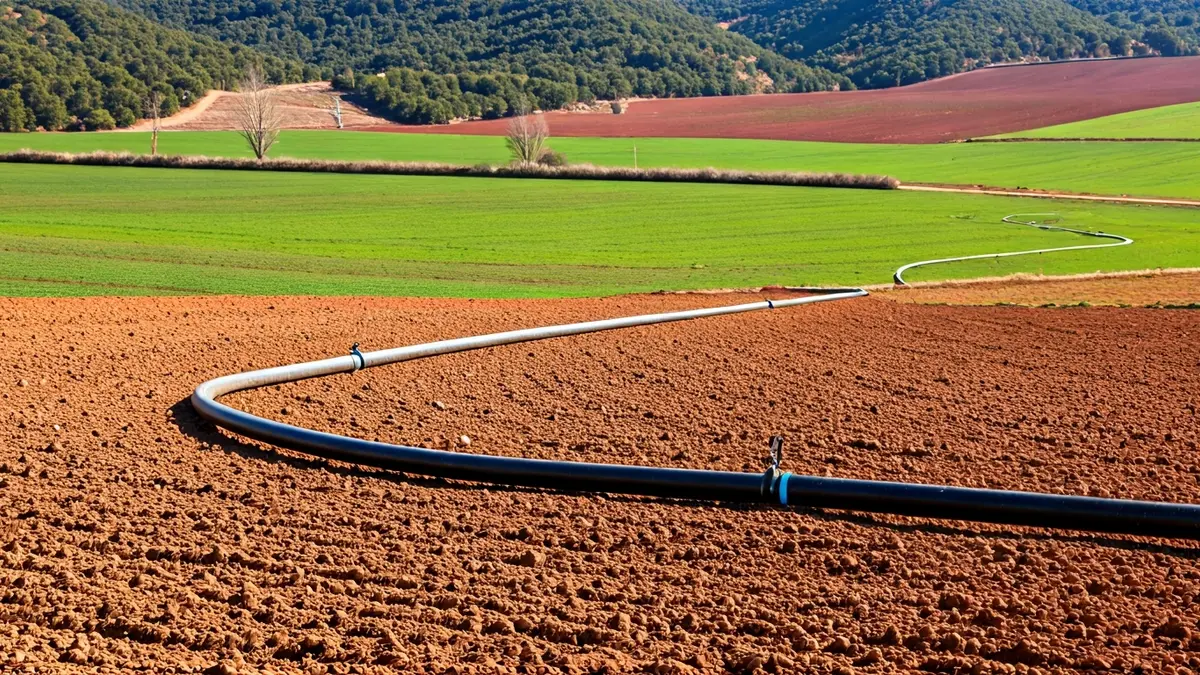
This award, expected to be formalized with the contract signing in the coming weeks, will allow the commencement of works primarily concentrated in the municipality of Roquetes. The works include the deployment of the irrigation network infrastructure to the farms, the creation of regulating ponds and the necessary complements for their operation, as well as the installation of the first of two photovoltaic modules planned for the entire project.
The overall Xerta-Sénia irrigation project, approved by the Department in September 2024 with a total budget of 29,020,362.31 euros, covers the municipalities of La Galera, Mas de Barberans, Roquetes, and Santa Bàrbara, located in the Baix Ebre and Montsià regions.
The project structure is divided into three phases. Phase 1 includes actions on the Xerta-Sénia Canal to supply zones 2 and 3, including ponds, pumping station, primary network impulse pipes, and pumps for zone 2, in addition to the distribution network for this same zone. Phase 2 comprises the distribution network for zone 3, the corresponding pumps, and the first photovoltaic park module. Finally, Phase 3 includes the second photovoltaic park module.
With the execution of Phase 1, the primary network part will be developed along with 654.3 hectares of the distribution network for zone 2, of which 382.33 hectares have already adhered to the irrigation system. This action, long demanded by local farmers, seeks more efficient water use and to guarantee the regularity of crop productions such as olives, citrus, and almonds, in response to the effects of climate change and rainfall variability.