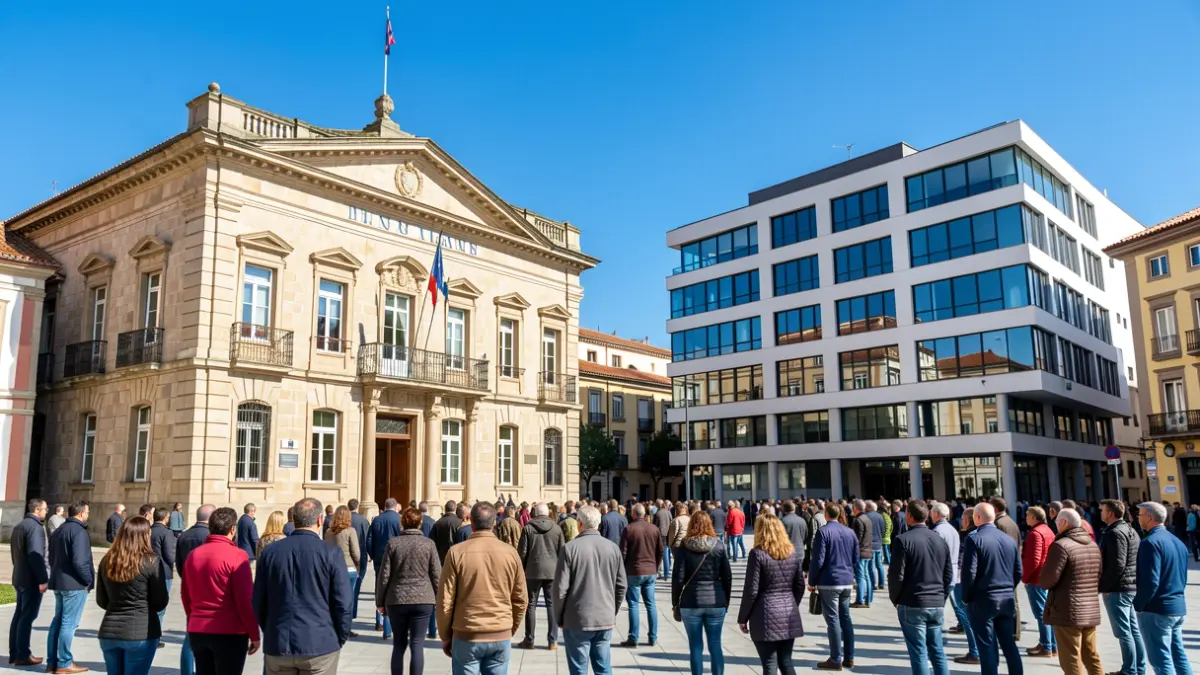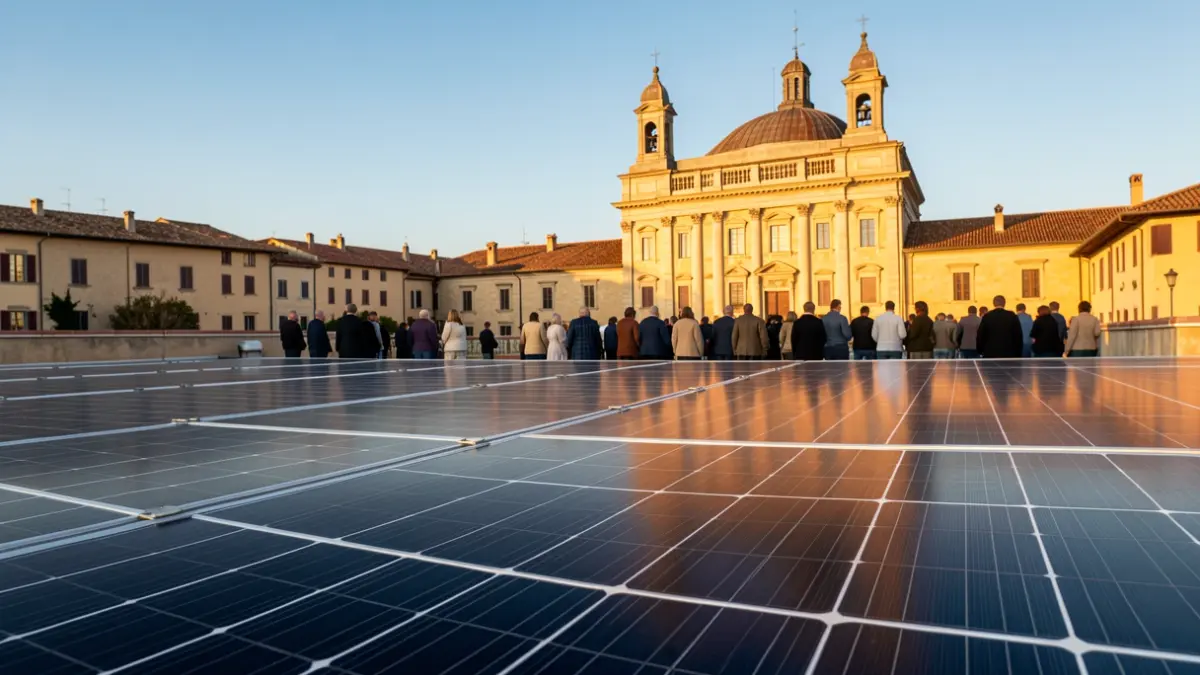
Pioneering initiatives in regions like Osona and Lluçanès, involving around thirty projects and thousands of families, are paving the way. This model has spread throughout the territory thanks to entities such as Osona Energia. At the municipal level, Caldes de Montbui already generates 15% of its energy through a public energy community, while cooperatives like Som Energia, with over 87,000 members, strongly advocate for a renewable future. In parallel, more than a hundred energy communities have registered on the Generalitat's website, demonstrating a growing interest in citizen participation in these projects.
In Osona and Lluçanès, the first communities emerged in 2021, spurred by the energy crisis stemming from the war in Ukraine. The establishment of Osona Energia, a second-degree cooperative, has been crucial in advising and supporting about fifty communities across Catalonia, from the Ribera d'Ebre to the Pirineu or Garrotxa.
Gil Salvans, technical manager of the Local Energy Agency of Osona (Aleo), explains that a replicable model was established: local non-profit entities receiving professional services from Osona Energia. Currently, 2,000 families are connected to the grid in Osona and Lluçanès, with the goal of doubling this figure. Salvans highlights that while photovoltaic self-consumption is a reality, the next step is for families to see savings on their bills and to diversify towards electric vehicles, energy efficiency in buildings, and the electrification of thermal consumptions.
Salvans also emphasizes the role of energy communities in the face of potential blackouts: "The territory must be capable of generating its own energy and even storing it in batteries." These projects, he states, "will make the electrical system more robust and resilient."
Endesa's data as of the end of March shows 141,633 supply points with self-consumption, of which 11.5% are collective, indicating the growing trend of the model linked to energy communities.
The Generalitat launched the platform Comunitatenergetica.cat to facilitate the creation and participation in these initiatives. The portal already lists 86 communities open to new members.
In Caldes de Montbui, a public Local Energy Community (CEL) with 27 photovoltaic installations generates 15% of the municipal energy. 600 families have connected, with an estimated saving of 1,500 euros per family over four years. The Councilor for Climate Action, Jordi Martín, notes that they currently lack storage systems, leaving them in the same situation as other citizens if the grid fails.
The cooperative Som Energia, with over 87,000 members, advocates for distributed and citizen-led generation. Its head of new projects, Nuri Palmada, states that "the future is renewable, period," and stresses the importance of making renewable energy manageable through batteries and by changing consumption patterns.
Som Energia plans to double its own production, from the current 50 GWh/year to around 90 GWh, aiming to hybridize its photovoltaic plants with batteries and adapt energy expenditure to peak generation hours. Palmada warns of a potential generation deficit in Catalonia if the deployment of manageable renewables is not accelerated.