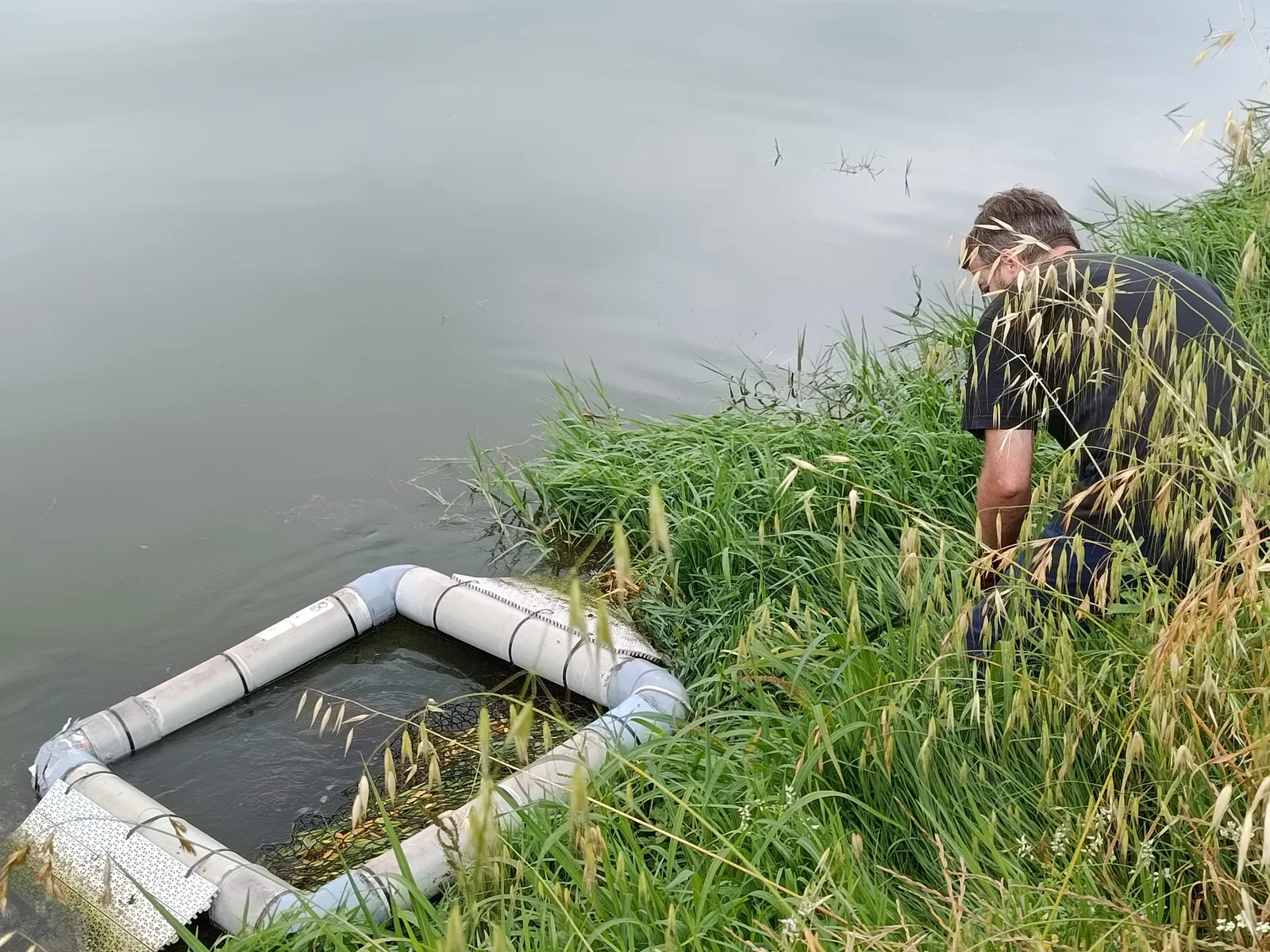
The Consorci del Ter has carried out the monitoring of native turtle populations, the European pond turtle (Emys orbicularis) and the Western marsh turtle (Mauremys leprosa), as well as the control of invasive exotic turtles, for the eleventh consecutive year in various points along the middle-lower course of the protected natural area "Riberes del Baix Ter". This monitoring, carried out by the Consorci's technical services through spring and autumn campaigns, is an essential tool for evaluating population evolution and detecting natural reproduction episodes.
This year's captures have identified 112 specimens of Emys, corresponding to 55 different individuals. Notable is the presence of 5 unchipped juveniles and 1 newborn, data that confirm the natural reproduction of the species in the area. A specimen released in 2015 was also detected having travelled 8 kilometres, evidencing the good adaptation of released animals and their natural movement in search of new territories.
The conservation programme, which continues the actions of the LIFE Potamo Fauna project, has released a total of 248 specimens of European pond turtle since 2015. The first specimens born in the wild were detected in 2021. The European pond turtle, currently classified as Endangered, is threatened by habitat loss, competition with other turtles, and predation by small carnivores such as the American mink.
Parallel to this, 60 invasive exotic turtles were captured, corresponding to the species Trachemys scripta elegans and Trachemys scripta scripta. These detection and removal actions contribute to reducing pressure on native populations and limiting their spread. The monitoring was carried out with the support of the Generalitat de Catalunya and uses specific traps and subcutaneous chips for individual identification of specimens.
The Consorci del Ter has also developed environmental education activities, including a workshop held on September 24 with 52 fifth-grade students from the Doctor Sobrequés school in Bescanó, where native turtles and the population boost project were introduced. Despite the advances, the species remains highly vulnerable, and it is essential to maintain conservation efforts to ensure its long-term viability.