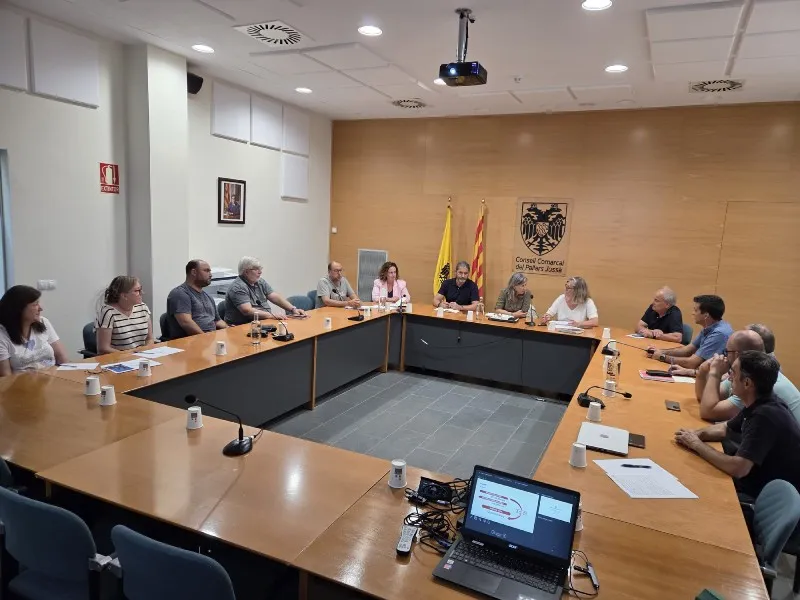
The Minister of Territory, Housing, and Ecological Transition, Sílvia Paneque, emphasized that "guaranteeing dignified and accessible mobility in mountain regions is a matter of territorial equity." This plan aims to strengthen existing services, promote demand-responsive transport, and bring opportunities closer to the residents of Pallars Jussà.
Investment in public transport in the region will rise from approximately 1.2 million euros annually to over 1.4 million, reflecting the Government's commitment to more sustainable and efficient mobility. The Director General of Transport and Mobility, Susi López, stated that "the goal is for living in a small municipality or a remote area not to be an obstacle to accessing services, education, or job opportunities."
As part of the plan, last September saw the inauguration of the regular line between Tremp and El Pont de Suert, offering four daily services during the academic term to facilitate student travel. The possibility of extending this service to non-academic periods is currently being explored.
Another key focus is the enhancement and digitalization of the demand-responsive transport (TAD) network through the Clic.cat platform. This will enable expanded services on more days and the implementation of operational improvements, such as the new TAD9 line (Naens – Burguet – Cervoles – Puigcerver – Senterada – La Pobla de Segur – Tremp) on Wednesdays, and increased frequencies on Mondays for local markets across various routes (TAD2, TAD4, TAD6, TAD7, TAD13).
New strategic stops are also being incorporated, including the FGC station in Cellers, the Hotel Terradets, the Day Centre in La Pobla de Segur, and settlements like Siall, Fígols, and Eroles. To inform the public, a regional public transport guide and a communication campaign will be developed.
Minister Paneque highlighted that "investing in public transport in Pallars Jussà is investing in territorial cohesion, equal opportunities, and the future of the region," by combining regular lines, TAD, and digital tools.
These measures align with rural mobility improvement policies, consistent with the Statute of Rural Municipalities and the Rural Agenda of Catalonia, aiming to combat depopulation and encourage residents to remain in the territory.
The study is based on an analysis of the travel habits of the 13,593 inhabitants of Pallars Jussà, who generate 42,002 daily trips. Currently, only 4.4% of mobility is by public transport, a figure the new measures aim to improve by offering efficient alternatives.