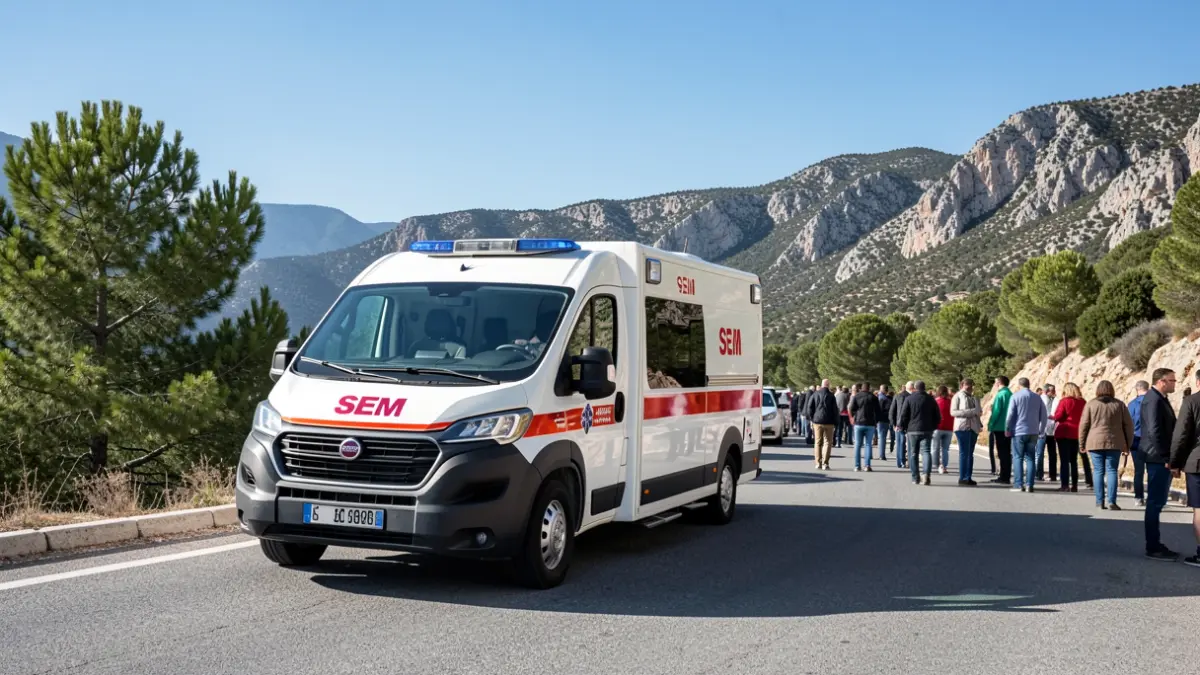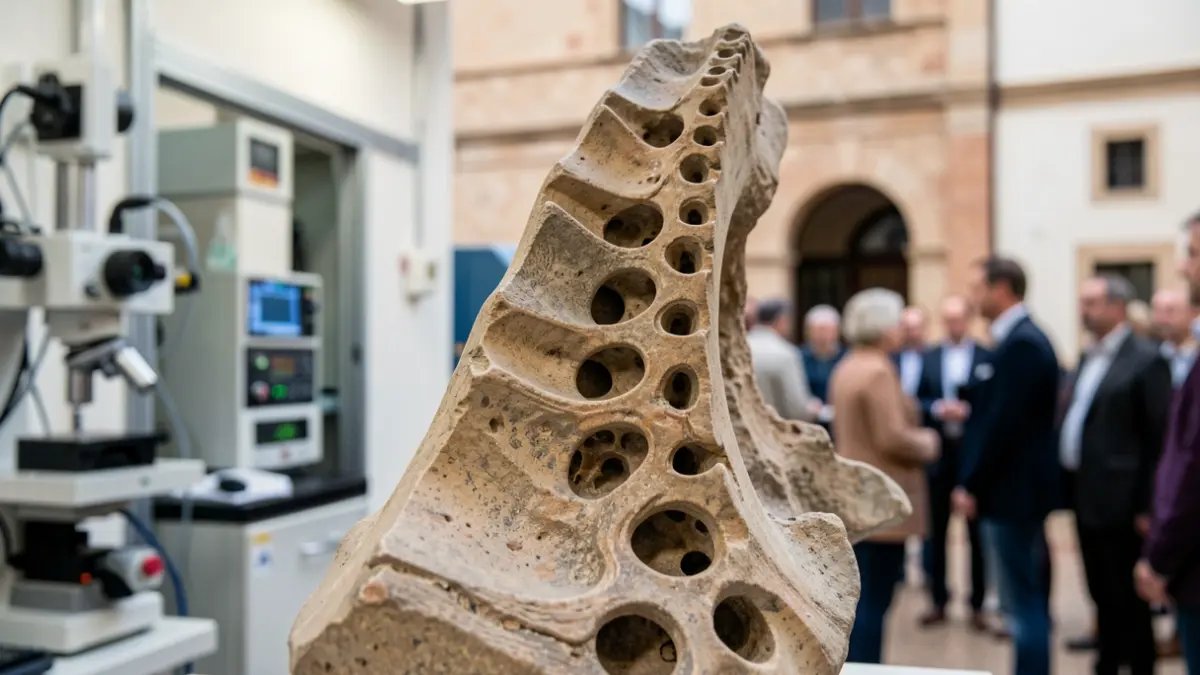
A collaboration between the Hospital del Pallars, the Museu de la Conca Dellà, and the Catalan Institute of Paleontology (ICP) has enabled a computed tomography (CT) scan of a fossilized vertebra from a long-necked dinosaur known as Abditosaurus. This specimen, found at a dig site in Orcau, within the Pallars Jussà region, belongs to the last great dinosaur of the Pyrenees, which lived approximately 70 million years ago.
First discovered over six decades ago and formally described in 2022, the Abditosaurus is the subject of a scientific study aiming to understand its internal bone structure and composition. The goal is to determine the extent of internal cavities that contributed to the lightness of this giant's skeleton.
According to Bernat Vila, an investigator at the ICP, the project focuses on the internal structure of the vertebrae to ascertain how these animals achieved such large sizes with bones that were likely hollow inside. The CT scan results will aid in analyzing its 'pneumaticity,' meaning the network of internal holes and fossae.
This analysis is part of a broader project titled 'Evolution and Paleobiology of Herbivorous Dinosaurs in Late Cretaceous Ecosystems,' funded by the Ministry of Science, Innovation and Universities and the Department of Culture of the Generalitat.
This is not the first time the Hospital del Pallars has performed a CT scan on a dinosaur bone; previously, a sediment block containing cranial remains was examined, though the results were not as anticipated. This time, more conclusive data is expected due to the absence of sediment, and there are hopes to analyze other parts of the animal, such as ribs, in the future.
The Abditosaurus species, a titanosaurian dinosaur, was described in 2022 by researchers from various institutions, including the ICP, the Museu de la Conca Dellà, the Autonomous University of Barcelona, the University of Zaragoza, and the Universidade NOVA de Lisboa, based on remains excavated at the Orcau-1 site. Measuring approximately 18 meters long and weighing 14 tons, it is the largest herbivorous dinosaur species discovered to date in Europe and belonged to the Ibero-American domain.