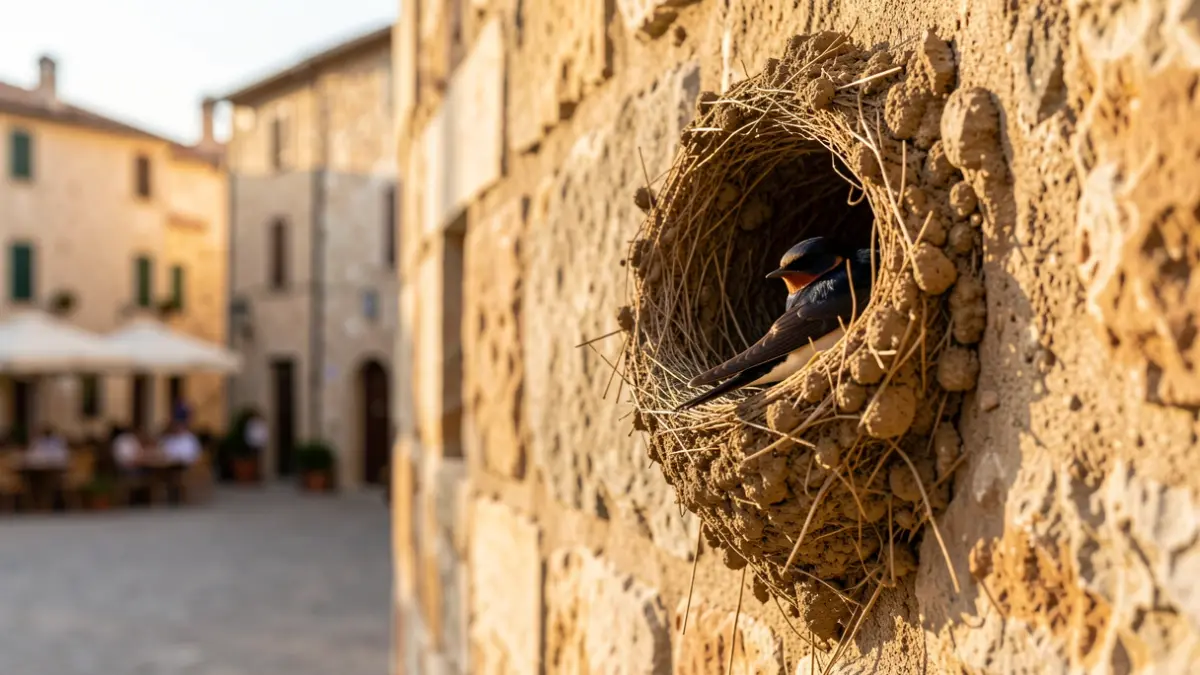
The number of common house martins detected in Sort and Esterri d’Àneu confirms the high air quality in the Pallars Sobirà region. According to Marta Naharro i Via, a professor at the Valls d’Àneu Learning Center and a member of the ICO (Catalan Ornithology Institute), the presence of these birds indicates an absence of insecticides and atmospheric pollution.
The most recent counts recorded 226 occupied nests in Sort, along with 5 under construction and 335 inactive. In Esterri d’Àneu, 103 occupied nests, 1 under construction, and 46 inactive nests were counted. These figures represent a significant increase compared to the start of the censuses, with 49 occupied nests in Esterri in 2010 and 165 in Sort in 2017.
Although the number of surveyed areas has increased, the general trend for the swallow population is positive. Students from the first year of ESO at the Hug Roger III institute in Sort and primary school pupils from La Closa school in Esterri d’Àneu, along with their teachers, participated in these observations.
“"The most beautiful thing is to be able to work on citizen science with children."
The common house martin is a migratory bird that spends the warm months in the Iberian Peninsula before migrating to sub-Saharan Africa in October. Its status is considered of "least concern" and it is not included in the Spanish catalog of threatened species. This year's favorable weather, with abundant rainfall, has facilitated nest building due to the availability of mud and insects.
Unlike other urban birds such as starlings or pigeons, the presence of house martins is a positive sign, as they depend on air quality and the availability of insects, also helping to control mosquito populations.