The Consorci de l’Estany has closely collaborated on the filming of the new film by Isaki Lacuesta, El fons de l’Estany, to ensure that the cinematographic production was compatible with the conservation of the protected natural space. The recordings took place during July and August in various locations around the Estany de Banyoles and its surroundings.
During the filming, the Consorci ensured strict compliance with environmental conditions, guaranteeing that the production had no significant impact on the environment. The production company, with the participation of J.A. Bayona, has shown great sensitivity towards conservation criteria, collaborating in adapting the filming to environmental requirements.
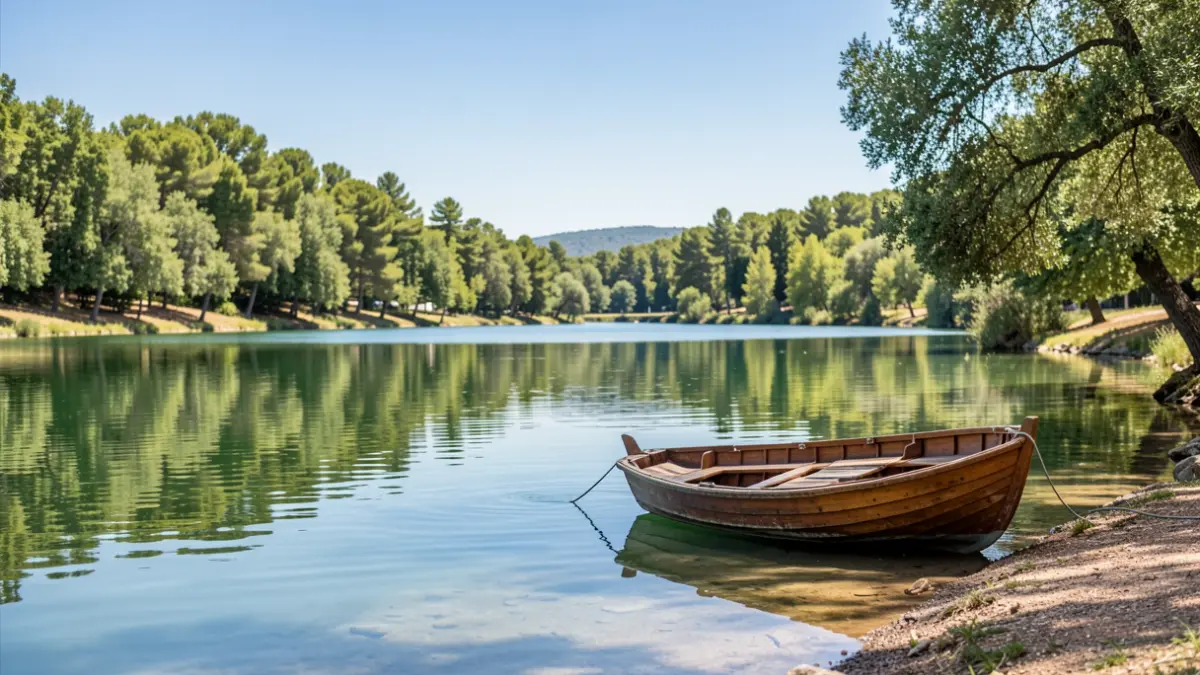
The filming, which began on July 20th and continued until the end of August, caused some temporary disruptions in the use of various parts of the natural space and the city, with occasional restrictions on access, parking, and circulation. Among the locations used were the Les Estunes area, the lagoon beneath the church of Porqueres, the small lakes of El Vilar and Montalt, the Draga, the Club Natació Banyoles, and areas within the Estany such as Can Morgat or the surroundings of the fallen trees at Punta Freixenet.
The Consorci de l’Estany facilitated the development of the recordings, particularly by using its own boat for transporting material and personnel, and to support underwater filming. Preventive measures were implemented to minimize impacts, such as controlling boats similar to the 'Oca' from the nineties and protecting elements like benches, walkways, or signs.
Selective vegetation adjustments were also carried out, and locations were proposed in less sensitive areas. In some cases, filming dates were modified to avoid impacts during fauna breeding periods, especially in sensitive areas like the wetlands of Porqueres or the stork lagoon at La Puda. The Consorci also assisted in processing authorizations for natural spaces within the Xarxa Natura 2000.
Albert Tubert, director of the Consorci de l’Estany, highlights the project as an example of cooperation between protected natural space managers and the film industry. "This project demonstrates that, with planning, goodwill, and the necessary resources, cultural and artistic activities can be hosted in a protected natural space in a way that is compatible with the conservation of its most valuable elements."
The collaboration was formalized through an agreement detailing the participation and compensation received by the Consorci. The team's positive attitude and sensitivity towards the environment and the space's managers were highly valued.
The director and cast members have explained that the Estany itself becomes almost another character in the film, serving as more than just a landscape. The Consorci eagerly awaits the final result of the film.