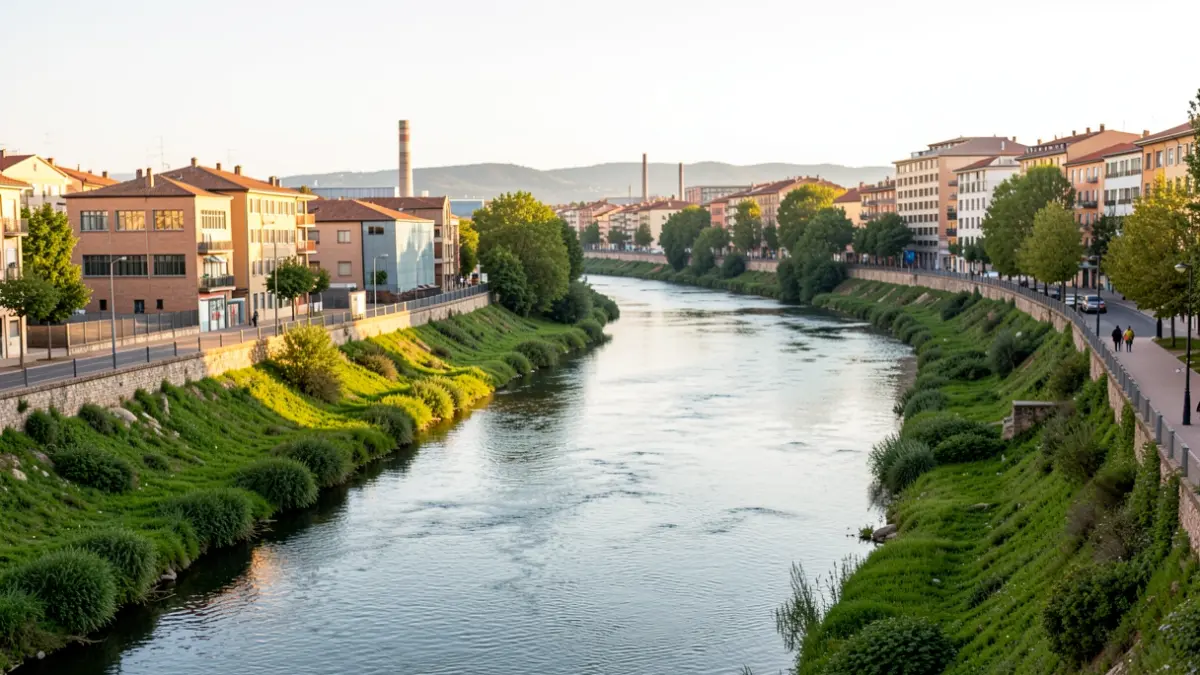
The Ripoll River, a key element for Sabadell, is at the center of an urban planning debate following the partial modification of the Municipal General Urban Planning Plan (MPG-132). This action, while not expanding foreseen uses, raises questions about the compatibility of certain economic activities with the environmental quality and public space function of the river corridor.
The previous, more restrictive plan left many industrial warehouses abandoned and created maintenance and security issues. The new proposal (MPG-132) aims to revitalize these areas through private investment and the rehabilitation of industrial heritage, diversifying the economy with cultural, sports, and tertiary uses, and creating local employment. This transformation towards hybrid environments is based on European urban dynamics but also introduces risks of intensified uses and environmental pressure that require attention.
Criticisms of MPG-132 focus on the potential increase in air and noise pollution, the impact on fauna and vegetation, and the fear that the natural corridor will become an area dominated by recreational and service uses. The central question is to what extent an intervention in 9.3% of the protected area can condition the future of the remaining 90.7%.
Beyond simplifying the debate between environmentalists and developers, the challenge lies in articulating a balanced model where environmental protection and economic development coexist. MPG-132 is neither an absolute error nor an unquestionable advance; its success will depend on its implementation, management, and supervision, accompanied by rigorous environmental assessments, sustainable mobility plans, and effective controls.
To ensure a sustainable future for the Ripoll, shared governance is considered essential. A permanent framework for participation between the administration, neighborhood associations, environmental organizations, and economic agents is needed to evaluate effects, anticipate impacts, and implement corrective measures.