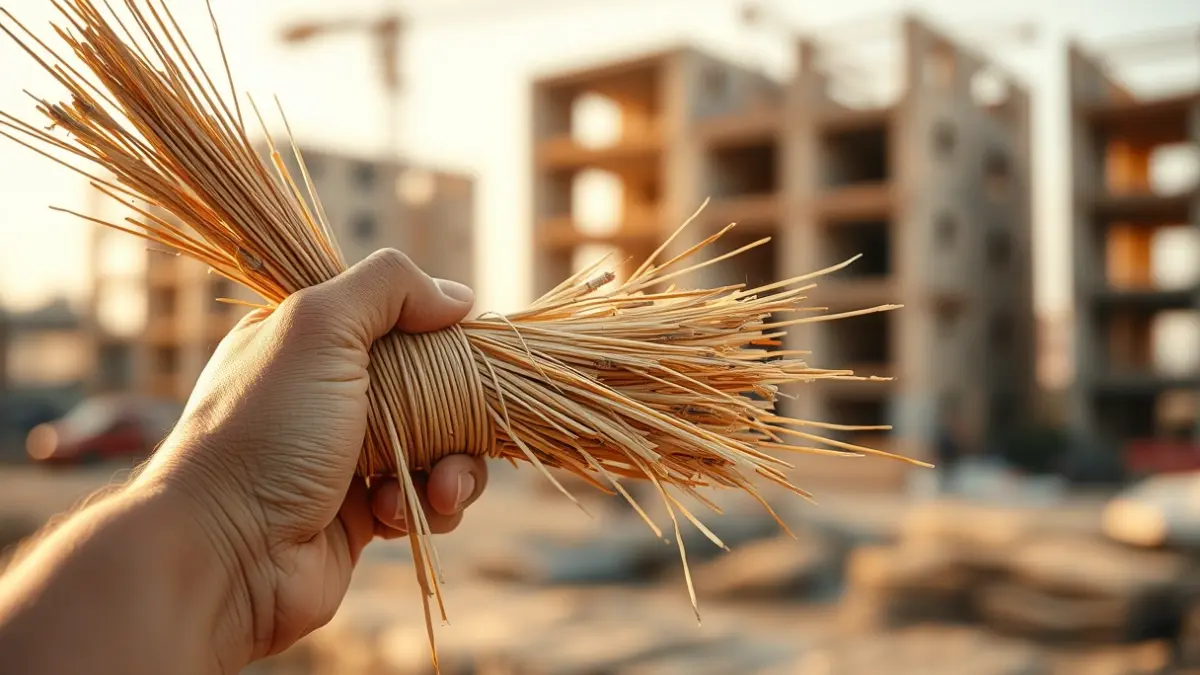
Straw, typically considered agricultural waste after harvesting, can have a second life as a construction element. This is the premise of an initiative that, from Guissona, promotes the use of this material for walls, insulation systems, and complete buildings. The project offers training in bioconstruction, aiming to disseminate knowledge about the application of local and natural materials in the sector.
The proponents of this approach seek to break away from the reliance on industrial and standardized construction solutions. They have specialized in straw due to its abundance in the Segarra region, where it is often burned or left to rot in the fields. According to estimates, just 10% of the cereal produced in Spain could cover the annual housing construction and renovation needs.
“"Straw allows for the construction of houses that, with good design, do not need heating or air conditioning, even in a climate like that of Lleida."
In addition to its potential as a renewable resource, straw stands out for its thermal insulation properties, enabling the creation of highly energy-efficient homes. Although bioconstruction strategies have gained relevance, with European regulations now addressing material decarbonization, bureaucratic barriers still exist for the use of materials like clay, wood, or straw. Current regulations tend to favor industrial products, making it difficult to justify traditional construction techniques.
Despite administrative challenges, interest in these training courses is growing. In early April, about fifteen people, including architects, masons, and the general public, participated in a course in Guissona to learn various straw construction techniques. This trend reflects a desire to regain the human connection with building one's own home, a common practice in the past.