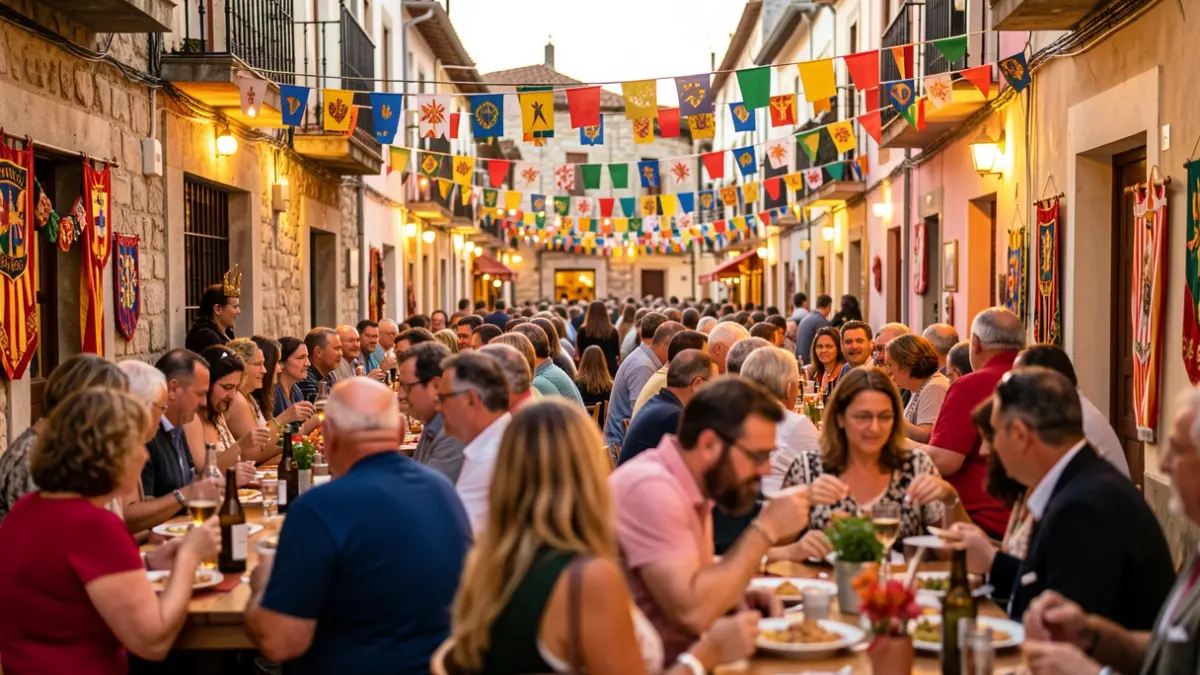
Popular festivals, from the ancient Greek Dionysia and Roman Bacchanalia to the current Aplec del Caragol in Lleida, share surprising elements despite contextual differences. These celebrations are characterized by a large influx of participants, noisy disinhibition, a temporary suspension of usual social norms, and the ability to strengthen bonds among attendees, representing a vital expression of celebration.
The Greek Dionysia, dedicated to Dionysus, the god of wine, were religious festivals marked by music, singing, high alcohol consumption, and uninhibited practices. The Roman Bacchanalia, a clear Latin adaptation of these festivals, shared the same essence.
Although the Aplec del Caragol does not have an explicit religious character, apart from the snail enthusiasts' devotion, and often presents a secular and irreverent tone, it retains ritualistic and liturgical elements. The 'Petita Rua' (Small Parade), the 'Sopar de germanor' (Brotherhood Dinner), or the 'Ofrena Floral in memoriam' (Floral Offering in memory) to the 'germandat de la banya' (brotherhood of the horn) evoke processions and the spiritual, even spirited, experiences lived by participants.