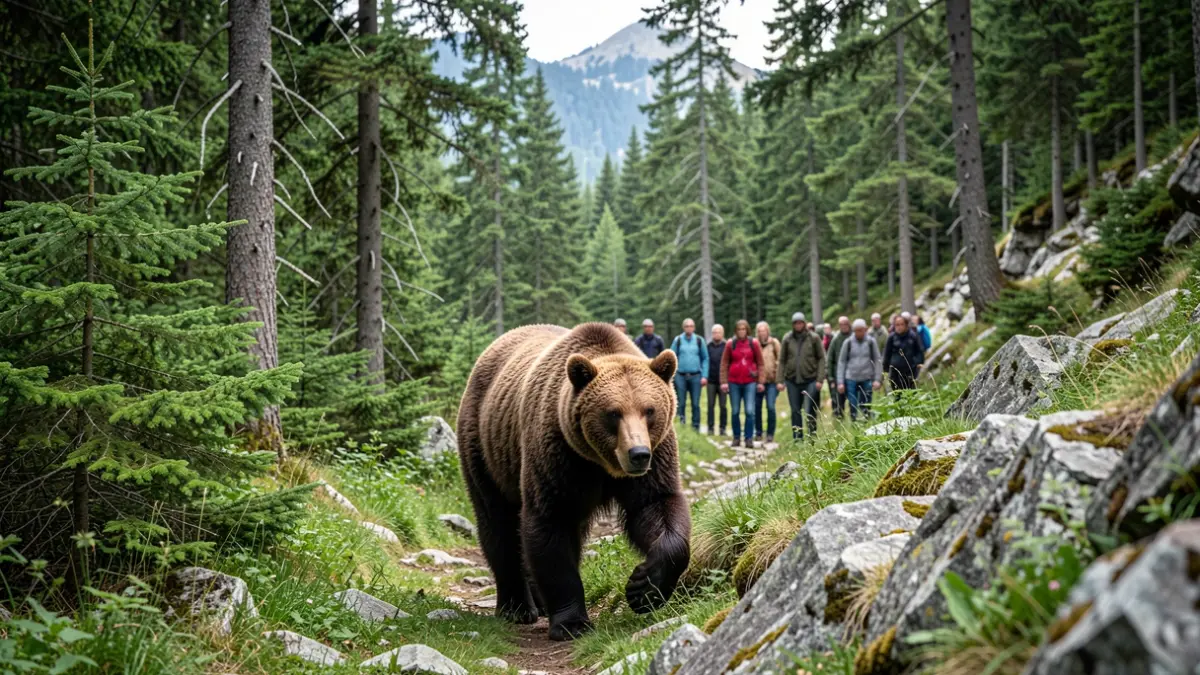
The survival of the Pyrenean bear colony is under potential threat due to inbreeding among current individuals. Most of these animals are descendants of a few founding individuals, raising concerns about possible diseases, malformations, or a decline in birth rates.
In 2016, the Generalitat attempted to improve genetic diversity by reintroducing the male bear Goiat, but the effort proved unsuccessful. Both he and his only known offspring were declared dead in 2024, after years without being sighted.
A recent investigation by the French organization Pays de l’Ours, titled "The Pyrenean Bear. The urgent need to defuse the genetic bomb," warns that inbreeding is already affecting the population's vitality. The study indicates a reduction in the average litter size, dropping from 2.37 cubs in cases of low inbreeding to 1.56 when inbreeding is high.
In response to these findings, Pays de l’Ours has launched a campaign to advocate for new reintroductions that would increase the species' genetic diversity in the Pyrenees.
Meanwhile, the Territori department of the Generalitat stated that, "for now, there are no indications of inbreeding problems." They acknowledge that the founding population is small, which limits genetic variability, and admit a significant drop in reproduction last year (8 cubs from 6 females), but attribute it to a one-off event. The department emphasizes the importance of rigorous population monitoring to evaluate the results.