This revitalization is evident in a large number of new musical talents, despite the lack of suitable spaces for their expression. According to anthropologist and singer Núria Morelló, this situation has led to a return to self-management, an inherent characteristic of the movement.
“"There are many people playing, but spaces are lacking, and self-management is returning."
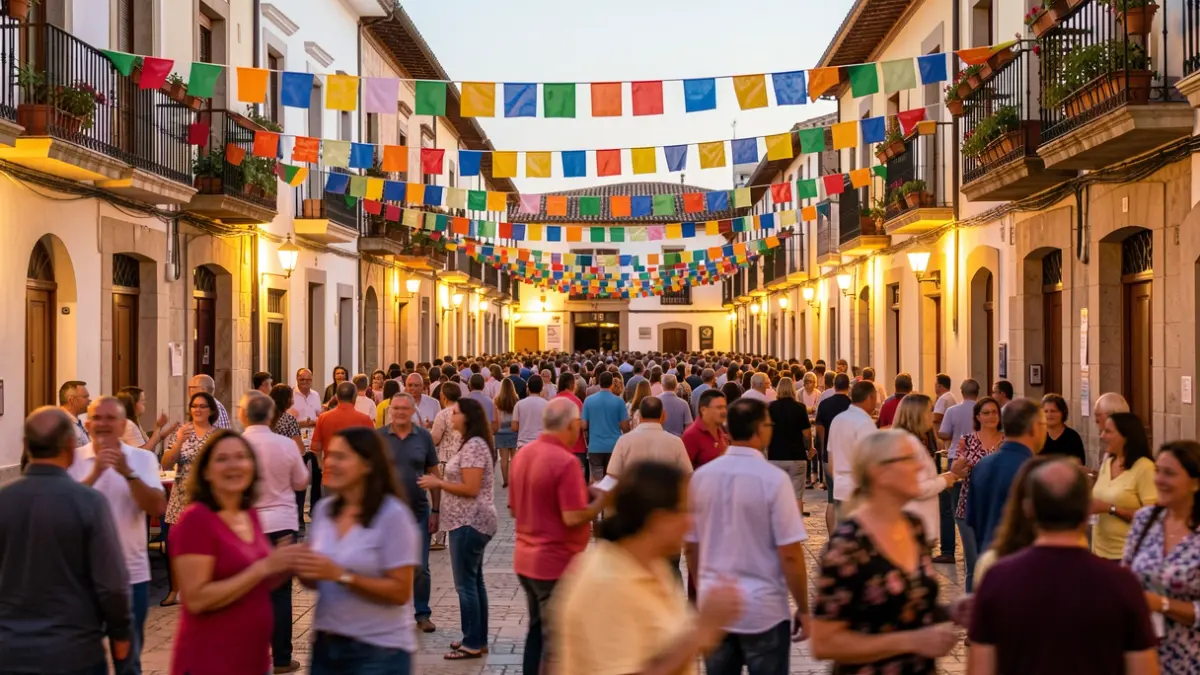
The punk phenomenon in Lleida is distinguished by its strong rural character, a peculiarity that sets it apart from its traditional urban image. Ramon Bernaus, known as Ramon de Ponts and organizer of the Konzert de Ponts, emphasizes the importance of this rootedness: “Youth was rebellious, and one must ask why from 1995 to 2005 hundreds of people started emerging in all the villages who moved within this environment.”
Although punk had an initial presence in Lleida in the early 80s with figures like El Ruso (Arkadi Rosell), it wasn't until the 90s that it truly exploded, especially in Balaguer. This locality was an epicenter with the Nits de Rock and the creation of Lleida's first CSO (Occupied Social Center), named La Via, which hosted initiatives such as the libertarian athenaeum Salvador Seguí.
“"Punk was a way to channel youthful rage, it was a countercultural explosion that brought social criticism, defiance, and self-management. We were comfortable against the system, and we built spaces that grew from the grassroots and are now hard to find. These spaces are missing for young people."
Other important centers of the movement were Ponts and Tàrrega, with activity also in municipalities such as Linyola, Vinaixa, and Torà. Curiously, the 'quintos' parties (related to military service drafts) acted as a vehicle for the expansion of rural punk, transforming into anti-militarist events that attracted bands and audiences.
Currently, the punk music scene in Lleida and the Franja, with over fifty bands, faces the challenge of a lack of concert venues and difficulty accessing the festival circuit. However, creativity and the spirit of “Do it Yourself” remain alive, with villages emerging as an alternative for the new generation of musicians.