In the early 80s, the avenue already had houses and warehouses expropriated for the channeling of the Segre River. In the summer of 1990, the eviction of a building on Carrer Gairoles led to over a hundred people, mostly of Roma ethnicity, settling in the abandoned Tarradellas properties, which were unsanitary and did not meet minimum habitability requirements.
Following the occupation, the Lleida City Council demolished the structures and set up a provisional camp with prefabricated modules. This process allowed for the progressive relocation of all families to decent housing, a task that was definitively completed in 1999.
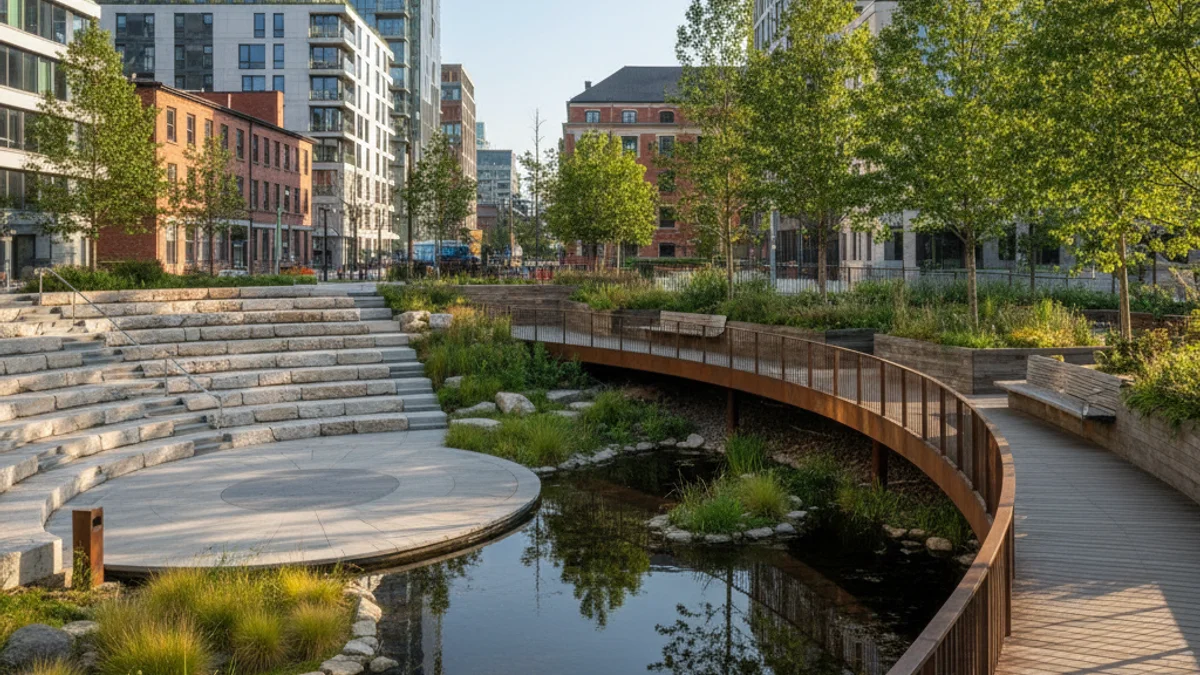
The image of the area changed drastically starting in 2006, when work began on extending the Camps Elisis towards the river. This intervention included the demolition of the fence next to the Palau de Vidre and culminated in the creation of a new public space featuring an amphitheater, a pond, fountains, and children's play areas, connecting it with the channeling area.