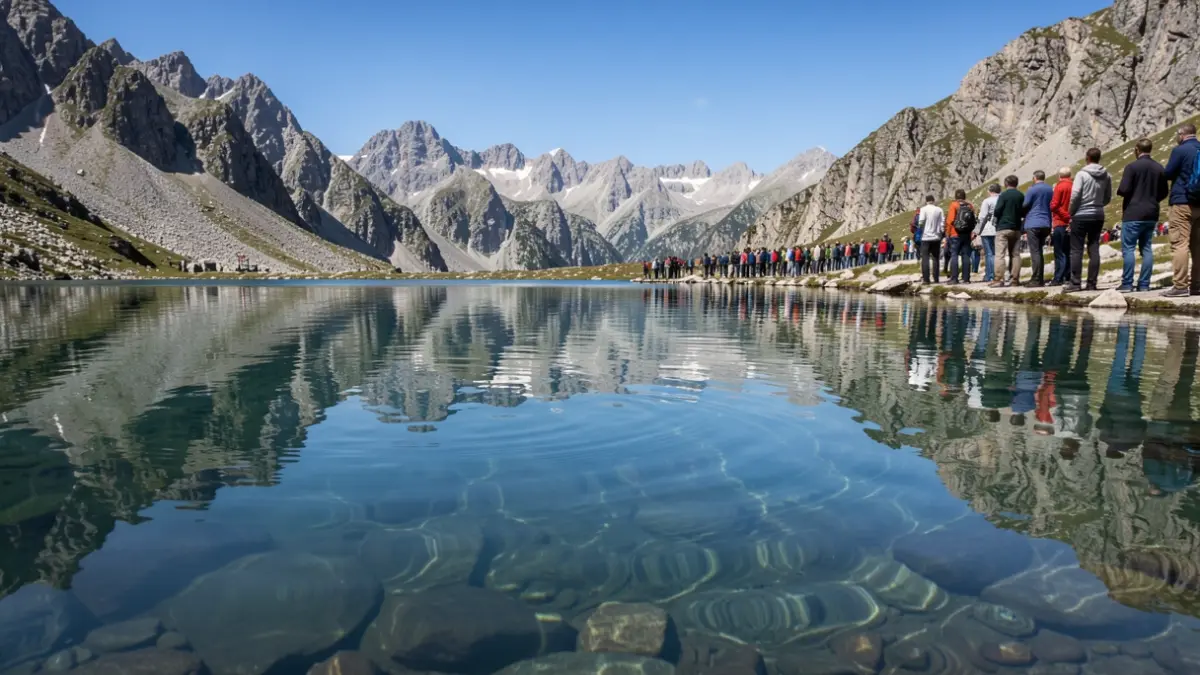
A study published in the journal Freshwater Biology and led by the Center for Advanced Studies of Blanes (CEAB-CSIC) has compared the aquatic plant communities present in about thirty remote lakes in the Pyrenees between the late eighties and the present day. The results reveal significant variations in the flora, coinciding with alterations in water chemistry associated with processes linked to climate change.
High mountain lakes are ecosystems sensitive to climate change. The research compared data from aquatic vegetation monitoring campaigns conducted in 1987 and 1988 with new sampling carried out between 2019 and 2023. In parallel, the evolution of water chemistry was analyzed. The study focused on macrophytes, plants observable to the naked eye, evaluating their presence, coverage, and depth distribution.
The results indicate that, although species diversity has remained relatively stable, the flora's composition has changed. The most evident transformations have occurred in lakes where parameters such as alkalinity have exceeded certain thresholds. In these cases, species capable of using dissolved bicarbonate in water as a carbon source have increased, while other plants more associated with soft and acidic waters have declined.
According to the researchers, these changes are linked to climate change, such as increased rock weathering and variations in atmospheric deposition. Esperança Gacia, a researcher at CEAB-CSIC, explains that the reduction in accumulated snow and its earlier melt increase rock weathering, carrying more minerals into the lakes. Dust inputs from the Sahara also modify the water's chemical composition.
The study identifies ecological tipping points, such as alkalinity above 150 μeq/L or conductivity above 20 μS/cm. Researcher Eric Baqué points out that changes are exacerbated when a certain very low alkalinity threshold is exceeded, highlighting the vulnerability of these systems.
Fast-growing species like some from the genera Myriophyllum and Potamogeton have increased their coverage, favored by conditions of higher alkalinity and nutrient availability. In contrast, aquatic mosses typical of acidic waters have lost significant coverage, and species such as Sparganium angustifolium and some Ranunculus have declined, possibly due to changes in the nitrogen and phosphorus ratio or habitat loss during droughts.
Despite these changes, the species richness of the lakes as a whole remains relatively stable, with a substitution of some species for others and a variation in community structure. The study, which also involved researchers from the University of Barcelona (UB) and CREAF, emphasizes the importance of analyzing species coverage and evolution to detect the effects of climate change and guide the conservation of these ecosystems.