Antibiotic resistance poses one of the most significant threats to global health. A primary route of spread is the exchange of genetic material between bacteria, particularly via plasmids – DNA molecules that confer new capabilities, such as antibiotic resistance. Previously, research focused mainly on transfer within a single colony, leaving less explored what happens between different bacterial communities that come into physical contact.
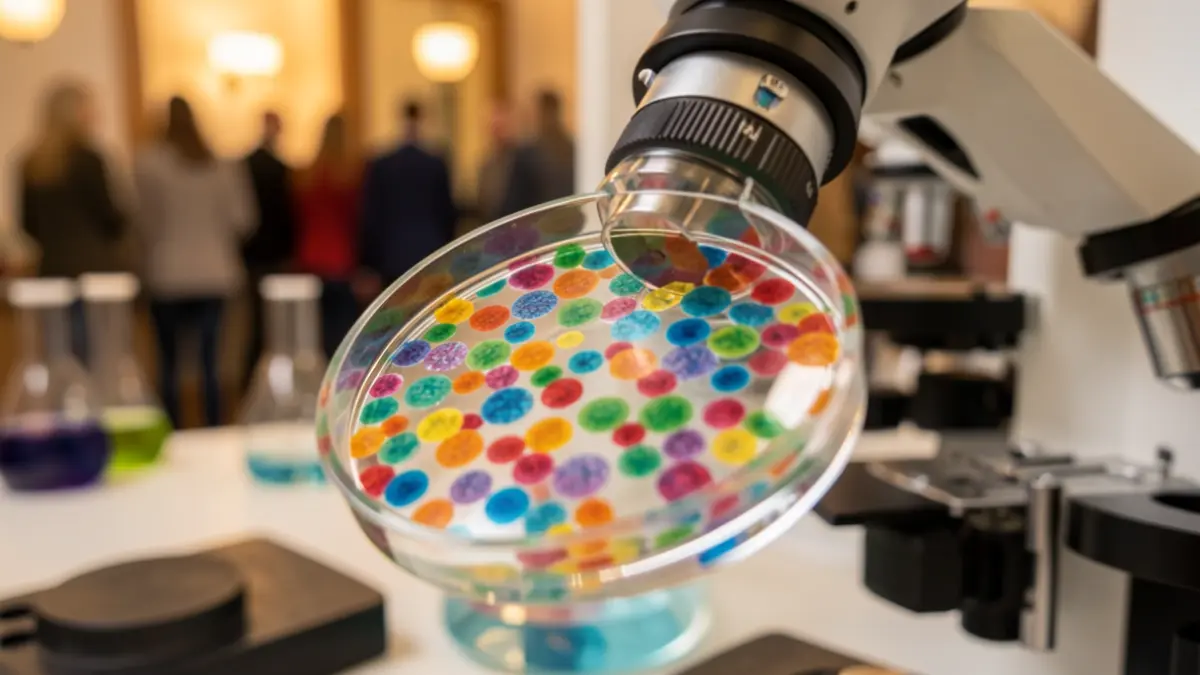
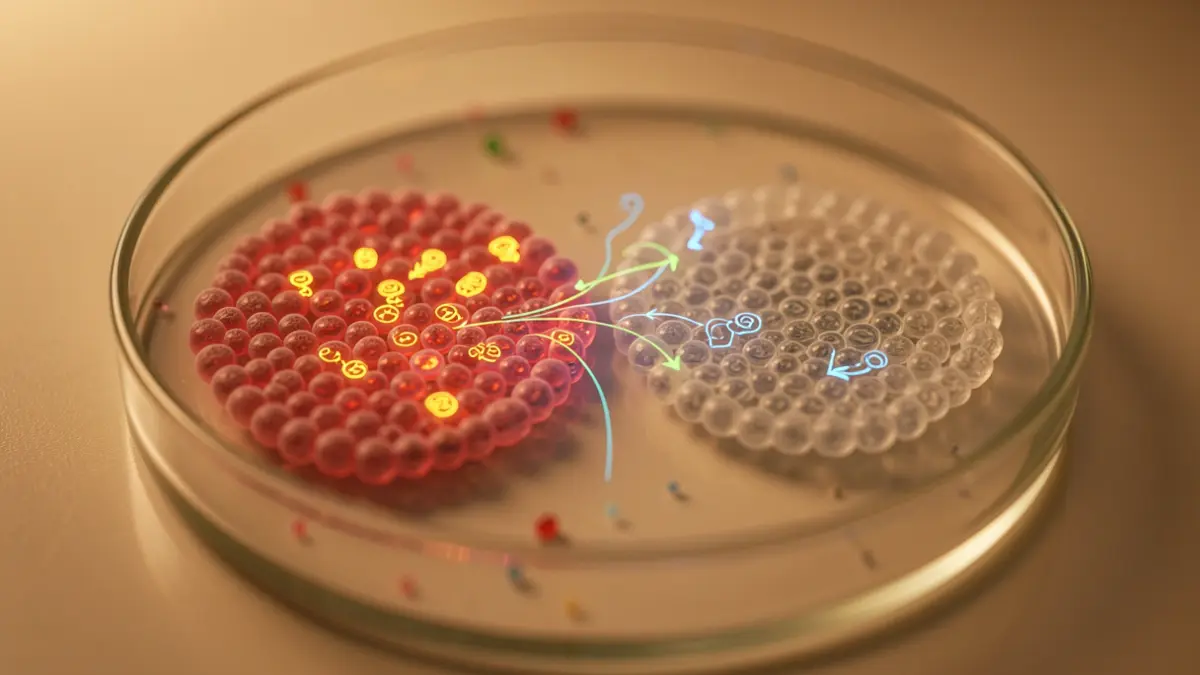
Research published in the scientific journal mSystems, led by scientists from the Center for Advanced Studies of Blanes (CEAB-CSIC), has shed light on this process. The team placed colonies of Stutzerimonas stutzeri (carrying resistance genes) and Escherichia coli (without these genes) on a laboratory plate. Upon collision, the transfer of resistance genes from the former to the latter was observed.
"We always think of biological factors to explain the problem of bacterial resistance to antibiotics, but something as fundamental as the spatial distribution of organisms plays a key role in the spread of resistance," explains Josep Ramoneda, lead researcher, who at the time of the study was affiliated with the Swiss Federal Institute of Aquatic Science and Technology (Eawag) and is currently at the CEAB-CSIC.
The experiment showed that the amount of resistance genes transferred depends on the initial distance between the colonies. The sooner colonies come into contact, the higher the transmission rate, as the carrier bacteria are more numerous. The internal distribution of cells is also crucial: greater mixing between carrier and non-carrier bacteria increases opportunities for genetic exchange.
"It's not enough to know which bacteria are present or which resistance genes they carry. We need to understand how they are organized in space, because this organization strongly influences propagation," notes Ramoneda.
Based on these findings, a computational model has been developed to simulate the growth, genetic dynamics, and collision of bacterial communities. This model can predict optimal conditions for resistance spread, linking individual processes to the organization of entire microbial communities.
The study's conclusions could improve the prediction and control of resistance spread in various environments, including medical devices, chronic wounds, dental plaque, pipes, and wastewater treatment systems. Understanding how distance and organization influence transmission could help design surfaces that hinder colony connection or identify risk points for resistance gene dissemination.