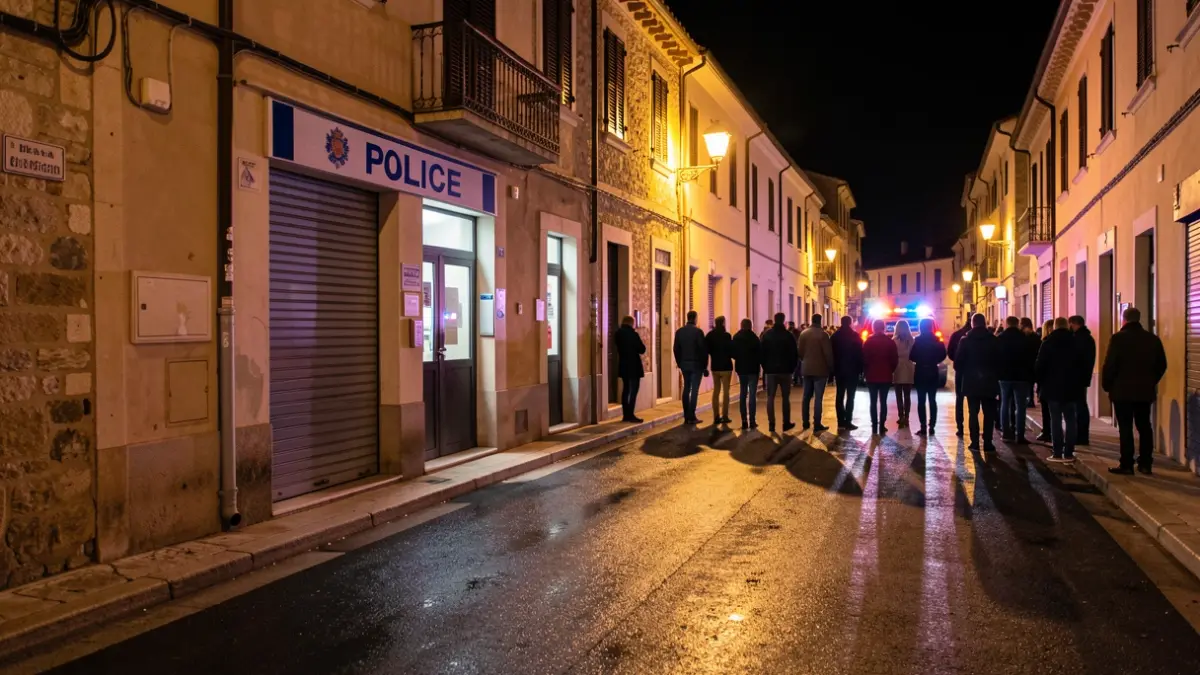
A shortage of officers in the Local Police of Lloret de Mar has necessitated increased security presence from the Mossos d'Esquadra. This situation arises from the local officers' decision to cease working overtime, highlighting a staff deficit at a crucial time as the tourist season begins.
Consequently, the Local Police station had to close during the nights of the past Saturday and Sunday. According to the mayor, Adrià Lamelas, regulations mandate a minimum number of officers, and as it was impossible to cover the service, the decision was made to close the facilities and temporarily hire private security.
Lamelas described the situation as exceptional and assured that hiring private security would not be repeated. He confirmed that support has been requested from the Mossos d'Esquadra to meet security needs, especially as the municipality's population grows significantly with the arrival of visitors. The mayor emphasized that security was maintained throughout the weekend despite the station's closure.
Meanwhile, negotiations between the municipal government and union representatives continue to update the collective agreement. The City Council has submitted a proposed agreement and awaits a counter-proposal from the unions in the coming days, aiming to finalize a pact at the negotiation meeting scheduled for Friday.
The mayor acknowledged that the current staff of 111 officers is insufficient to meet the demands of a municipality with significant population fluctuations between winter and summer, although it is adequate for the resident population. The unions, on their part, are calling for a review of allowances, compensation, and salary improvements, noting that the current agreement has been pending renewal for years.