The operation took place along the coast of Tossa de Mar, Santa Cristina d'Aro, and Sant Feliu de Guíxols, as part of the RESILIA project, funded by the Generalitat de Catalunya. The primary goal is the conservation of Posidonia oceanica, one of the most sensitive habitats in the Mediterranean.
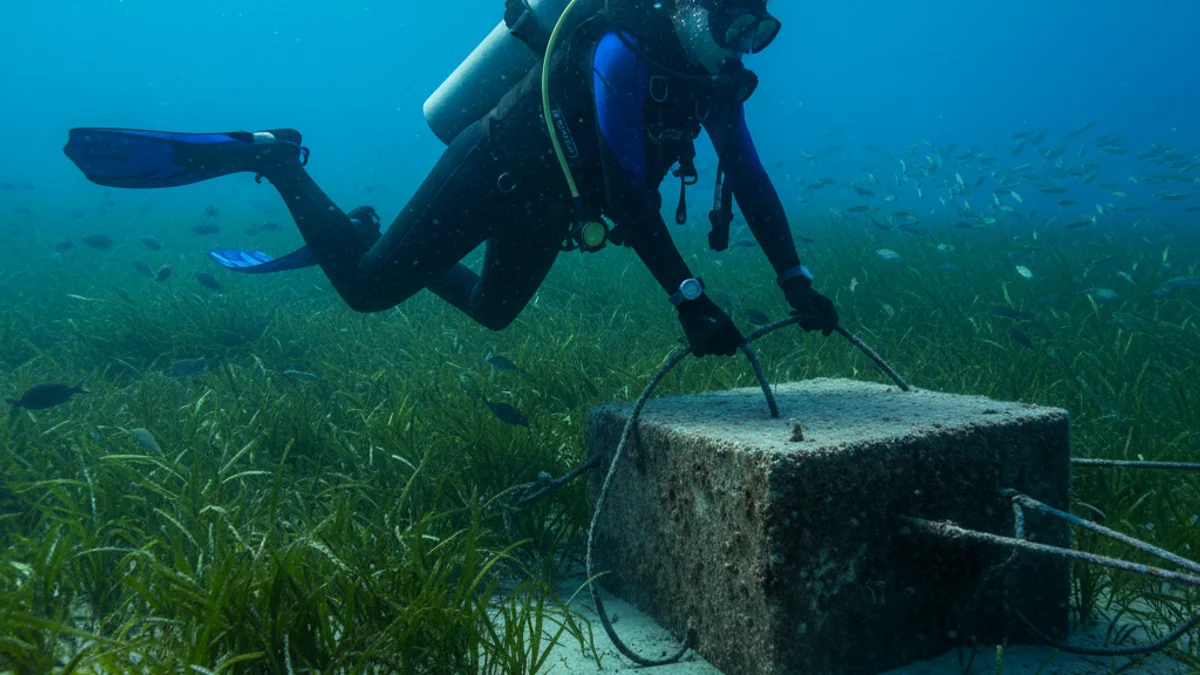
The work began by identifying and georeferencing anchoring buoys in areas with confirmed Posidonia presence. This review allowed the detection of concrete blocks, disused structures, and anchoring weights that were exerting direct pressure on the seabed.
Following coordination sessions with the involved local councils and the Generalitat, the removal of the elements was agreed upon, considering both environmental impact and technical feasibility. The intervention was carried out over three days with the support of a crane-equipped vessel.
In total, exactly 11,440 kilograms of material were extracted. Items removed include 78 anchoring weights, 13 tires filled with concrete, 4 fragments of outfalls, and one large structure. All waste was transported and managed by an authorized handler.
The RESILIA project has a forward-looking vision, working towards the conservation and restoration of Posidonia meadows in three protected marine areas of the Natura 2000 Network, combining environmental management, research, and citizen participation.